Ding dong! Check out your exclusive enrollment guide for "Exploring Latin America and the Caribbean Countries" now!
"Exploring Latin America and the Caribbean Countries" is an interdisciplinary course co-created by Professor Chen Taotao from the School of Economics and Management at Tsinghua University, together with distinguished professors from universities in Brazil, Chile, Peru, Mexico and other Latin American countries. First launched in the spring semester of 2023, the course will welcome its 4th session in 2026 and has gradually evolved into a flagship program at Tsinghua University for Latin American studies and global competence development. Inviting renowned experts and scholars from political, academic and practical circles in China and Latin America, the course addresses diverse topics spanning politics, economy, society and culture in Latin America through thematic lectures, helping students build a comprehensive cognitive framework for the region.
This carefully crafted enrollment guide will walk you through:
1.The overall curriculum design and training objectives
2.Highlights and snapshots from previous sessions
3.Real-life dialogues between Chinese and Latin American scholars and ambassadors
4.Exclusive Previews for the spring 2026 session
I. Course Overview
Course Code: 80517572
Lecture Time: Weeks 9, 11–16 of the spring 2026 semester; every Thursday, 18:45–22:00 (7 sessions in total)
Total Class Hours: 32
Instruction Language: 75% English | 25% Chinese
Cooperating Unit: Center for Global Competence Development, Tsinghua University
Curriculum Content
•Each session covers insights into 4+ Latin American countries
•Key Focus Countries for Spring 2026: Chile, Brazil, Peru, Mexico
Faculty and Teaching Format
•Joint instruction by leading experts and professors from China and Latin America
•Chinese faculty deliver lectures in Chinese to help students systematically understand the regional background
•Latin American faculty deliver lectures in English, focusing on hot topics and cutting-edge research in their respective countries
•An international classroom built through a blended online and offline teaching model
Highlight: 1–2 serving or former ambassadors of Latin American countries to China will be invited for face-to-face dialogues with students during the course.
II. Course Background and Objectives
Over the past decade, China’s ties with Latin American countries have grown increasingly close in economic and trade cooperation, people-to-people exchanges and development collaboration. In 2018, the Tsinghua University Latin America Center was officially established in Santiago, the capital of Chile. As a university-level overseas research and exchange platform of Tsinghua University, the center is committed to serving the university’s overall strategy for global competence talent development and promoting in-depth cooperation with Latin American countries in academic research, people-to-people exchanges, scientific and technological innovation and other fields.
Launched against this backdrop, "Exploring Latin America and the Caribbean Countries" aims to systematically enhance students’ global competence and regional cognitive ability. Through the course, students will gain an in-depth understanding of the basic national conditions of Latin American countries in politics, economy, society and culture, as well as the development trajectory of China-Latin America relations. As an introductory course on regional studies, it analyzes representative issues and real-world hot topics in Latin America, providing students with limited prior knowledge of the region a clear, comprehensive and enlightening cognitive framework.
As one of the flagship courses of the Tsinghua University Latin America Center, "Exploring Latin America and the Caribbean Countries" is closely linked with the program China-Latin American Youth Responding to Global Challenges —— Poverty Alleviation Challenge. The course features thematic content on poverty alleviation and development, and invites Chinese and Latin American experts to share practical experience. While deepening students’ understanding of Latin America, it guides them to extend classroom learning to real-world scenarios of China-Latin America poverty alleviation cooperation, promoting the organic integration of theoretical learning and practical understanding.
•The cooperation agreement for this program was included in the outcomes of President Xi Jinping’s visit to Brazil in 2024.
•The 2025 Poverty Alleviation Challenge attracted more than 310 teachers and students from 27 universities and enterprises in China, Brazil, Chile and Peru, achieving remarkable social and academic repercussions.
Through the synergy of classroom teaching and a series of lectures at the Poverty Alleviation Challenge, "Exploring Latin America and the Caribbean Countries" continuously promotes the in-depth integration of Latin American regional research and development practice.
The course sincerely welcomes all students interested in Latin America and the Caribbean to enroll. We hope to help Tsinghua students gain a deeper understanding of this distant yet friendly region, and grow into an important youth force promoting mutual understanding, trust and win-win cooperation between China and Latin American countries in the future.
III. Highlights and Snapshots from the Spring 2025 Session
In the spring 2025 semester, "Exploring Latin America and the Caribbean Countries" brought together outstanding experts and scholars from top universities and research institutions in China and Latin America. Relying on a blended online and offline teaching model, it built an international classroom featuring multi-party interactions among Chinese professors, Latin American professors and young students. During the course, a special dialogue session with the former Chilean Ambassador to China was organized, offering students a valuable opportunity for face-to-face exchanges with diplomatic practitioners.
The semester’s course attracted more than 300 young students from China, Brazil, Chile, Peru and other countries. Through online and offline interactions, they jointly explored important issues of regional development in Latin America and China-Latin America relations.

Session 1: Unity in Diversity – Core Issues in Latin America and Its Studies
The inaugural session was hosted by Professor Chen Taotao, the course coordinator, Professor of Finance at the School of Economics and Management and Director of the Tsinghua University Latin America Center, together with Mr. Xiang Zhiqian from the Center for Global Competence Development, who introduced the overall curriculum design and learning objectives.
Subsequently, Professor Li Ziying, Vice Dean of the Institute of Regional and Global Governance and Vice Dean of the School of Spanish and Portuguese at Beijing Foreign Studies University, delivered a thematic lecture on the overall landscape of Latin America. Starting with geographical environment, historical context, cultural traditions and institutional characteristics, she helped students establish a comprehensive understanding of Latin America and initially experience the unique rhythm of this region where unity and diversity coexist.
Session 2: Course Linkage with the 2025 Poverty Alleviation Challenge – China-Chile Thematic Lecture on Poverty Alleviation
As a flagship course of the center, "Exploring Latin America and the Caribbean Countries" was closely linked with the China-Latin American Youth Responding to Global Challenges —— 2025 Poverty Alleviation Challenge. Through a thematic lecture focusing on poverty alleviation, it extended classroom learning to China-Latin America development practice.
In the first half, Violante di Canossa, Chief Economist at the UNDP China Country Office, delivered a keynote speech entitled Artificial Intelligence and Human Development: Opportunities and Challenges, focusing on the potential role and practical challenges of artificial intelligence in advancing the Sustainable Development Goals, especially in the field of poverty alleviation.
In the second half, Maribel Florez, Director of Global Learning at the Office of the Vice President for International Affairs of the Pontifical Catholic University of Chile, delivered a welcome speech. Afterwards, María Luisa Méndez Layera, Director of the Center for Conflict and Social Cohesion Studies at the Pontifical Catholic University of Chile, analyzed issues of inequality, social mobility and social cohesion from an urban perspective; Magdalena Valdés, Professor at the Faculty of Agricultural and Forestry Engineering of the Pontifical Catholic University of Chile, emphasized the important significance of agricultural biodiversity and plant genetic resources in the poverty alleviation process from a rural development perspective.
In the interactive session, Chinese and Latin American scholars and young students conducted in-depth exchanges on topics such as AI for poverty alleviation, social inequality and rural development, inspiring young people to think about innovative paths for poverty alleviation.
Session 3: Course Linkage with the 2025 Poverty Alleviation Challenge – China-Brazil Thematic Lecture on Poverty Alleviation
This was the second lecture in the series of "Exploring Latin America and the Caribbean Countries" × 2025 Poverty Alleviation Challenge events.
In the first half, Chen Xuemin, Member of the Standing Committee of the Rongjiang County Party Committee and Deputy County Magistrate of Rongjiang County People’s Government, delivered a keynote speech entitled Poverty Alleviation Practice of "Village Super League" in Rongjiang, Guizhou, China, systematically introducing the practical experience of Rongjiang County in advancing poverty alleviation and rural revitalization through grassroots governance and sports culture.
In the second half, Pedro Fandiño, Professor at the Faculty of Economics of the Federal University of Rio de Janeiro (UFRJ) and the Brazilian Center for Advanced Studies (CBAE), and Paula Carvalho, Associate Researcher at the National Institute of Science and Technology for Public Policies, Strategies and Development (INCT-PPED), jointly shared insights into the evolution path and influencing factors of poverty in Brazil.
In the Q&A session, Chinese and Latin American young students discussed issues such as the global poverty alleviation cooperation mechanism and Brazil’s role and opportunities in international poverty alleviation cooperation, further deepening the cross-regional comparative perspective.
Session 4: Turmoil in Latin America and China-Latin America Relations
In the first part, Professor Xu Shicheng, Honorary Member of the Chinese Academy of Social Sciences and Research Fellow at the Institute of Latin American Studies, delivered a thematic lecture entitled Turmoil in Latin America and China-Latin America Relations at Jianhua Building of the School of Economics and Management, Tsinghua University. He reviewed the political changes and diplomatic trends in Latin America in recent years, and systematically analyzed the historical foundation, real-world landscape and future trends of China-Latin America relations.
In the second part, Cynthia Sanborn, Professor at the Department of Social and Political Sciences of the Universidad del Pacífico in Lima and Director of the Center for Asia-Pacific and China Studies, delivered a lecture entitled State and Natural Resource Governance in an Era of Global Uncertainty: Reflections from Latin America in a blended online and offline format. Combining the experience of Latin American countries in resource dependence and environmental conflict governance, she analyzed the impact of global political and economic uncertainty on natural resource governance in Latin America, and compared the similarities and differences between China and Latin America in governance logic and multi-stakeholder participation mechanisms.
Session 5: Focus on Mexico – National Development Issues and New Trends in China-Mexico Relations
This session focused on contemporary social development issues in Mexico and new trends in China-Mexico economic interactions.
In the first half, Adalberto Noyola, Senior Researcher at the Institute of Engineering of the National Autonomous University of Mexico (UNAM) and Director of the UNAM-Beijing Foreign Studies University Mexico Research Center, delivered a lecture. Combining years of engineering and research experience, he analyzed the key issues and challenges of Mexico in environmental governance, scientific and technological development and social transformation.
In the second half, Enrique Dussel Peters, Professor at the Faculty of Economics of UNAM, Director of the Mexico-China Research Center and Coordinator of the Academic Network on China in Latin America and the Caribbean (Red ALC-China), delivered a lecture focusing on the new trends of China-Latin America socio-economic cooperation against the backdrop of major power competition, and looked forward to the future development direction of China-Latin America relations.
Session 6: Ambassador Dialogue × Regional Perspective – Co-lecture by Former Chilean Ambassador to China and Experts on Central America and the Caribbean
Featuring the signature "Ambassador Dialogue", this session focused on development issues in Central America and the Caribbean and multilateral interactions in China-Latin America relations.
In the first half, Professor Li Ziying delivered a lecture, systematically introducing the development context and research focus of Central America and the Caribbean, helping students understand this increasingly important regional block in China-Latin America relations.
In the second half, Fernando Reyes Matta, former Chilean Ambassador to China and Director of the Latin America-China Research Center at the Andrés Bello National University of Chile, delivered a lecture. Combining his diplomatic practice experience, he analyzed the transformation logic and future prospects of China-Latin America cooperation under the multilateral framework based on the outcomes of the 4th CELAC-China Forum.
In the exchange session, students conducted in-depth face-to-face discussions with the ambassador and experts on issues such as the actual operation of China-Latin America multilateral mechanisms, changes in Latin American countries’ perceptions of China, and how young people can participate in China-Latin America cooperation, with a lively and profound classroom interaction.
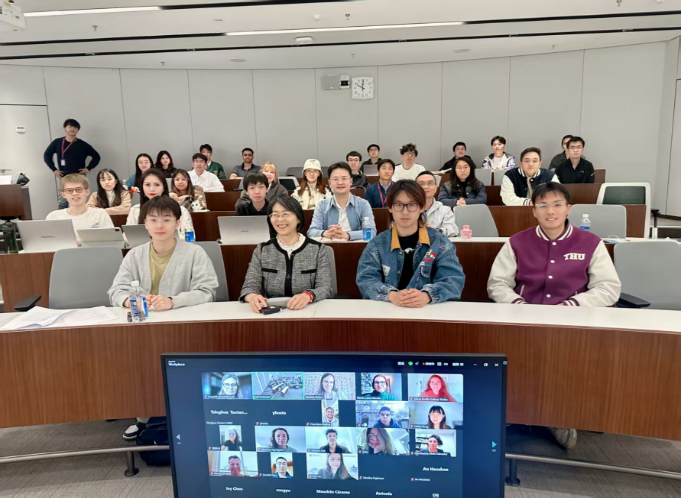
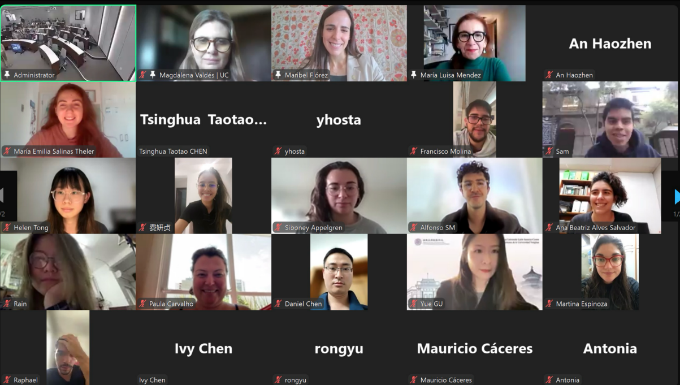
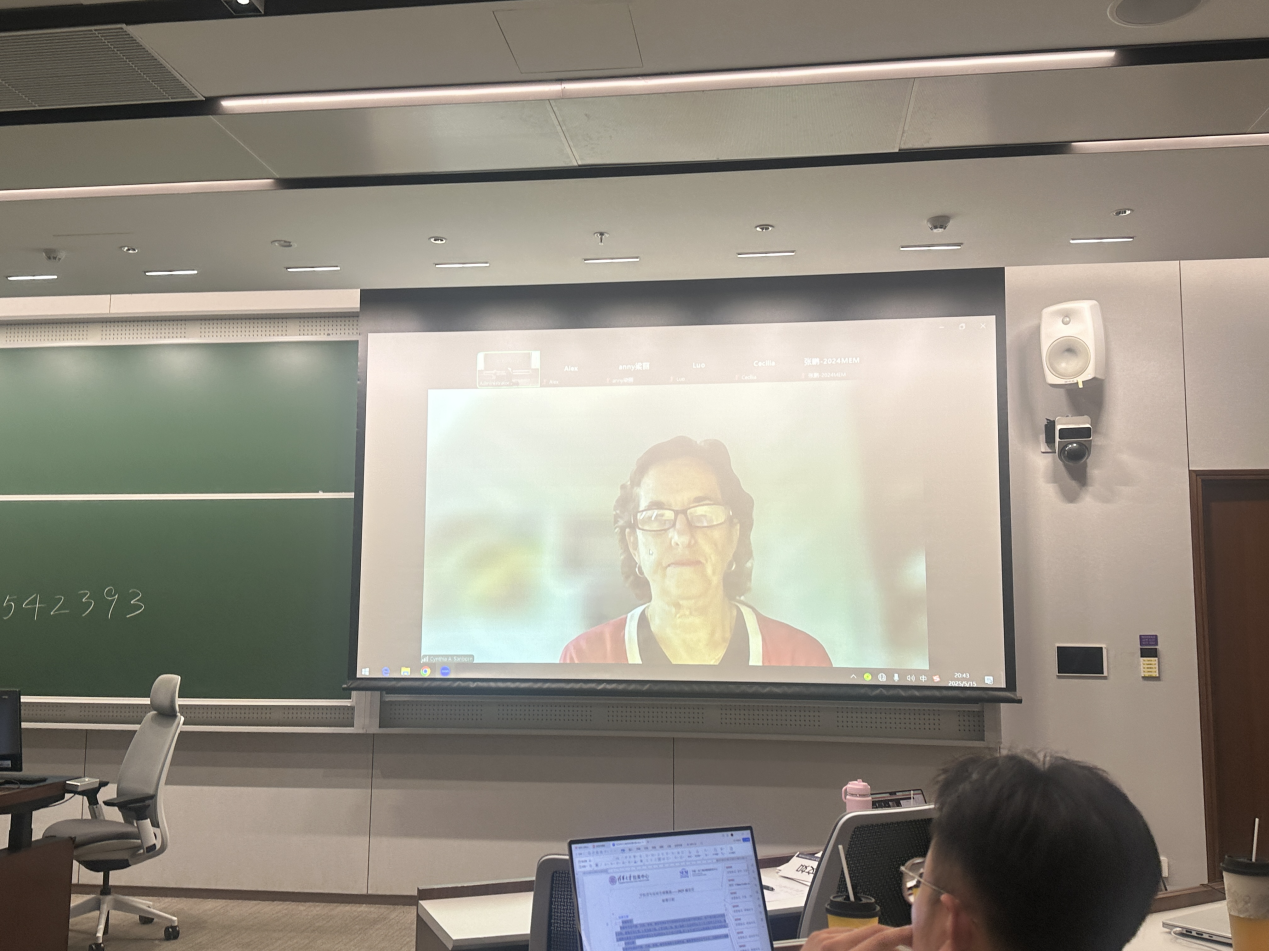
2025 Course Snippets
IV. Exclusive Previews for the Spring 2026 Session
For the spring 2026 session, we will strengthen teacher-student interactions in class and adopt more diverse course formats to facilitate close exchanges between students and Latin American experts and peers.
1. "Peak Dialogue": Latin American Ambassadors on Campus
Following the invitation of Fernando Reyes Matta, former Chilean Ambassador to China and Director of the Latin America-China Research Center at the Andrés Bello National University of Chile, for exchanges with students last academic year, the spring 2026 session plans to invite another 1 serving or former ambassador of a Latin American country to China as a special guest for in-class interactions. Students will have the opportunity to gain an in-depth understanding of the actual operation of China-Latin America relations, multilateral cooperation mechanisms and regional development issues from the first-hand perspective of diplomatic practitioners.
2. China-Latin America Youth "Hand in Hand" Salon
The course will invite Latin American students studying at Tsinghua University to participate in the themed salon of China-Latin America Youth "Hand in Hand". Through small-scale, face-to-face exchanges, it will promote in-depth dialogues between Chinese and Latin American youth on learning experiences, national perceptions, development issues and cooperation visions. Here, you are not only "learning about Latin America", but also making genuine friends with young Latin Americans.
3. Course × Poverty Alleviation Challenge Linkage: Exclusive Practical Opportunities in Latin America
As an important linked course of the China-Latin American Youth Responding to Global Challenges —— Poverty Alleviation Challenge, "Exploring Latin America and the Caribbean Countries" also serves as a key pre-departure course for study and practice in Latin American countries. Under the linkage mechanism between the course and the Poverty Alleviation Challenge, outstanding award-winning participants of the challenge will have the opportunity to receive full funding for study exchanges and practical research in Latin American countries, truly extending classroom learning to real-world scenarios in Latin America.
We sincerely invite undergraduate, master’s and doctoral students of Tsinghua University who are interested in this course to embark on the journey of "Exploring Latin America and the Caribbean Countries". As a Latin American proverb goes: "Better to grasp today than two tomorrows." Seize the opportunity and enroll now!
For any inquiries, please contact the teaching assistant via email: qiaozy23@mails.tsinghua.edu.cn