China-Latin America Youth Responding to Global Challenges: 2026 Poverty Alleviation Challenge
Chile Station Final: Opening Ceremony and Ice-breaking Session
About the “Poverty Alleviation Challenge”
Poverty alleviation is a universal challenge for developing countries and a shared concern for the entire world. In 2024, the Tsinghua University Latin America Center, the Research Center for China-Latin America Management Studies, School of Economics and Management, Tsinghua University, and the Center for Global Competence Development at Tsinghua University, in collaboration with Latin American university partners, successfully launched and implemented the “China-Latin America Youth Responding to Global Challenges — 2024 Poverty Alleviation Challenge” (hereinafter referred to as the “Poverty Alleviation Challenge”) in China (Tsinghua), Brazil, and Chile. This initiative sparked a wave of university-led poverty alleviation dialogues across China and Latin America. In November of the same year, during President Xi Jinping’s state visit to Brazil and his attendance at the 19th G20 Leaders’ Summit, Party Secretary Qiu Yong of Tsinghua University and the Rector of Universidade Federal do Rio de Janeiro (UFRJ) signed a cooperation agreement on the “China-Latin America Youth Responding to Global Challenges” program. This agreement was included in the official list of outcomes of President Xi’s visit to Brazil, becoming a landmark initiative for China-Latin America win-win development led by Tsinghua University. The 2026 Poverty Alleviation Challenge is co-hosted by founding organizers including Tsinghua University, Universidade Federal do Rio de Janeiro (UFRJ), Pontificia Universidad Católica de Chile (UC), Universidad de Chile, and Universidad del Pacífico (Peru). The program is jointly organized by the Embassy of China in Brazil, the Fundação Getulio Vargas (FGV) EAESP, Universidad de Santiago de Chile (USACH), and Pontificia Universidad Católica del Perú (PUCP).
The 2026 Poverty Alleviation Challenge has attracted more than 666 youth participants from 88 universities and organizations in countries such as China, Chile, Brazil, and Peru, forming a total of 119 teams. The challenge is structured into two stages—the “Preliminary Round” and the “Transnational Finals”—aiming to foster cross-cultural communication and collaboration while stimulating the innovative thinking and practical skills of global youth in the field of poverty alleviation. In June 2026, the preliminary round of the 2026 Poverty Alleviation Challenge was successfully conducted. With Tsinghua University serving as the primary offline venue, participants from Latin American countries joined through a hybrid online and offline format. After intense competition, 12 innovative teams stood out and advanced to the transnational finals. The Chile Final is being held in Santiago, Chile, from August 17 to 19, Chile Standard Time. During this final phase, participating teams will engage in a series of challenging activities, including ice-breaking sessions, field research, poverty alleviation seminars, mentoring, and the design and presentation of poverty alleviation solutions.
The 2026 Poverty Alleviation Challenge received support from the Chinese Embassy in Brazil, the Chinese Consulate-General in Rio de Janeiro, the Embassy of Brazil in China, the Chinese Embassy in Chile, the Embassy of Chile in China, the Chinese Embassy in Peru, and the Embassy of Peru in China. Leading Chinese and international companies and institutions, including Envision Group, CGE Group (Chile), Minera Las Bambas S.A., Zhongshan (Beijing) Cultural Industry Co., Ltd., DiDi, China Mobile International (Chile), Kuaishou International Business (KSIB), and the Luksic Foundation, also provided important support for the program.
01 Opening Ceremony
On the morning of August 17, 2026, Chile Standard Time, the Opening Ceremony of the Chile Final of the “China-Latin America Youth Responding to Global Challenges: 2026 Poverty Alleviation Challenge” was held at the Auditorium of Universidad de Chile. Distinguished guests in attendance included: Professor Chen Taotao, Professor at the School of Economics and Management of Tsinghua University, Director of the Tsinghua University Latin America Center, and Director of the Research Center for China-Latin America Management Studies, School of Economics and Management, Tsinghua University; Andrés Bórquez, Director of the Directorate of International Relations (DRI), Universidad de Chile; Maribel Florez, Director of the Global Learning Office, Office of the Vice President for International Affairs, Pontificia Universidad Católica de Chile (UC); Marcela Vera, Director of Asian and Pacific Affairs, Faculty of Administration and Economics, Universidad de Santiago de Chile (USACH). The event was moderated by Pablo Humeres, Global Learning Manager at the Directorate of International Relations (DRI), Universidad de Chile.
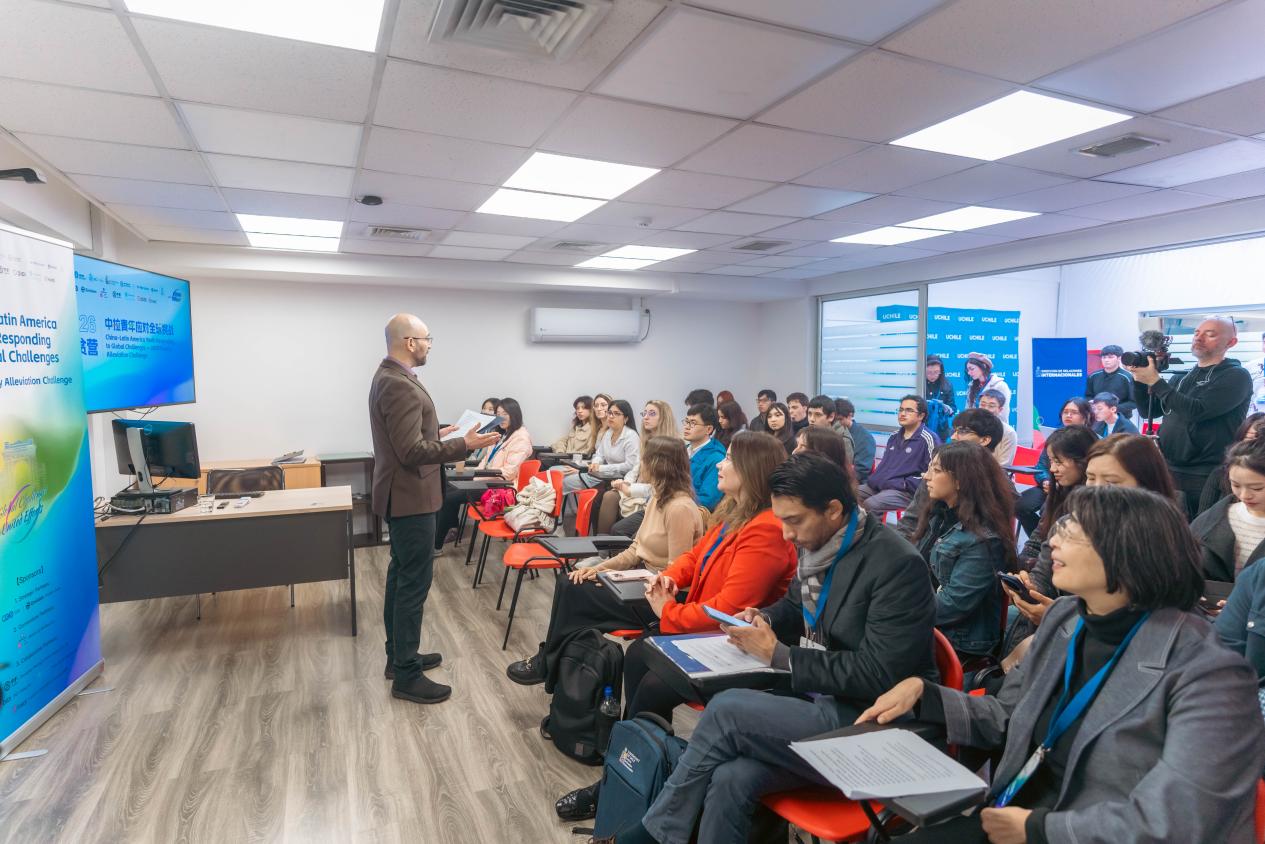
Figure: Opening Ceremony Scene
In her opening remarks, Professor Chen Taotao, Professor at the School of Economics and Management of Tsinghua University, Director of the Tsinghua University Latin America Center, and Director of the Research Center for China-Latin America Management Studies, School of Economics and Management, Tsinghua University introduced the basic framework of the competition and the status of the finalist teams. She extended special gratitude to partner universities and enterprises—including Universidad de Chile, Pontificia Universidad Católica de Chile, Universidad de Santiago de Chile, and the CGE Group (Chile)—for their robust support in facilitating the event. She emphasized that this initiative is not merely a competition, but a collective action to address global challenges.
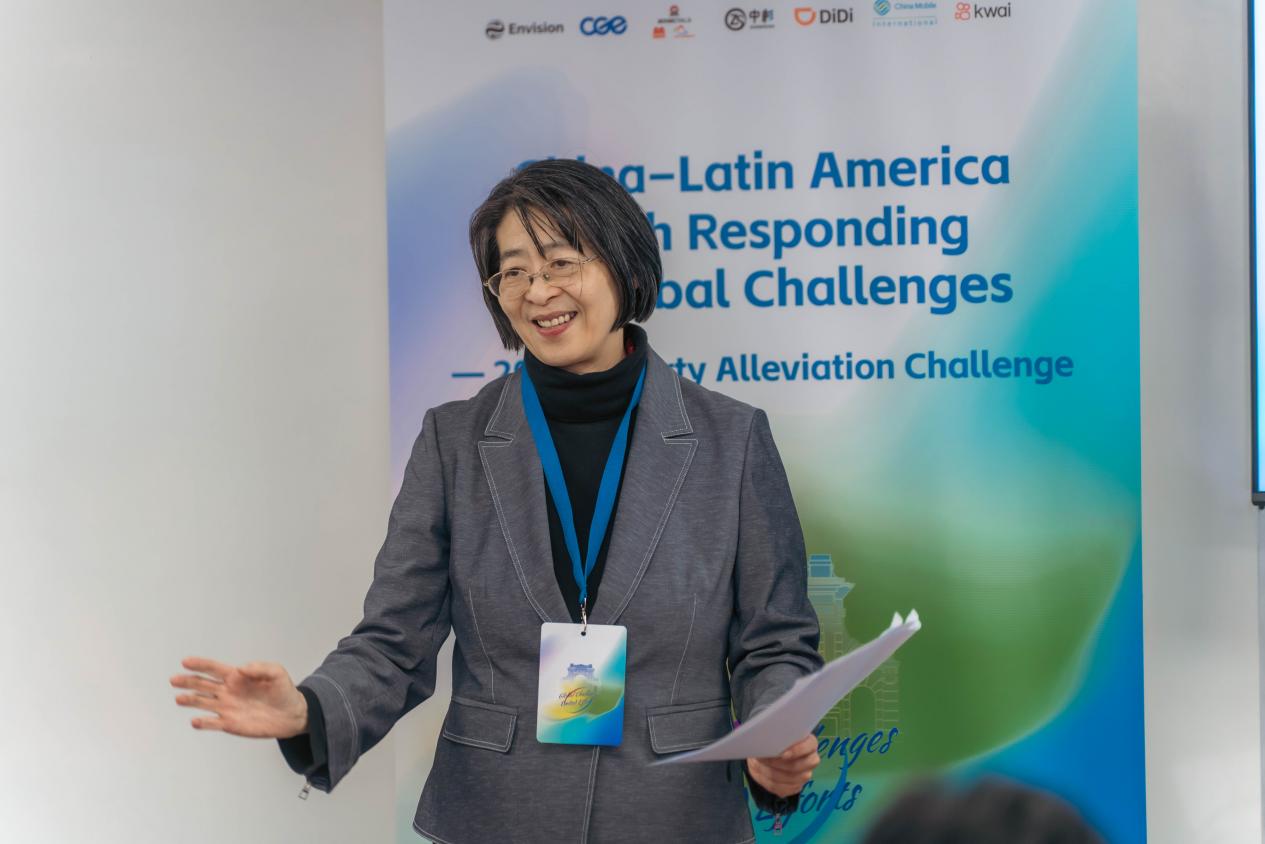
Figure: Professor Chen Taotao delivering her speech
Andrés Bórquez, Director of the Directorate of International Relations (DRI) at Universidad de Chile, extended a warm welcome and sincere congratulations to all guests in his speech. He stated that this event provides a valuable opportunity to deepen exchanges between China, Chile, Peru, and Brazil, particularly among the youth.
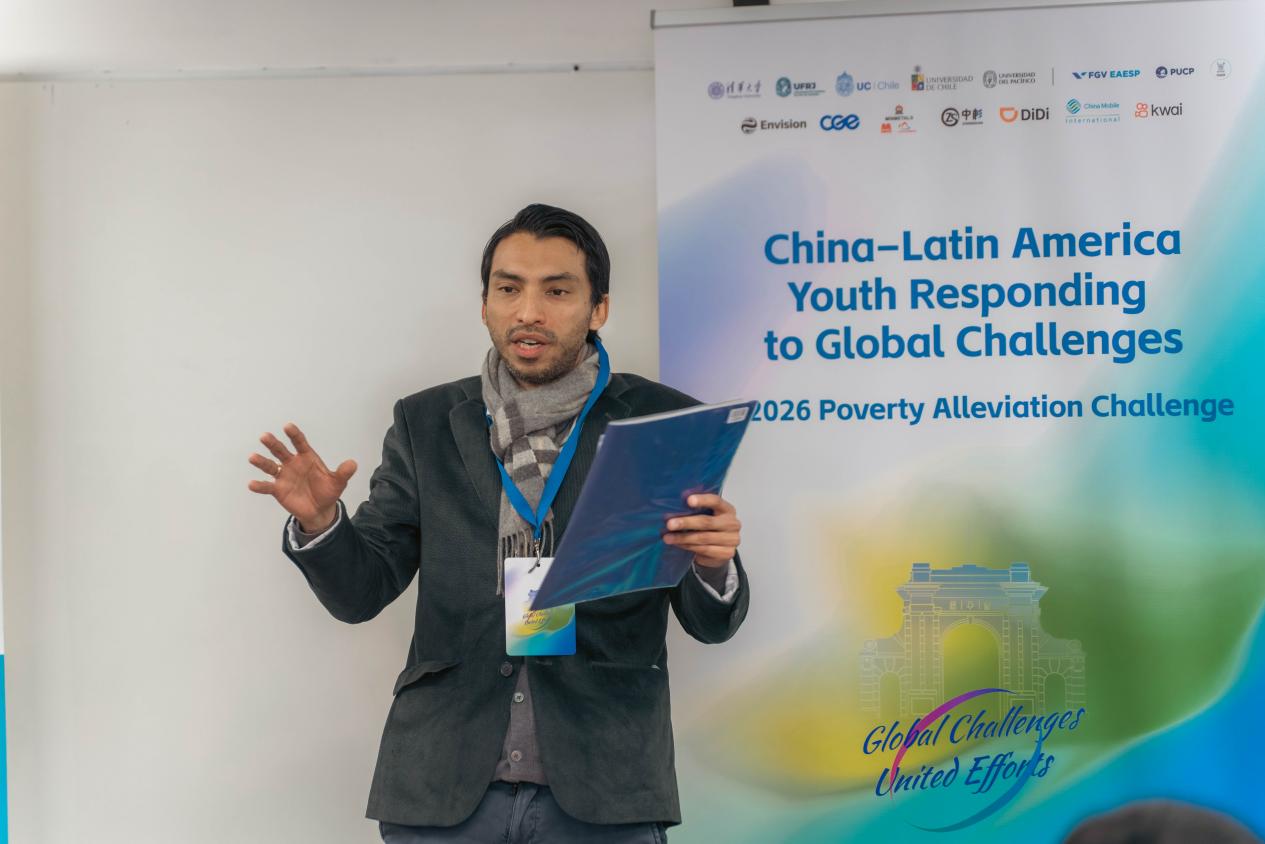
Figure: Andrés Bórquez delivering his speech
Maribel Florez, Director of the Global Learning Office at the Office of the Vice President for International Affairs, Pontificia Universidad Católica de Chile (UC), remarked that the opportunity for youth from different countries to engage in face-to-face communication is extremely precious, and such exchanges can bring about real change. She noted that several collaborative projects incubated by the competition have already been implemented and continue to develop, and most projects in the current competition also demonstrate practical prospects and potential for transformation.
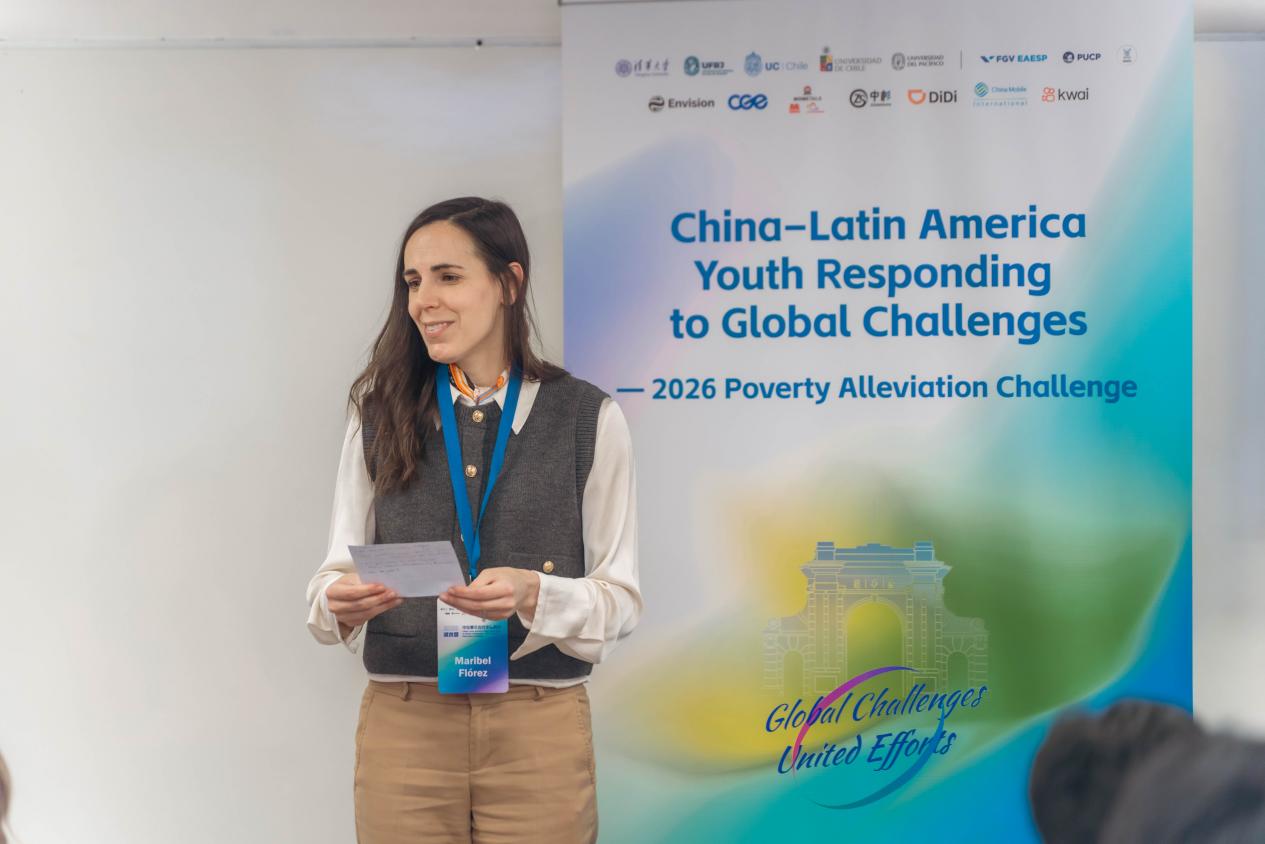
Figure: Maribel Florez delivering her speech
Marcela Vera, Director of Asian and Pacific Affairs at the Faculty of Administration and Economics, Universidad de Santiago de Chile (USACH), pointed out that the abundant natural resources in the Latin American region have yet to be fully and rationally developed and utilized locally. She stated that this competition provides an important opportunity for Global South countries to strengthen cooperation and development, helping all parties jointly address the issues of poverty and inequality in Latin America.
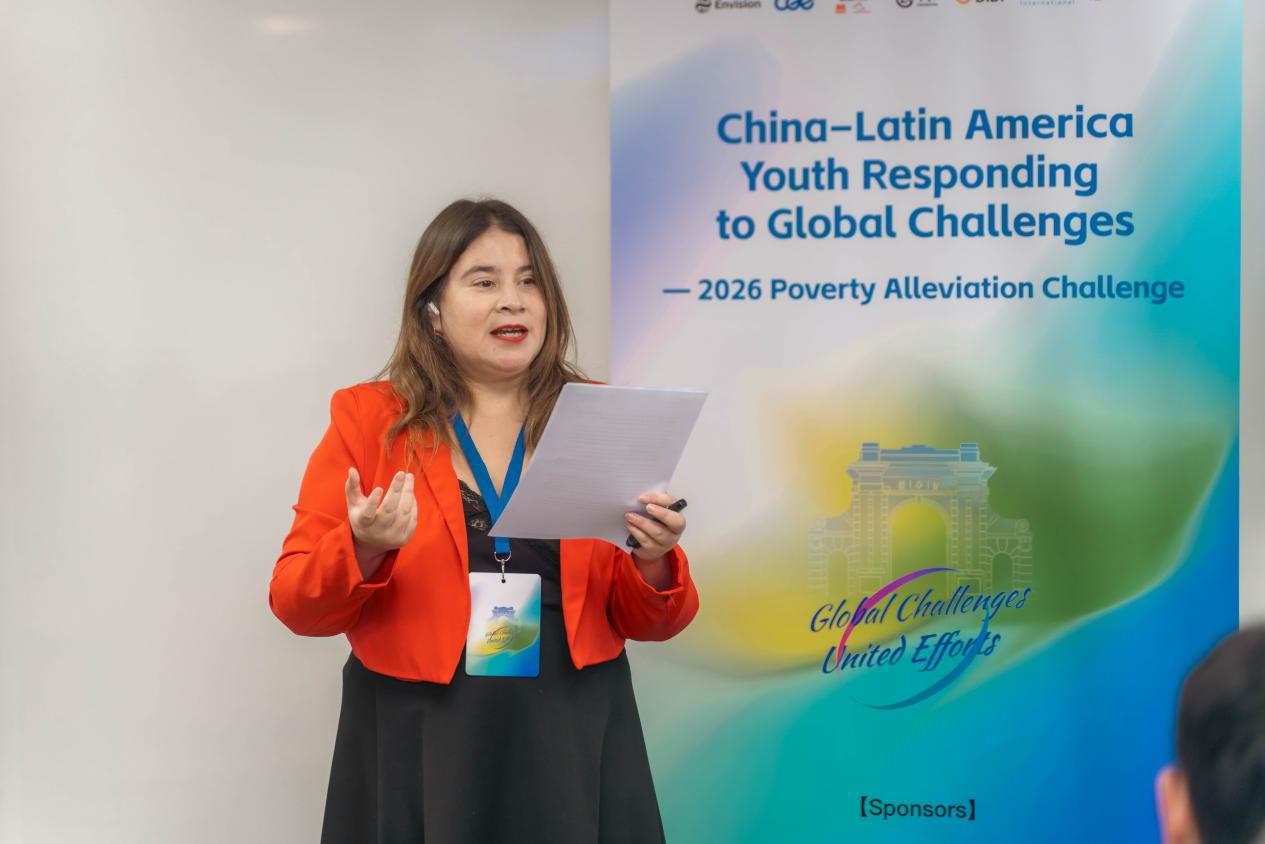
Figure: Marcela Vera delivering her speech
02 Ice-breaking Session
During the Ice-breaking session, contestants introduced their personal backgrounds, team compositions, motivations for participating, and their understanding and reflections on the phenomenon of poverty. In the subsequent project presentation and feedback session, each team presented a series of innovative poverty alleviation solutions from diverse, interdisciplinary, and cross-cultural perspectives, showcasing the unique poverty reduction ideas and collective wisdom of different professional fields. Participants approached the topic from various dimensions, such as industrial development, educational enhancement, and the application of digital technology, engaging in in-depth exchange and mutual learning with peers from different countries and disciplines. Together, they explored feasible paths and innovative solutions for poverty alleviation, fully demonstrating the unique value of cross-field cooperation in addressing global challenges.
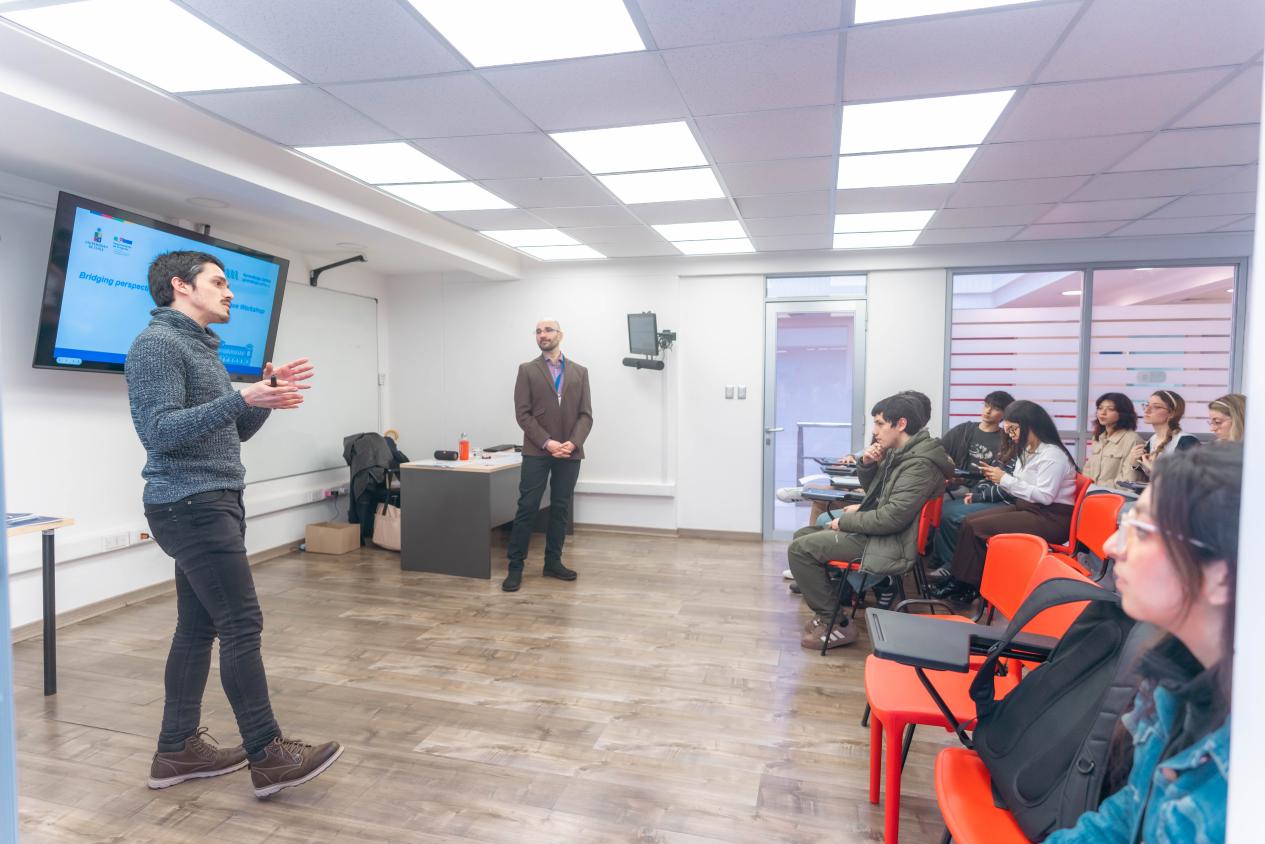
Figure: Ice-breaking Session
In the inter-group exchange session, participants engaged in active and enthusiastic discussions, exploring the differences between “dialogue” and “debate”. They agreed that respect, openness, and listening are key factors in promoting genuine dialogue. Subsequently, the group further discussed how to establish mutual trust with stakeholders during project implementation, providing a useful reference for the follow-up execution of the projects.
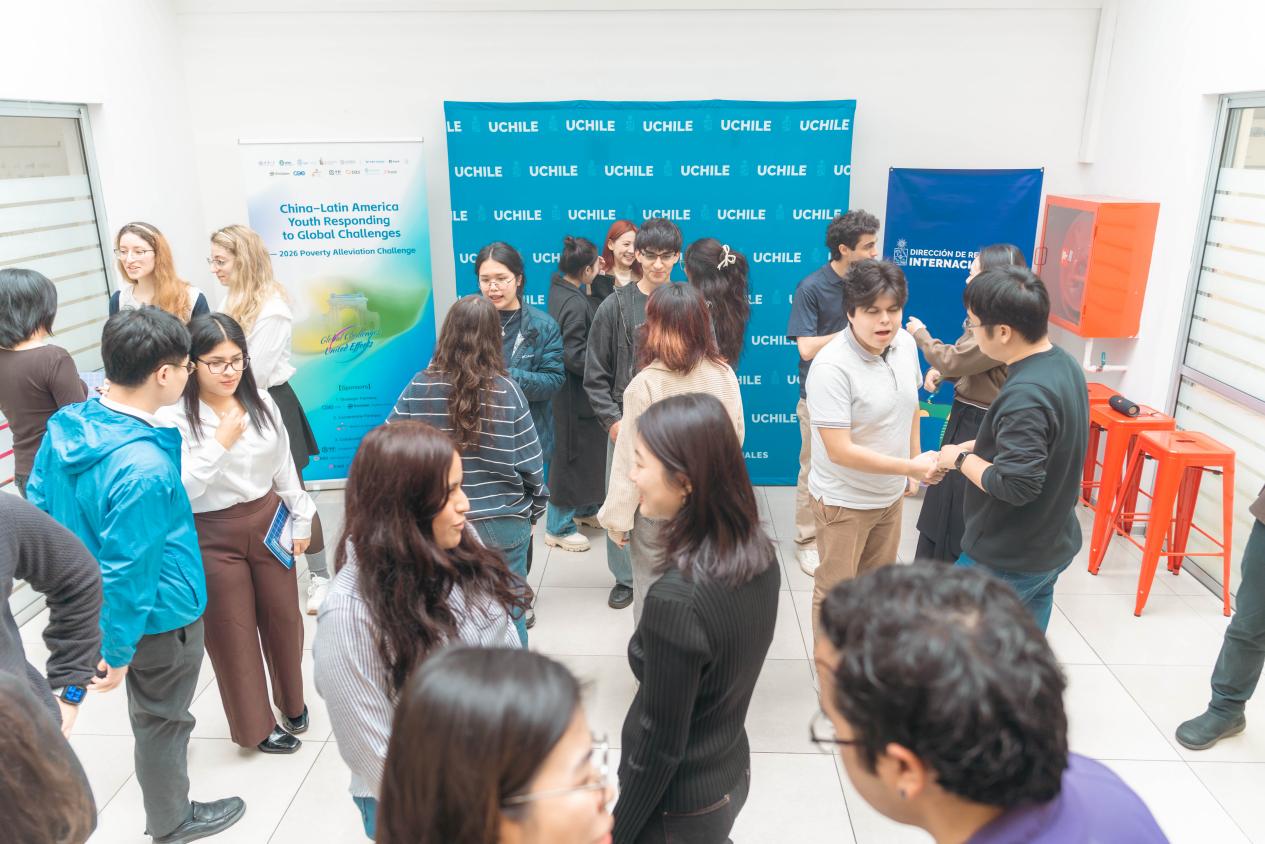
Figure: Inter-group Exchange Session
The ice-breaking session of the 2026 Poverty Alleviation Challenge Chile Station Final Round concluded amidst the active and enthusiastic exchanges of the student participants. Through this activity, participants deepened their understanding of the field of poverty alleviation. By means of cross-cultural and interdisciplinary mutual learning, they broadened the international horizons and innovative dimensions of their project designs, incubating more practical poverty reduction solutions through the collision of ideas.
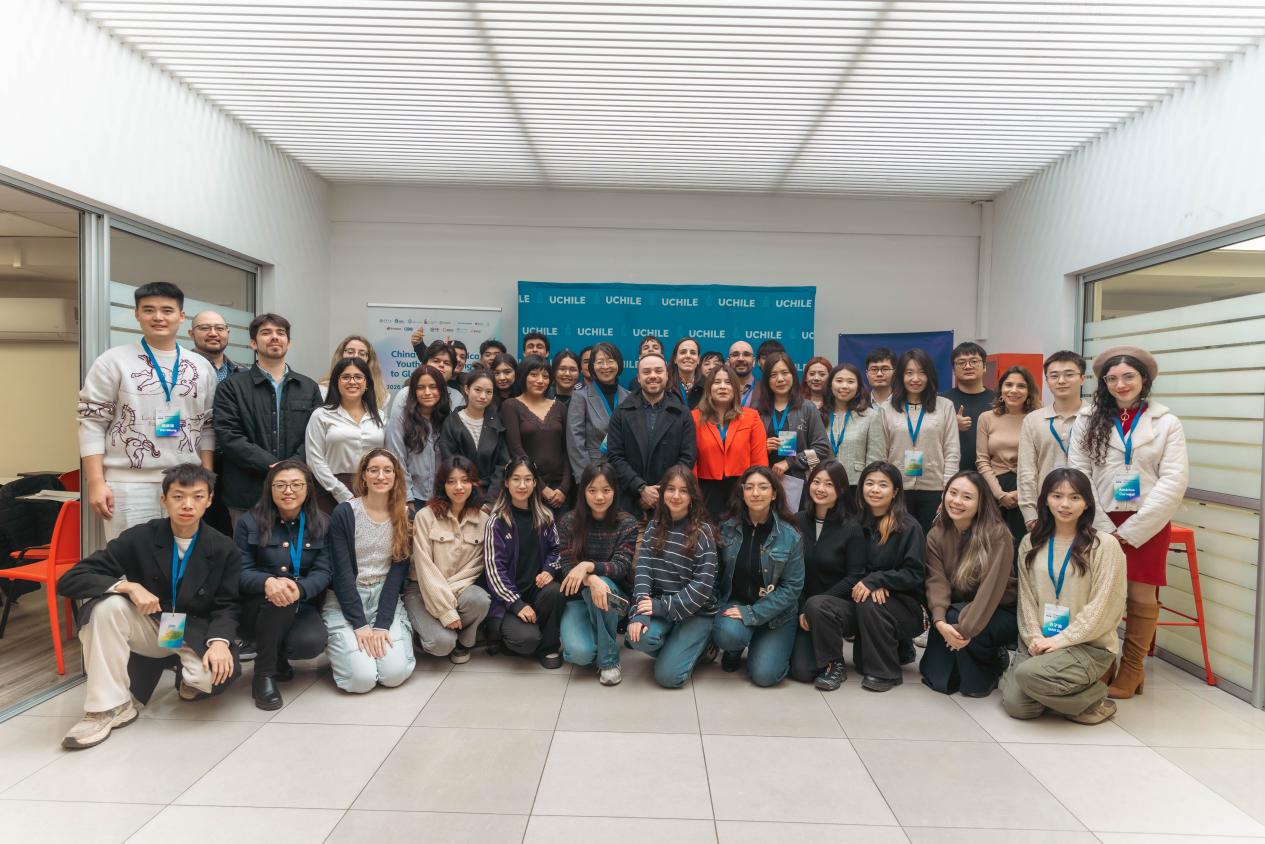
Figure: Group Photo of the Opening Ceremony and Ice-breaking Session