About the 2025 Poverty Alleviation Challenge
Co-hosted by Tsinghua University, the Federal University of Rio de Janeiro in Brazil, the Pontifical Catholic University of Chile, the University of Chile, the Universidad del Pacífico in Peru and Minera Las Bambas S.A., the China-Latin American Youth Responding to Global Challenges — 2025 Poverty Alleviation Challenge attracted the participation of more than 310 teachers and students from 27 universities and enterprises across four countries: China, Brazil, Chile and Peru. The Challenge is divided into two stages: the Preliminary Competition and the Transnational Final, aiming to promote cross-cultural communication and collaboration, and inspire the innovative thinking and practical capabilities of global youth in the field of poverty alleviation.
On June 7, 2025, the Preliminary Competition of the 2025 Poverty Alleviation Challenge was successfully held, with Tsinghua University as the offline main venue and participants from Latin American countries competing simultaneously in a hybrid online and offline format. After a fierce competition, 12 innovative teams stood out and advanced to the Transnational Final. In August 2025, the Transnational Final of the 2025 Poverty Alleviation Challenge was held in Brazil and Chile successively.
In January 2026, 32 Latin American university students who advanced to the final came to China for cultural immersion activities, including face-to-face exchanges with Chinese teachers and students, visits to China's poverty alleviation bases and institutions, and Chinese cultural tours.
The 2025 Poverty Alleviation Challenge received support from the Chinese Embassy in Brazil, the Consulate-General of China in Rio de Janeiro, the Brazilian Embassy in China, the Chinese Embassy in Chile, the Chilean Embassy in China and the Chinese Embassy in Peru. We sincerely thank renowned domestic and foreign enterprises for their strong support for the event, including Envision Group, CGE, Minera Las Bambas S.A., China Mobile International (Chile), Kuaishou International Business (KSIB) and Banco BOCOM BBM S.A..
On January 20, 2026, more than 60 teacher and student representatives from Brazil, Chile and Peru visited the Research Institute for Accessibility Development of Tsinghua University for an exchange activity themed Accessibility and Poverty Alleviation: Toward an Inclusive and Shared Future. Through theme introductions, laboratory visits and interactive exchanges, they gained an in-depth understanding of China's concepts and practices in accessibility development and technology-enabled assistance for persons with disabilities, as well as a series of innovative achievements of Tsinghua University.
Distinguished guests present at the event included: Chen Taotao, Professor of the Finance Department at the School of Economics and Management, Director of the Center for Latin American Studies, and Director of the China-Latin America Management Research Center at the School of Economics and Management, Tsinghua University; Shao Lei, Dean of the Research Institute for Accessibility Development of Tsinghua University; Ren Tianling, Vice Dean of the School of Information Science and Technology and Leader of the Cross-Innovation Group for Transsensory Perception and Human-Machine Fusion at the National Research Center for Information Science and Technology, Tsinghua University; Ji Linhong, Director of the Intelligent and Biomachine Laboratory at the Department of Mechanical Engineering, Tsinghua University; Jiao Yang, Research Associate at the Future Laboratory, Tsinghua University; Sun Zhiyuan, Teacher at the Center for Global Competence Development of Tsinghua University Students; Paula Silva de Carvalho, Research Associate of the National Institute of Science and Technology for Public Policy and Development Strategies (INCT-PPED) at the Federal University of Rio de Janeiro; Maribel Florez, Director of Global Learning at the Office of the Vice President for International Affairs of the Pontifical Catholic University of Chile; Osvaldo Guzmán Núñez, Deputy Director of International Relations at the University of Chile; Nifta Lau Ibarias, Research Fellow of the China and Asia-Pacific Research Center at the Universidad del Pacífico in Peru; and Hua Zhen, Translation Expert at Minera Las Bambas S.A..
In the speech session, Professor Chen Taotao extended a warm welcome to the arrival of the Latin American teachers and students, and expressed her expectation to promote the interaction and cooperation between China and Latin America in the fields of inclusive development and social innovation through academic and practical exchanges in the accessibility field.
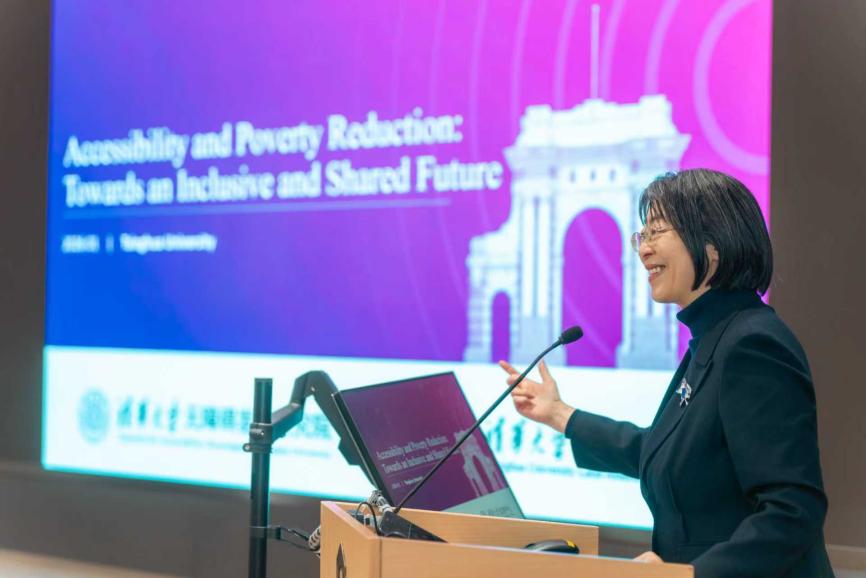
Professor Chen Taotao delivering a speech
Visiting the Research Institute for Accessibility Development of Tsinghua University
Dean Shao Lei introduced the nearly 10-year development history and distinctive interdisciplinary innovation characteristics of the Research Institute for Accessibility Development of Tsinghua University. Its core missions include acting as a national think tank to promote the implementation of laws related to accessibility environment construction, advocating inclusive design, developing welfare technologies and promoting social participation. He also demonstrated the important role of the accessibility concept in promoting social equity and narrowing development gaps.
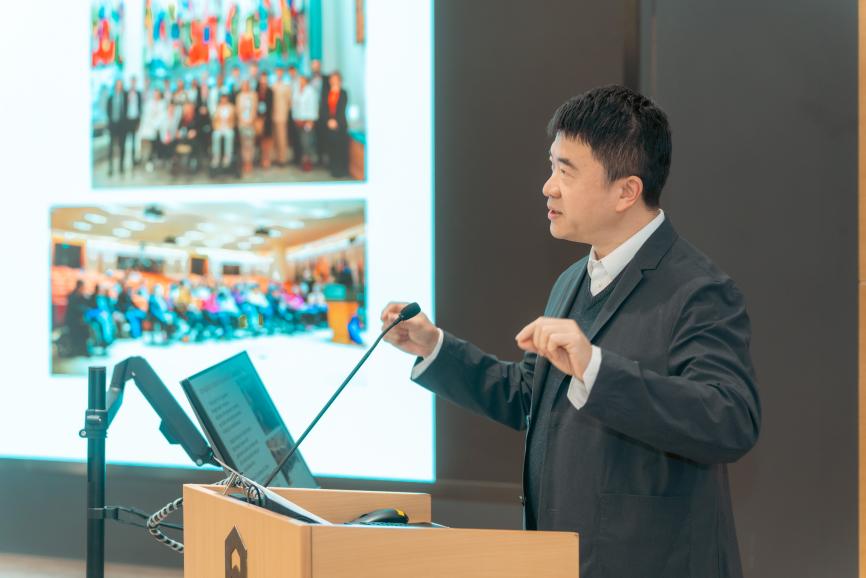
Dean Shao Lei delivering a speech
Subsequently, the participants were divided into groups by their countries – Brazil, Chile and Peru – and visited relevant laboratories for in-depth tours, gaining a close understanding of the R&D progress, application scenarios of accessibility technologies and their practical effects in poverty alleviation and social integration.
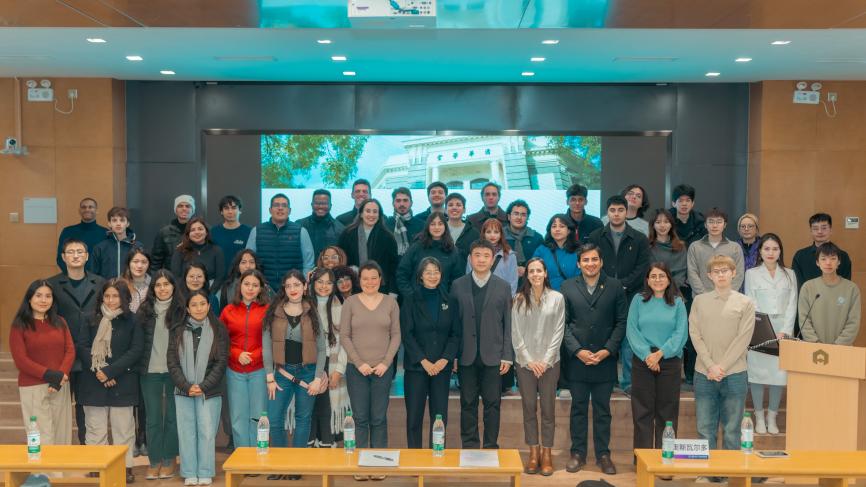
Group photo of the participants
Visiting Three Key Laboratories: Technology Empowering Inclusive Development
In the laboratory visit session, teachers and students from Brazil, Chile and Peru visited three representative scientific research laboratories, and got a close look at Tsinghua University's cutting-edge achievements in the fields of accessibility and health technology.
The Brazilian team visited the Future Laboratory of Tsinghua University. Under the introduction of Teacher Jiao Yang, Research Associate at the Future Laboratory, they focused on understanding the development status and application prospects of accessible innovative technologies such as digital braille display, and conducted exchanges on how technological means can promote educational equity and information accessibility for the visually impaired.
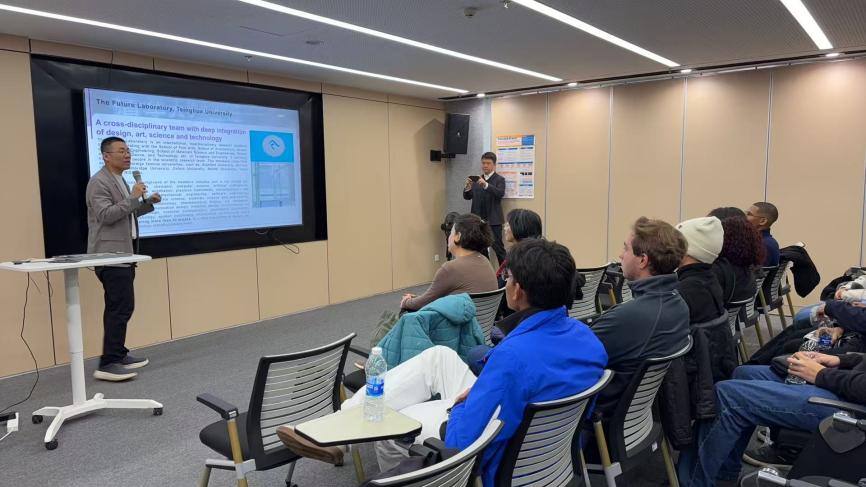
The Brazilian team on the visit
The Chilean team visited the laboratory of Professor Ren Tianling's research group – Vice Dean of the School of Information Science and Technology and Leader of the Cross-Innovation Group for Transsensory Perception and Human-Machine Fusion. They systematically learned about the cutting-edge research results centered on transsensory perception technology and intelligent sensing, focused on discussing the practical application of relevant technologies in health management as well as medical and rehabilitation scenarios, and deeply perceived the potential value of human-machine fusion technology in improving public health and social inclusion.
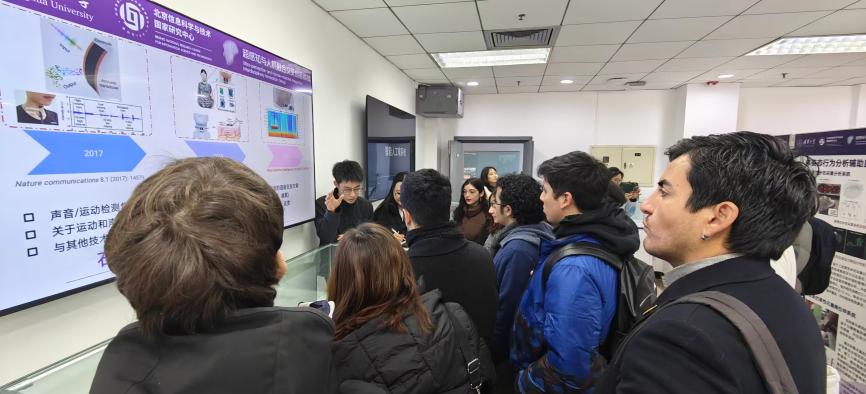
The Chilean team on the visit
The Peruvian team walked into the Intelligent and Biomachine Laboratory of Professor Ji Linhong's research group at the Department of Mechanical Engineering of Tsinghua University. They conducted visits and exchanges on exoskeleton equipment and rehabilitation engineering technology, gained an in-depth understanding of the application practice of intelligent mechanical systems in motor rehabilitation and functional reconstruction for persons with disabilities, and personally felt the positive role of technology-enabled assistance for persons with disabilities in improving quality of life and promoting social integration.
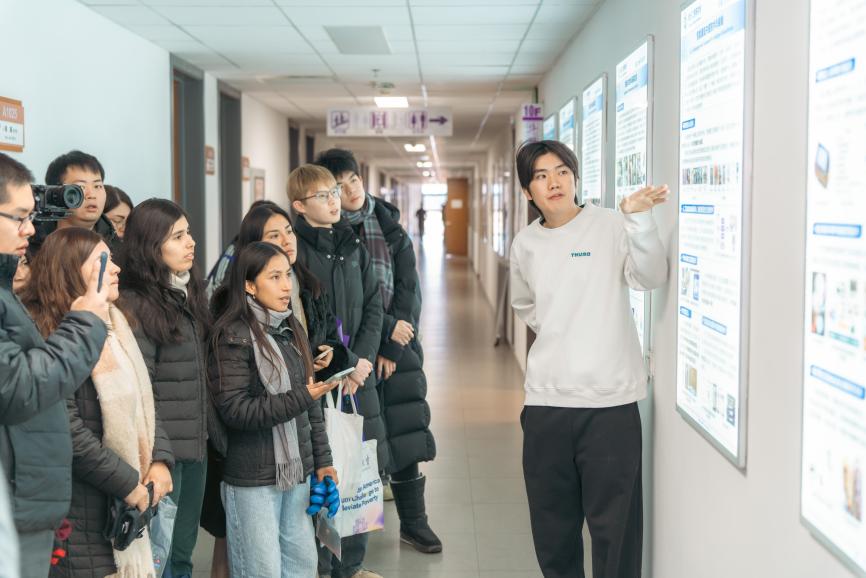
The Peruvian team on the visit
Through on-site explanations and immersive experiences, Latin American teachers and students gained a more intuitive and in-depth understanding of China's practices in technology-enabled assistance for persons with disabilities, accessibility design and related industrialization paths.
Mutual Learning Through Exchanges
In the interactive exchange session, the participating teachers and students raised questions and conducted discussions on issues such as the application of accessibility technologies, social inclusion and public policy practices, as well as the possible paths for deepening cooperation between China and Latin America in relevant fields, further deepening their understanding of China's experience and the China-Latin America comparative perspective.
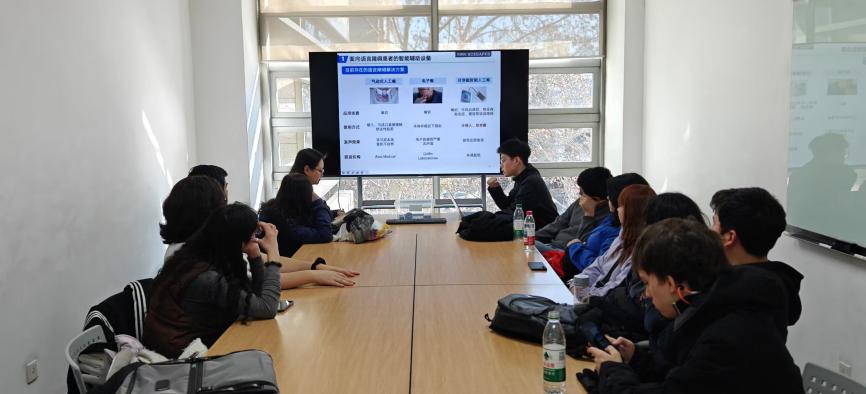
Q&A and discussion session
This event was jointly organized by the Center for Latin American Studies and the Research Institute for Accessibility Development of Tsinghua University. By deepening conceptual mutual learning and academic exchanges, it actively promoted the experience sharing in the fields of accessibility development and technology-enabled assistance for persons with disabilities, as well as exploratory cooperation in the field of poverty alleviation.