About the 2025 Poverty Alleviation Challenge
Co-hosted by Tsinghua University, the Federal University of Rio de Janeiro in Brazil, the Pontifical Catholic University of Chile, the University of Chile, the Universidad del Pacífico in Peru and Minera Las Bambas S.A., the event attracted over 310 teachers and students from 27 universities and enterprises across four countries: China, Brazil, Chile and Peru. The China-Latin American Youth Responding to Global Challenges — 2025 Poverty Alleviation Challenge was divided into two stages: the Preliminary Competition and the Transnational Final, aiming to promote cross-cultural communication and collaboration, and inspire the innovative thinking and practical capabilities of global youth in the field of poverty alleviation.
On June 7, 2025, the Preliminary Competition of the 2025 Poverty Alleviation Challenge was successfully held, with Tsinghua University as the offline main venue and participants from Latin American countries competing simultaneously in a hybrid online and offline format. After a fierce competition, 12 innovative teams stood out and advanced to the Transnational Final. In August 2025, the Transnational Final of the 2025 Poverty Alleviation Challenge was held in Brazil and Chile successively.
In January 2026, 32 Latin American university students who advanced to the final came to China for cultural immersion activities, including face-to-face exchanges with Chinese teachers and students, visits to China's poverty alleviation bases and institutions, and Chinese cultural tours.
The 2025 Poverty Alleviation Challenge received support from the Chinese Embassy in Brazil, the Consulate-General of China in Rio de Janeiro, the Brazilian Embassy in China, the Chinese Embassy in Chile, the Chilean Embassy in China and the Chinese Embassy in Peru. We sincerely thank renowned domestic and foreign enterprises for their strong support for the event, including Envision Group, CGE, Minera Las Bambas S.A., China Mobile International (Chile), Kuaishou International Business (KSIB) and Banco BOCOM BBM S.A..
On January 24, 2026, the China-Latin America joint practice tour in Gaochun drew to a close. Teachers and students from Tsinghua University, the Pontifical Catholic University of Chile and the University of Chile visited rural revitalization practice sites and characteristic cultural tourism scenes in depth during the three-day joint study tour, gaining a systematic understanding of Gaochun's exploratory achievements in industrial development, ecological protection and cultural exchanges. Through on-site visits and continuous exchanges, Chinese and Chilean youth enhanced mutual understanding and friendship in the process of learning and living together. The itinerary on the closing day was not only a continuation of the research practice, but also a concentrated presentation of the phased achievements of this China-Latin America youth exchange.
Wandering and Appreciating, Savoring the Charms of Gaochun Slowly
On the morning of the 24th, the study tour group went to the Gaochun International Slow City, bringing the joint practice to a perfect end with an in-depth tour and capturing the beauty of the Gaochun countryside in the slow time.
Stepping into the Yaxi Visitor Center of Gaochun International Slow City, an in-depth tour to understand the Slow City officially began. The group stopped in front of the exhibition area and learned in detail about the development history, overall planning and cultural tourism ecological characteristics of the Slow City. From winning the honor of "China's first International Slow City" to the layout of the ecological sightseeing corridor, and then to the development model of the deep integration of ecological agriculture and leisure tourism, each introduction clearly outlined the unique core of the Slow City. Chinese and Chilean youth not only sorted out the development context of Gaochun from "China's first International Slow City" to all-for-one tourism, but also found the best annotation for the subsequent on-site experience through the vivid pictures and texts in front of them.
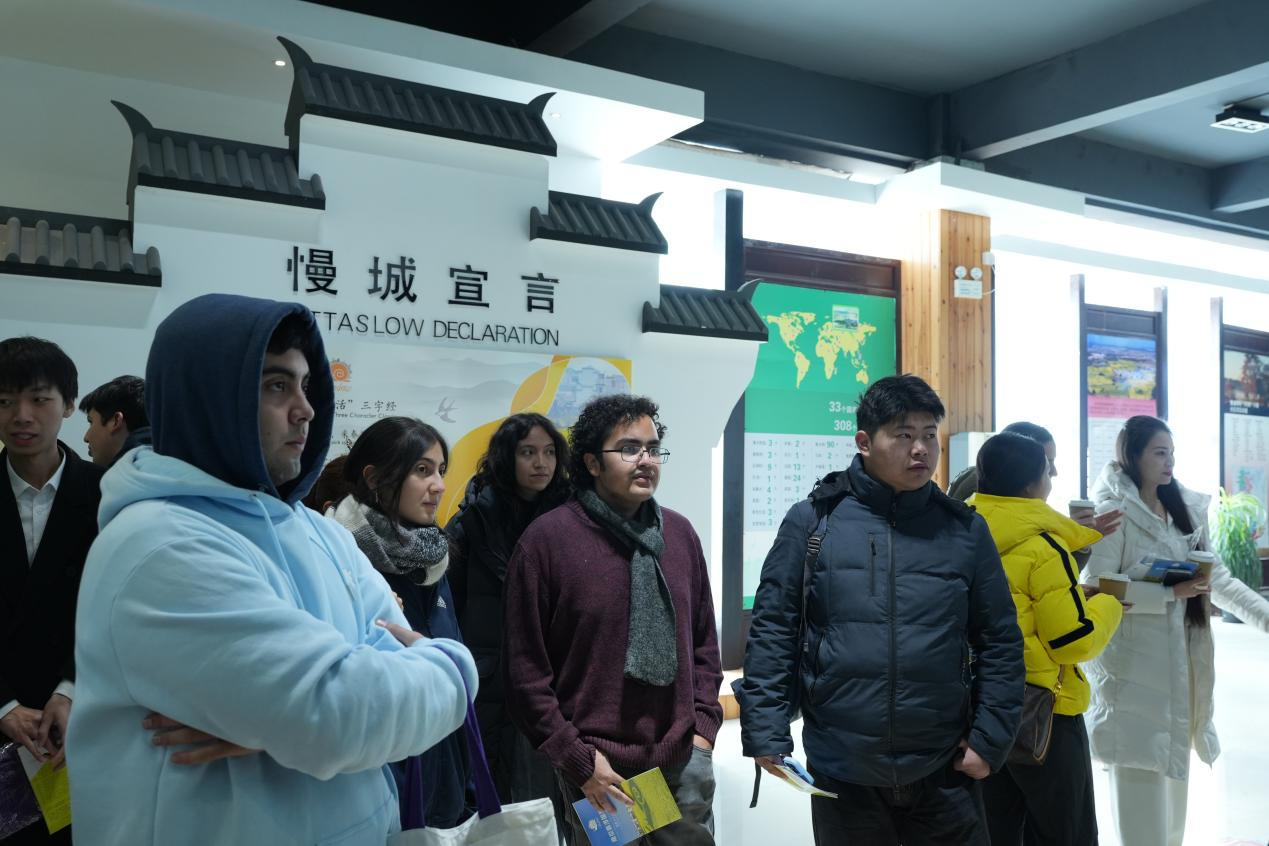
Chinese and Chilean youth listening attentively to the explanation
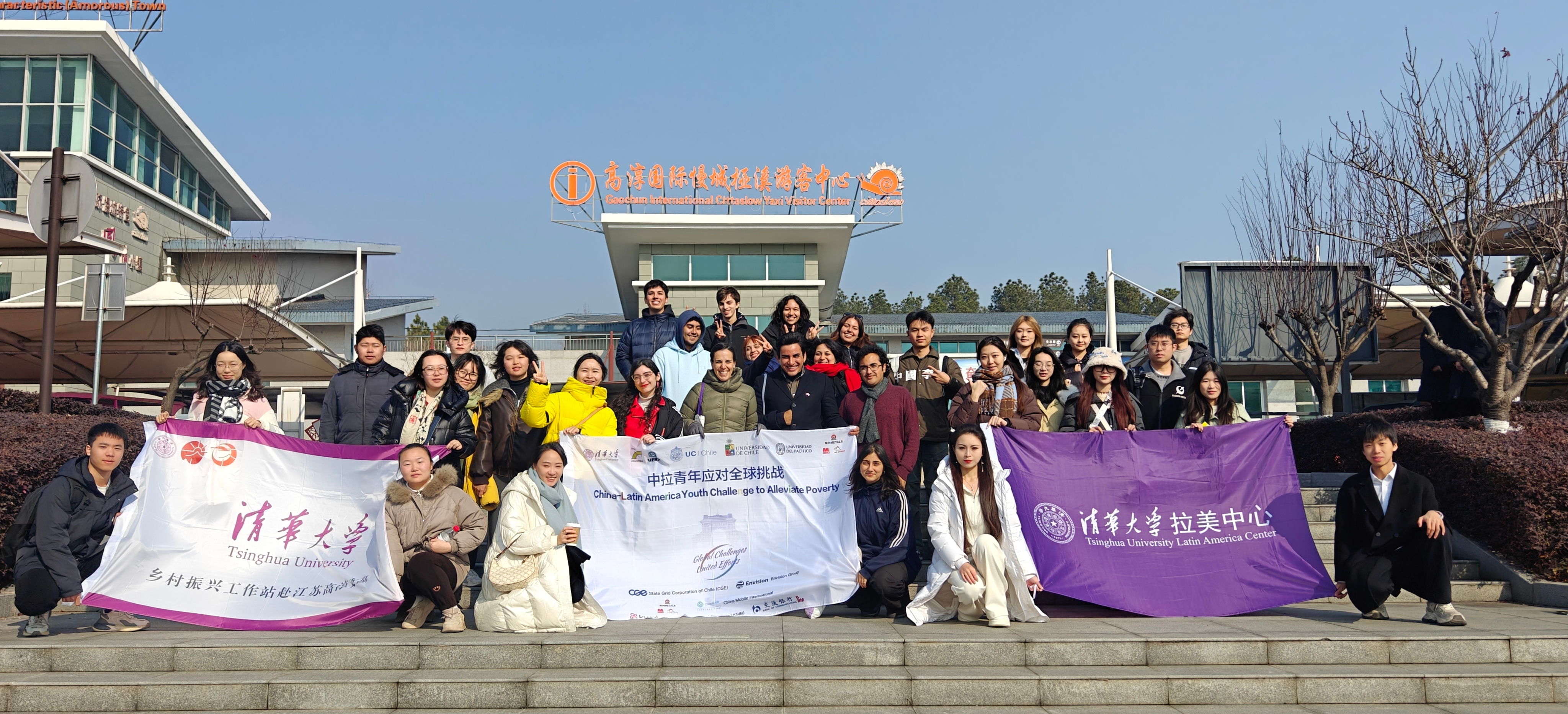
Group photo of the study tour team
Leaving the visitor center, the study tour group took a sightseeing bus and started a roaming tour of the Slow City. Along the way, the original ecological natural landscapes and rural pastoral scenery complemented each other, and the lush vegetation, lakes and mountains along the route presented a unique ecological style. The youth looked far and wide on the bus, experiencing on the spot the landscape characteristics and life rhythm of the Slow City under the combination of ecological protection and rural construction, and intuitively felt the rural revitalization model of Gaochun.
Subsequently, the study tour group arrived at the Zhensong Yunju Homestay, encountering the elegance of Chinese living in the mountains and fields. Stepping into the homestay, the wooden walls and floors, together with the neo-Chinese style furniture, set off each other in the warm light. Sunlight cast scattered shadows on the floor through the doors and windows, fully reflecting the leisurely artistic conception of "living against the pines, sleeping with the clouds". The group visited the guest rooms and public spaces on the spot, focused on investigating the homestay's "ecology + cultural tourism" operation model, and gained an in-depth understanding of how it leverages the ecological advantages of the Slow City to create a high-end rural living experience.
In front of the antique gate, the red lanterns and Chinese couplets hung up created a strong Chinese charm. Chilean teachers and students took a group photo here with their national flag, freezing the collision between the heaviness of Chinese architecture and the vitality of cross-culture into a unique memory. This research not only allowed the youth to experience the practical results of the integration of rural culture and tourism up close, but also gave them an in-depth understanding of the exploration path of Gaochun's homestays in quality upgrading and rural revitalization.
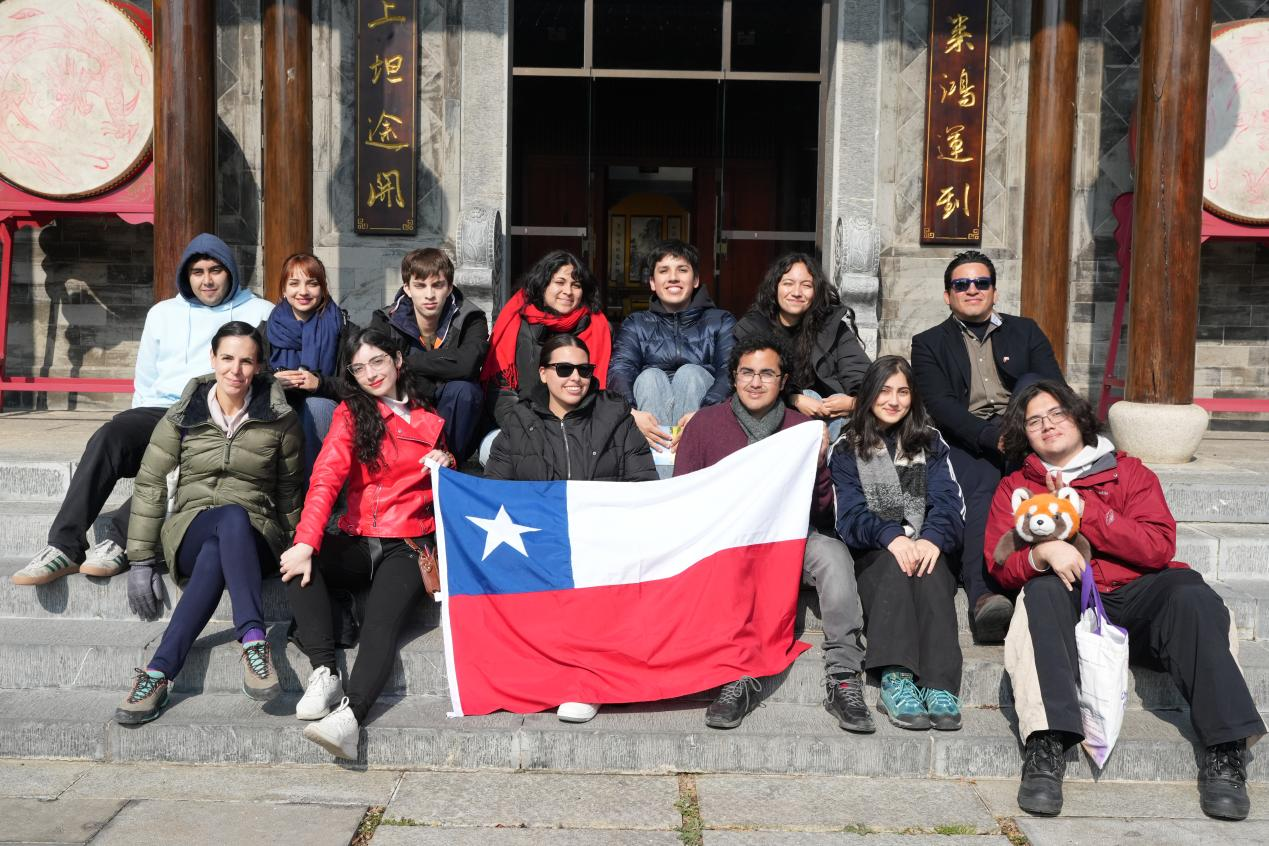
Chilean teachers and students taking a group photo at Dafudi
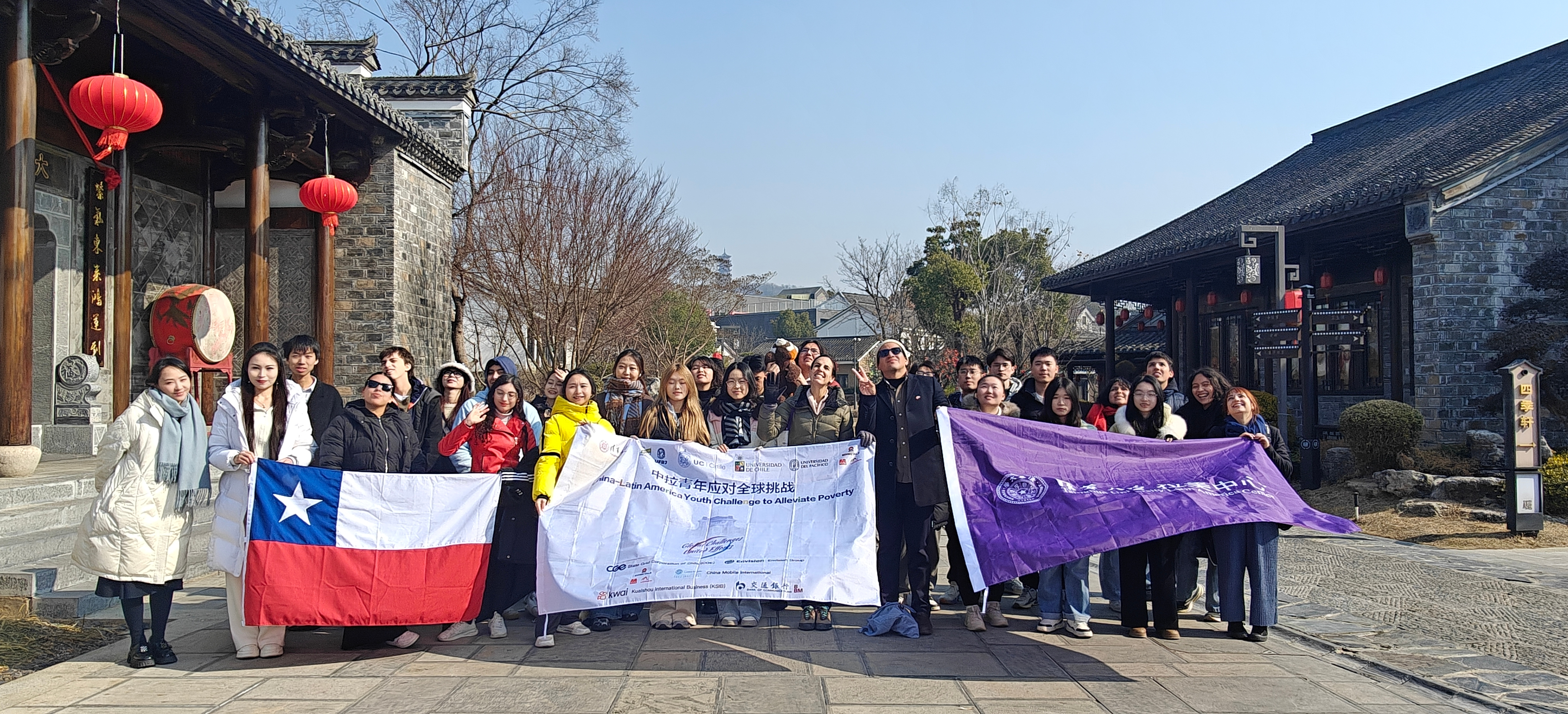
Group photo of the study tour team
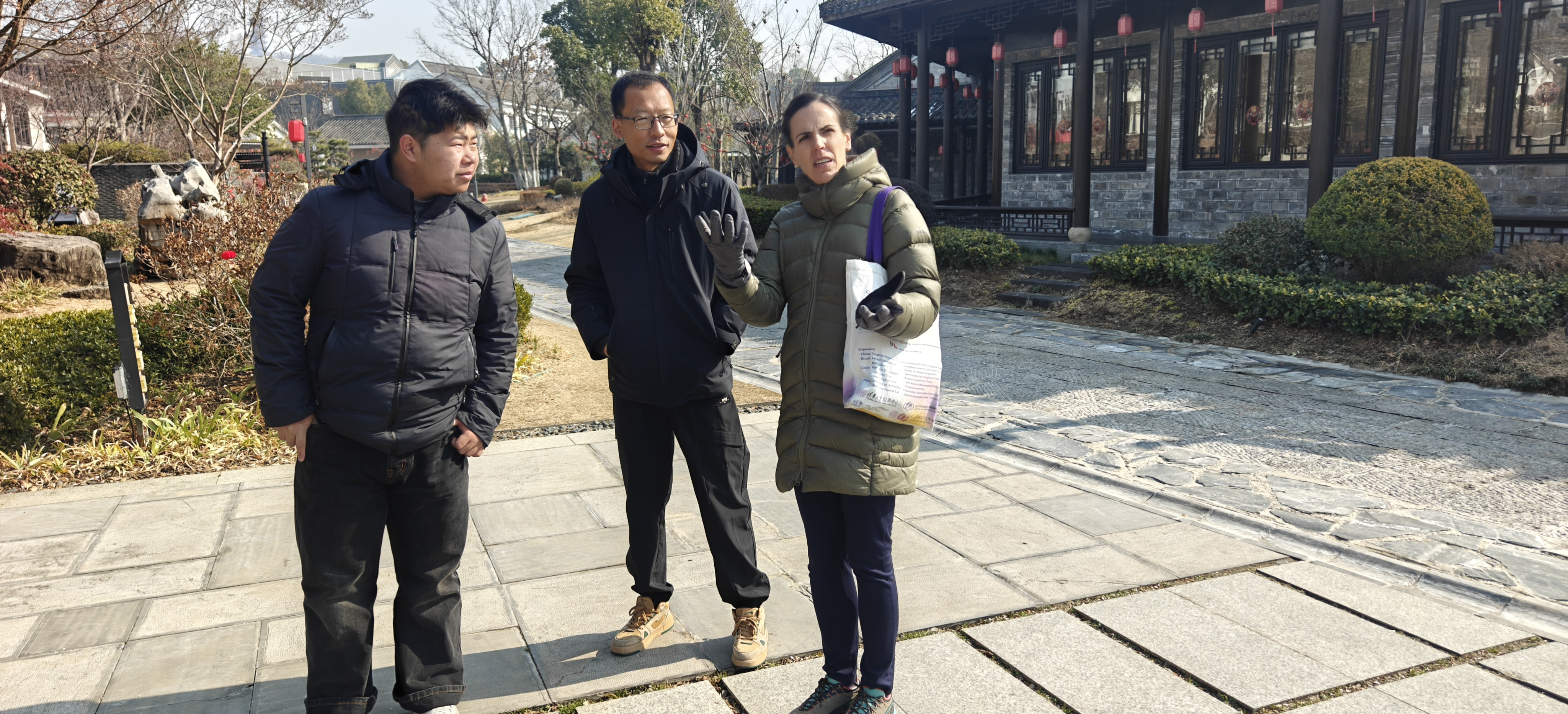
Chinese and Chilean teachers communicating and discussing at Zhensong Yunju Homestay
Later, the study tour group walked into Lanxi Village and experienced the style of traditional villages and rural scenery on the spot. At the entrance of the village, a local guide introduced the development path of increasing income by relying on local characteristics and the integration of culture and tourism to the group. Through on-site visits and explanations, the members gained an in-depth understanding of the local practical experience of promoting the development of modern industries and advancing rural revitalization while preserving the style of traditional villages.
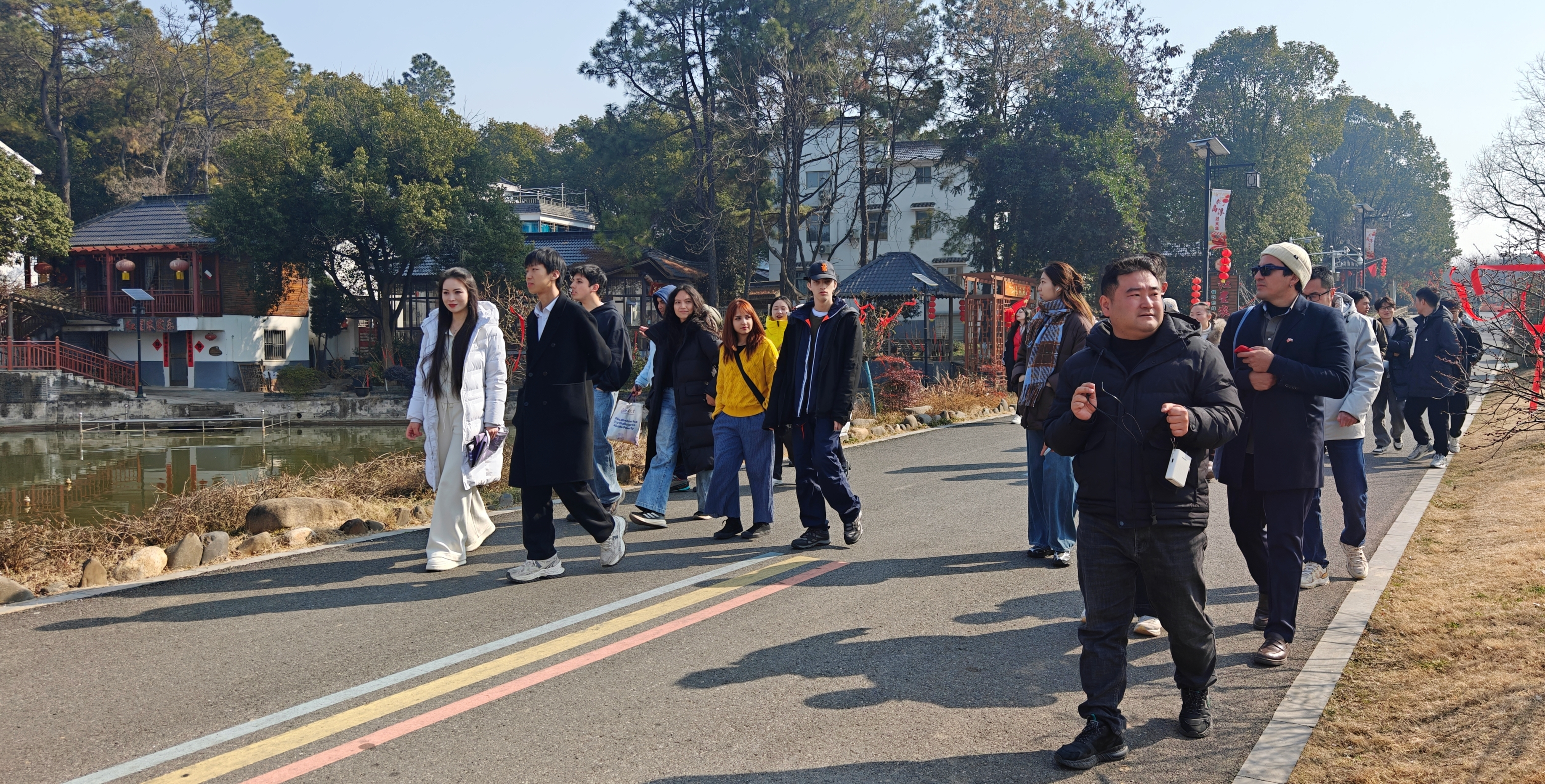
The study tour team visiting Lanxi Village
Wandering along the streets and lanes of the village, the study tour group passed through scattered residential buildings and connected farmland, feeling the vitality of the town during the tour. This visit made Chinese and Chilean youth more intuitively understand the grassroots practice logic of Gaochun's rural revitalization, and provided an in-depth and down-to-earth observation and experience opportunity for this cross-cultural study tour.
A Warm Closing, the Friendship of Gaochun Lasts Forever
With the end of the on-site visit session, this cross-cultural practice also came to a warm conclusion. Members of the Gaochun Team of Tsinghua University's Rural Revitalization Workstation spontaneously prepared red envelopes with blessings and gave them to the Chilean youth. They put each member's signature and blessing into the red envelopes, along with the warmth and reluctance between Chinese and Chilean youth. Afterwards, students from Tsinghua University also held a table tennis friendly match with their Chilean friends, further enhancing their friendship while exchanging skills.
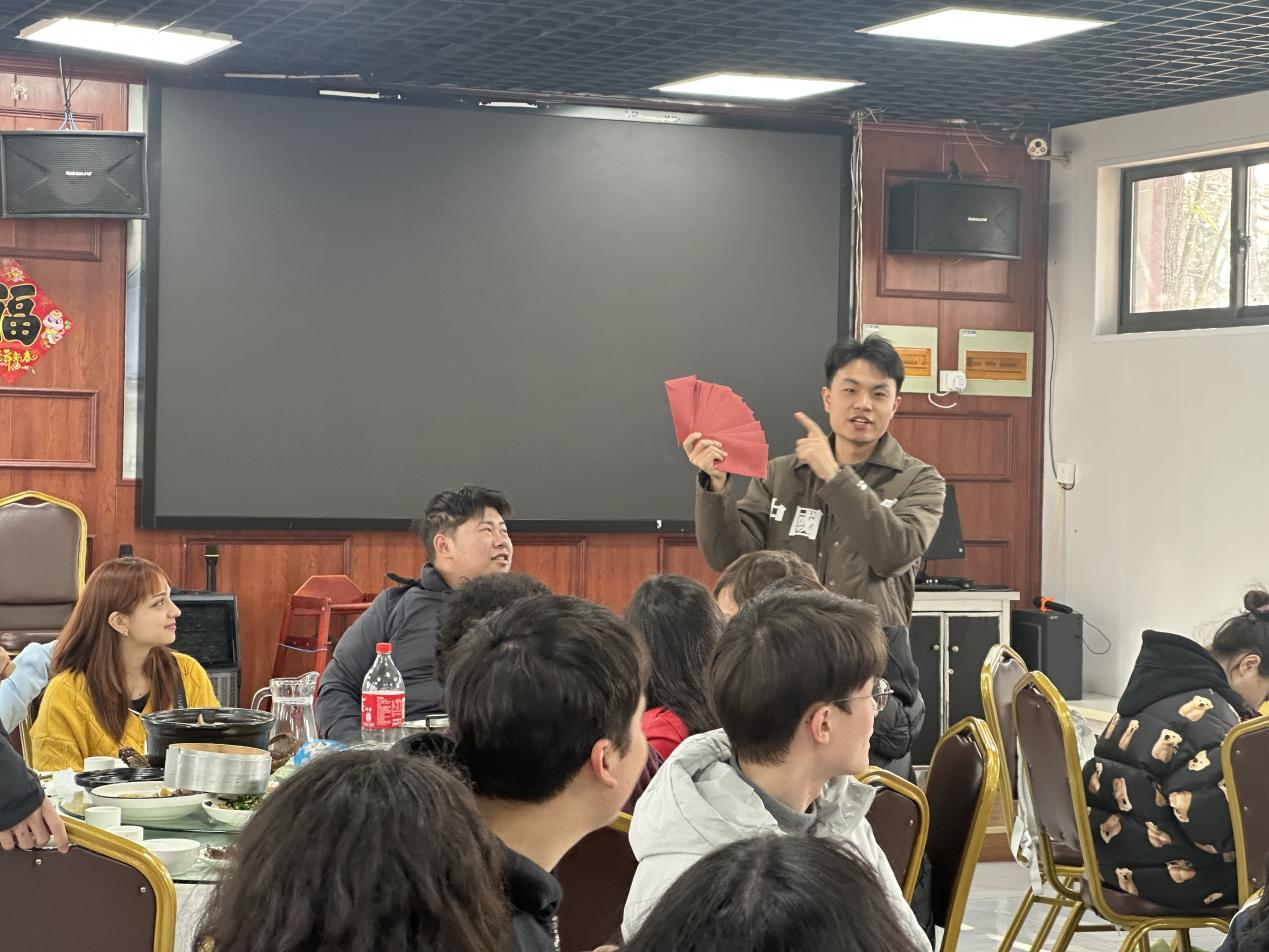
Members of the Gaochun Team showing the prepared red envelopes
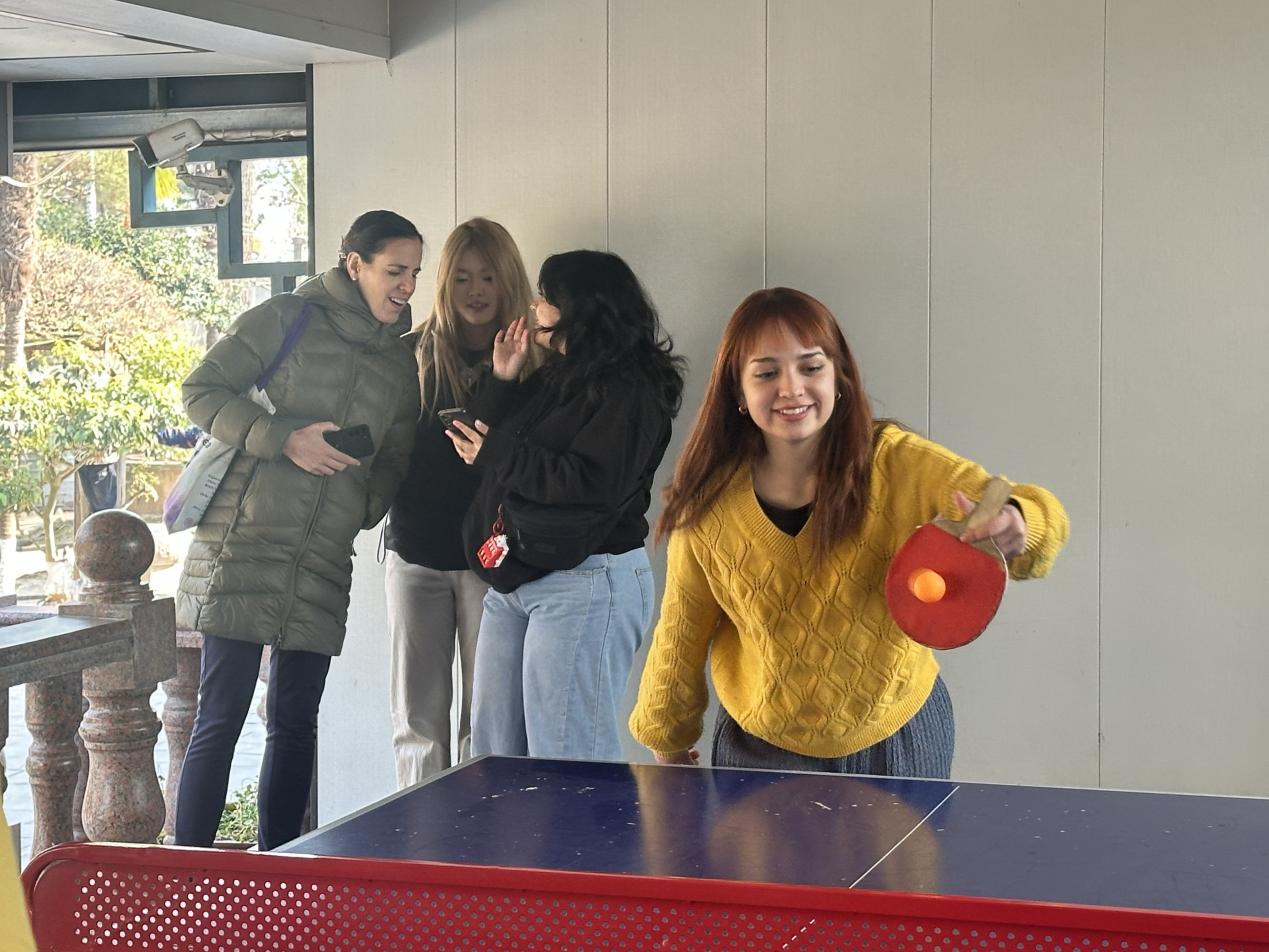
Chinese and Chilean youth holding a table tennis friendly match
At the end of the activity, Chinese and Chilean youth stood together for a group photo, saying "goodbye" and "thank you" in different languages. Laughter hid reluctance and was full of cherishment for the time spent together. Against the background of the ancient village with white walls and black tiles, the youthful demeanor of the youth from the two countries and the fluttering national flags complemented each other, recording this cross-border friendship. This study tour not only allowed the youth to intuitively experience Gaochun's practice of rural revitalization and the integration of culture and tourism, but also enhanced the understanding and friendship between the youth of the two countries through close exchanges, laying a solid foundation for the continuous interaction and cooperation between Chinese and Chilean youth in the fields of academia, culture and rural development in the future.
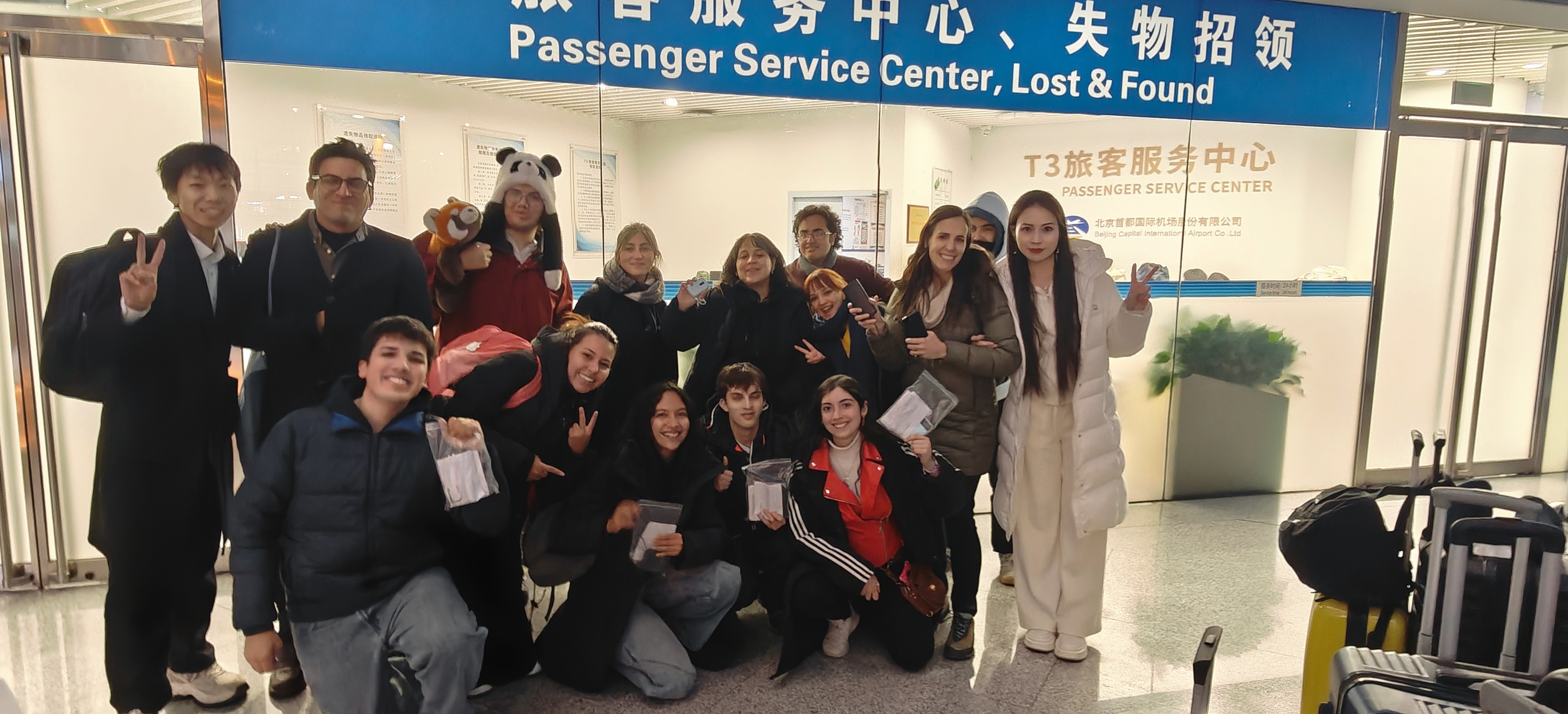
Group photo of Chinese and Chilean teachers and students