About the 2025 Poverty Alleviation Challenge
Co-hosted by Tsinghua University, the Federal University of Rio de Janeiro in Brazil, the Pontifical Catholic University of Chile, the University of Chile, the Universidad del Pacífico in Peru and Minera Las Bambas S.A., the event attracted the participation of more than 310 teachers and students from 27 universities and enterprises across four countries: China, Brazil, Chile and Peru. The 2025 Poverty Alleviation Challenge is divided into two stages: the Preliminary Competition and the Transnational Final, aiming to promote cross-cultural communication and collaboration, and inspire the innovative thinking and practical capabilities of global youth in the field of poverty alleviation.
On June 7, 2025, the Preliminary Competition of the 2025 Poverty Alleviation Challenge was successfully held, with Tsinghua University as the offline main venue and participants from Latin American countries competing simultaneously in a hybrid online and offline format. After a fierce competition, 12 innovative teams stood out and advanced to the Transnational Final. In August 2025, the Transnational Final of the 2025 Poverty Alleviation Challenge was held in Brazil and Chile successively.
In January 2026, 32 Latin American university students who advanced to the final came to China for cultural immersion activities, including face-to-face exchanges with Chinese teachers and students, visits to China's poverty alleviation bases and institutions, and Chinese cultural tours.
The 2025 Poverty Alleviation Challenge received support from the Chinese Embassy in Brazil, the Consulate-General of China in Rio de Janeiro, the Brazilian Embassy in China, the Chinese Embassy in Chile, the Chilean Embassy in China and the Chinese Embassy in Peru. We sincerely thank renowned domestic and foreign enterprises for their strong support for the event, including Envision Group, CGE, Minera Las Bambas S.A., China Mobile International (Chile), Kuaishou International Business (KSIB) and Banco BOCOM BBM S.A..
On January 23, 2026, members from the Tsinghua University Latin American Center, the "Rural Entrepreneurship +" program, the Cili Station of the Tsinghua University Rural Revitalization Workstation, as well as the Universidad del Pacífico in Peru and Minera Las Bambas S.A. continued their in-depth study tour in Cili County, Hunan Province. Following the exploration of the characteristic agricultural product industrial chain on the first day, the itinerary on the second day focused on the innovative development of the culture and tourism industry.
The first stop of the study tour group was the "Cliff Blossom No.1 Camp" in Zhumugang Village, Sanguansi Tujia Township. Led by Professor Chen Taotao, Director of the Tsinghua University Latin America Center, Director of the Research Center for China-Latin America Management Studies, SEM, Tsinghua University and Professor of the Finance Department at the School of Economics and Management, Tsinghua University, teachers and students conducted an in-depth investigation of this comprehensive outdoor sports camp integrating an international standard cross-country track, luxury wild RV tents and parent-child team building activities.
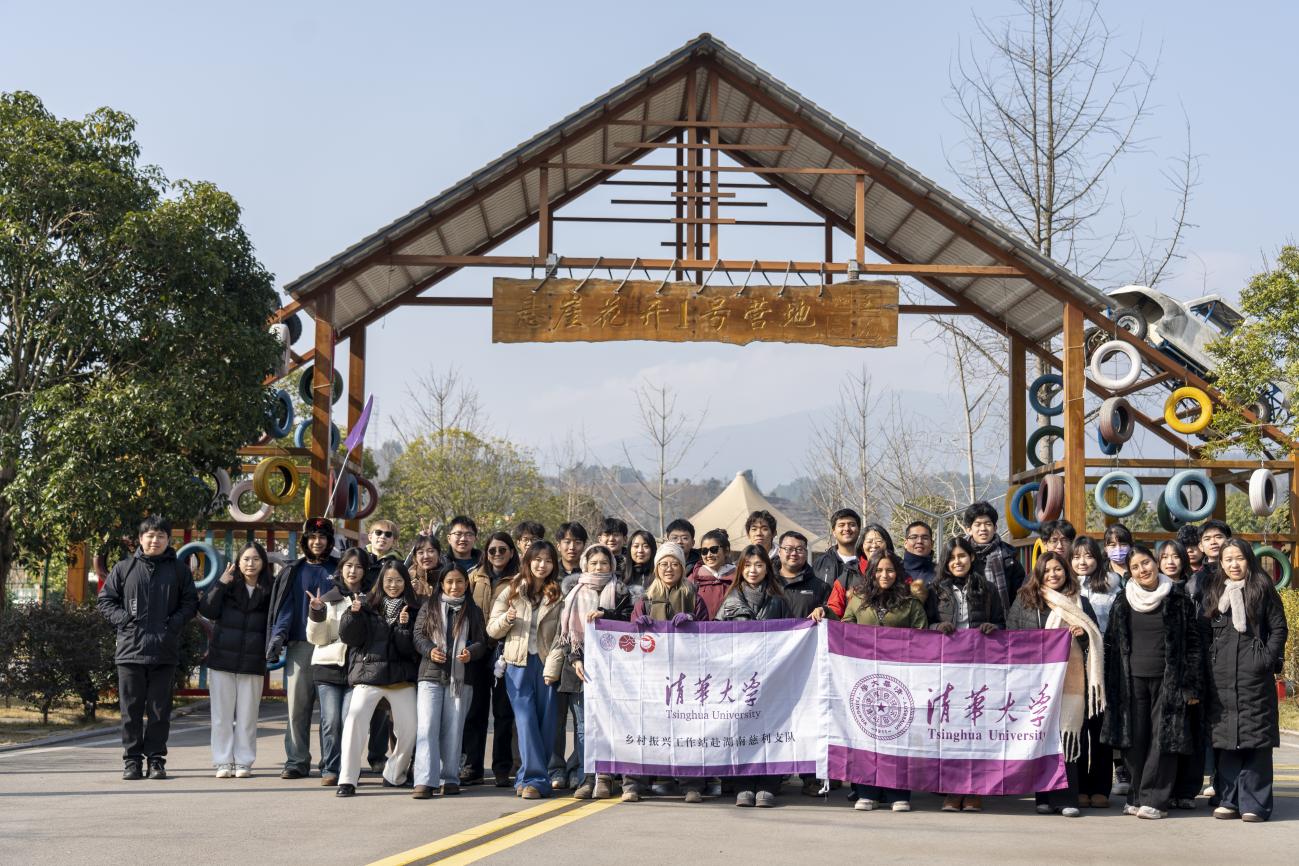
Group photo of teachers and students at Cliff Blossom Camp
The person in charge of the camp gave a detailed introduction to the project's development history from its signing and settlement in 2020 to the present. Relying on the unique landscape and landform of Zhangjiajie, the project has built an amphibious cross-country track, aiming to become an emerging tourist destination attracting cross-country enthusiasts and RV fans from all over the country. It is also committed to making tourists "slow down, stop and stay" by designing a variety of night activities, effectively extending the tourism consumption chain.
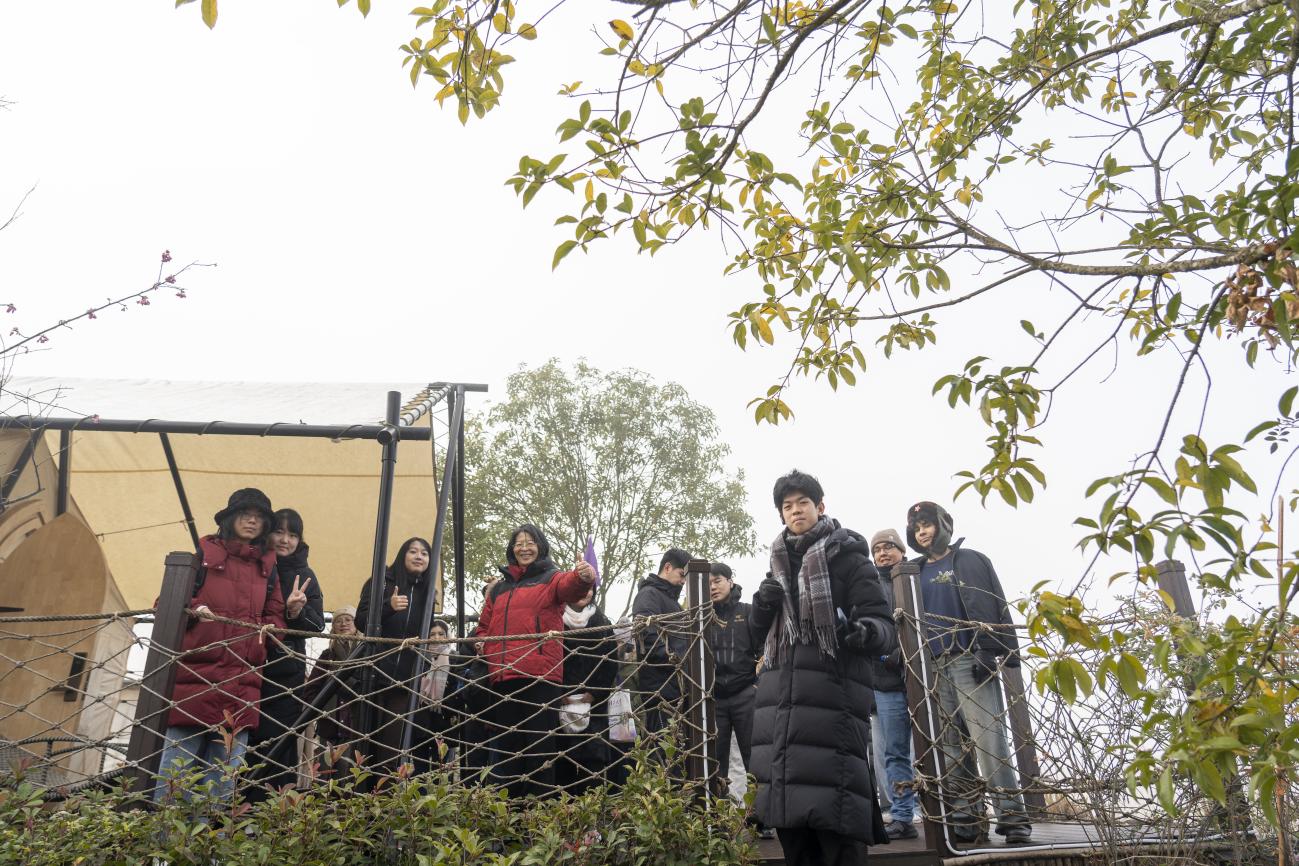
Professor Chen Taotao and teachers and students inspecting Cliff Blossom Camp
The forum revolved around the core topic of "how cultural and tourism projects can effectively drive community development and villagers' poverty alleviation". Chinese and Latin American teachers and students held a heated discussion with the camp operators and local government representatives, focusing on the core issues such as the project's commercial operation, community win-win mechanism, characteristic positioning and government support. This dialogue provided young students with a vivid first-hand case to understand the whole process of a new cultural and tourism project from landing and operation to symbiosis and common prosperity with the community.
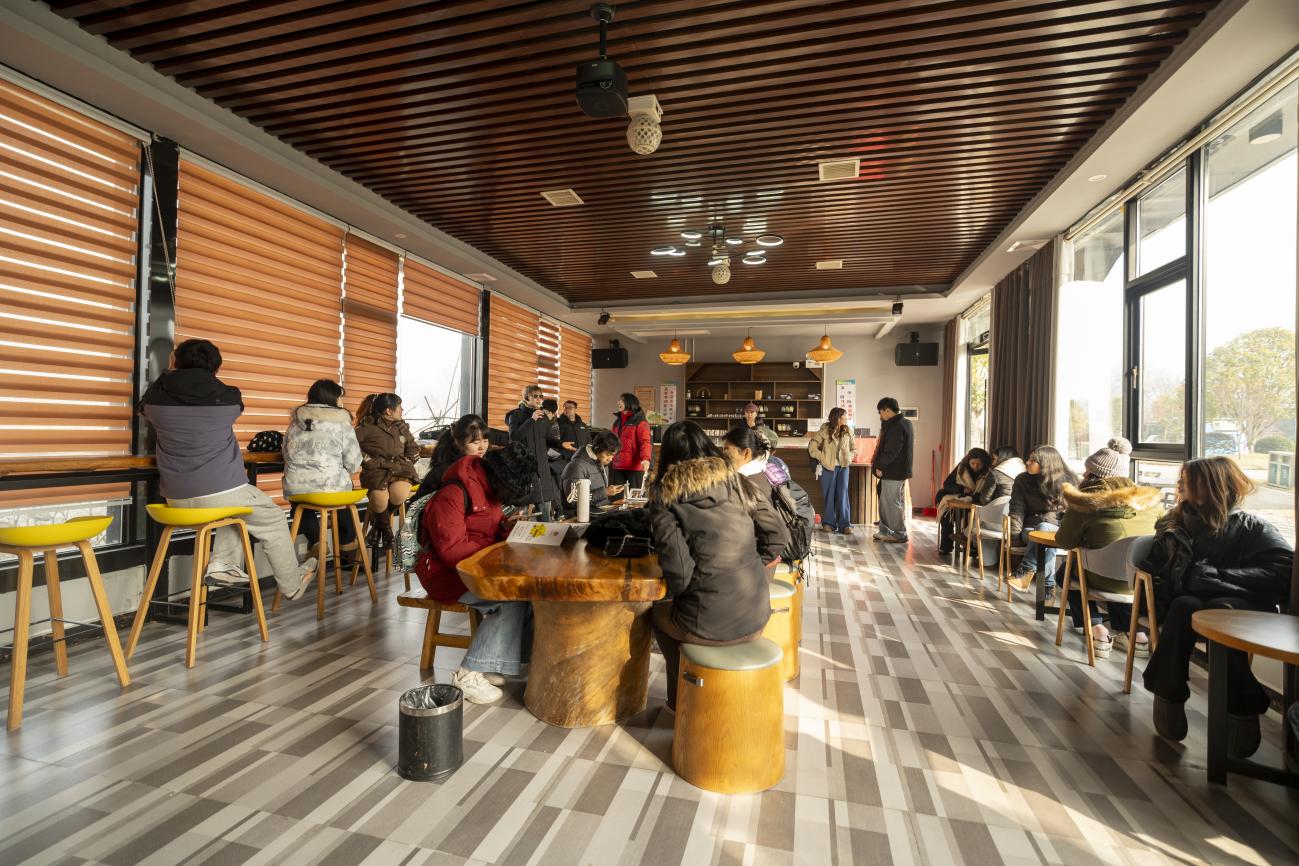
Chinese and Latin American teachers and students exchanging ideas with the camp director
In the afternoon, the study tour group moved to the Zhangjiajie Grand Canyon Scenic Area and held a special forum with Zhang Jiqian, General Manager of Zhangjiajie Grand Canyon Tourism Development Co., Ltd.. The forum was hosted by An Haozhen, a PhD candidate at the Tsinghua University Latin American Center.
With the theme of "Keeping the Ordinary by Leaving Blank, Achieving Change through Co-creation", General Manager Zhang Jiqian shared the epic struggle and operational wisdom of the scenic area over the past 20 years. She reviewed the transformation of the scenic area from a wild canyon known as "Rotten Boat Stream" by locals to a well-known scenic area receiving more than one million visitors annually, and profoundly explained its core development philosophy.
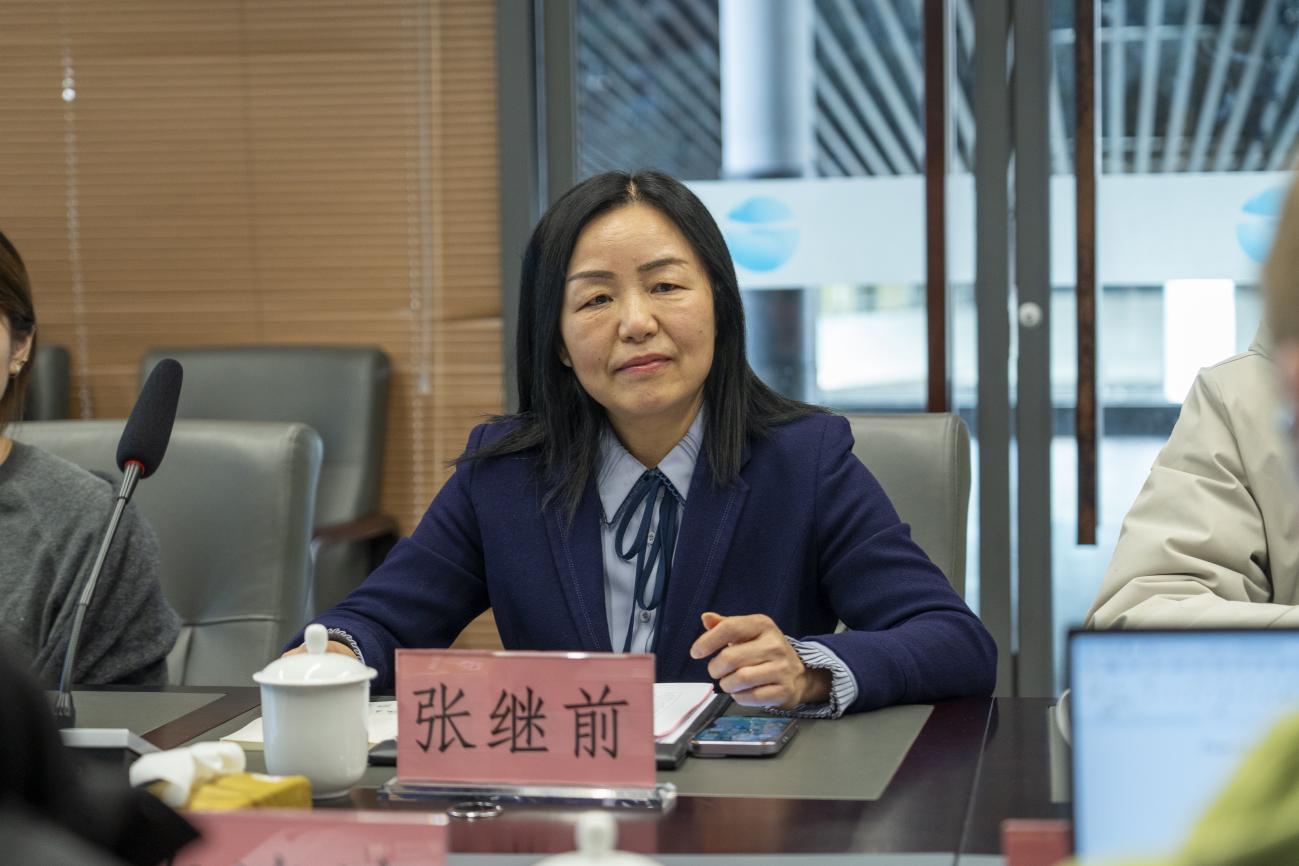
General Manager Zhang Jiqian sharing the development philosophy of the scenic area
General Manager Zhang Jiqian also focused on introducing the scenic area's specific practices in driving rural revitalization and fulfilling social responsibilities: direct investment in the construction of highways and drinking water projects to improve people's livelihood; driving employment for more than 2,000 people in the surrounding areas through tourism radiation; establishing a public welfare foundation to fund poor students for a long time, with a total donation of more than 50 million yuan. These data and cases have clarified the concept of "Lucid waters and lush mountains are invaluable assets" and the path of "Enriching the people through tourism".
In her concluding speech, Professor Chen Taotao, Director of the Tsinghua University Latin America Center, spoke highly of the dialogue. She pointed out that the story of Zhangjiajie Grand Canyon is not only a commercial success case, but also a vivid textbook for transforming natural resources into development momentum and feeding back the local community with enterprise growth. Its perseverance in "leaving blank" and vitality in "co-creation" have important reference significance for thinking about sustainable development on a global scale.
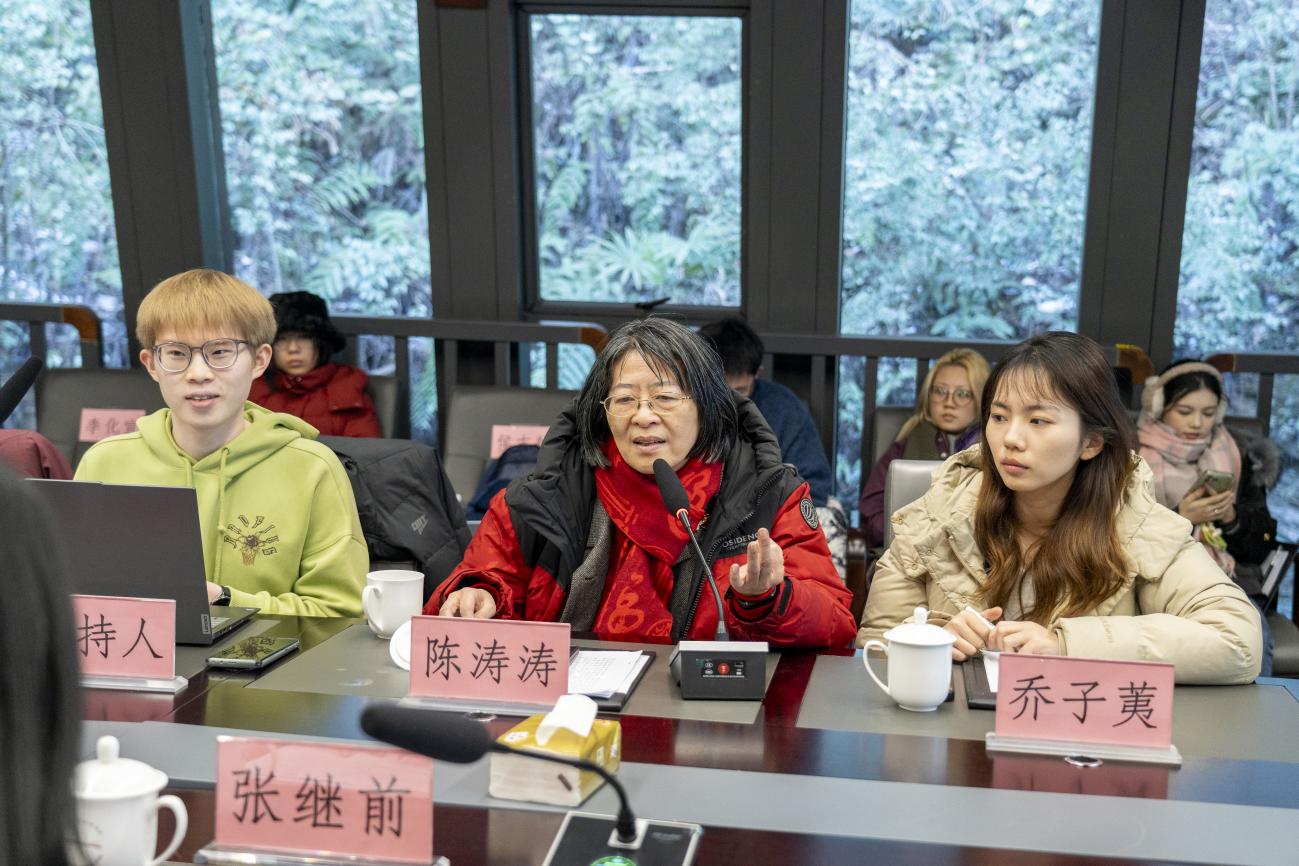
Professor Chen Taotao delivering a concluding speech
After the forum, teachers and students experienced the core projects of the scenic area in person: walking on the breathtaking glass bridge and taking a boat tour on the quiet Colorful Lake. Through practice, they felt the shocking experience brought by the integration of "creativity, technology and nature", and also had a deeper understanding of the "product innovation and tourist experience" discussed in the morning.
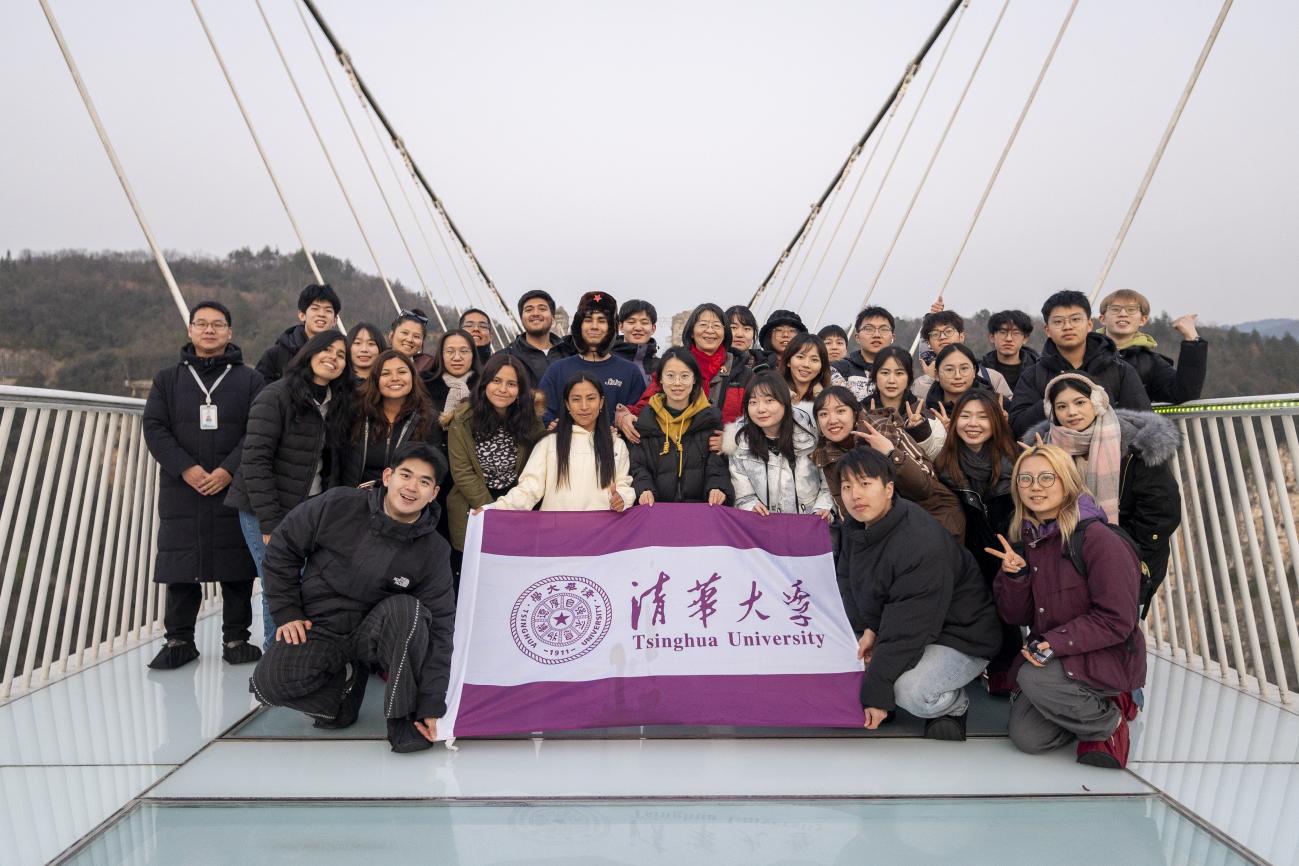
Group photo of Chinese and Latin American teachers and students at Zhangjiajie Grand Canyon
After the intensive research during the day, Latin American young students and members of the Cili Team of the Tsinghua University Rural Revitalization Workstation held group discussions in the evening. Based on what they had seen and heard in Cili over the past two days and combined with the background of their respective countries, they conducted in-depth discussions on issues such as the sustainability of industrial poverty alleviation, the benefit-sharing mechanism in tourism development, and the role and governance experience of the government in poverty alleviation. Sparks of ideas burst out in cross-cultural exchanges, and concerns about common challenges made the connection between each other closer.
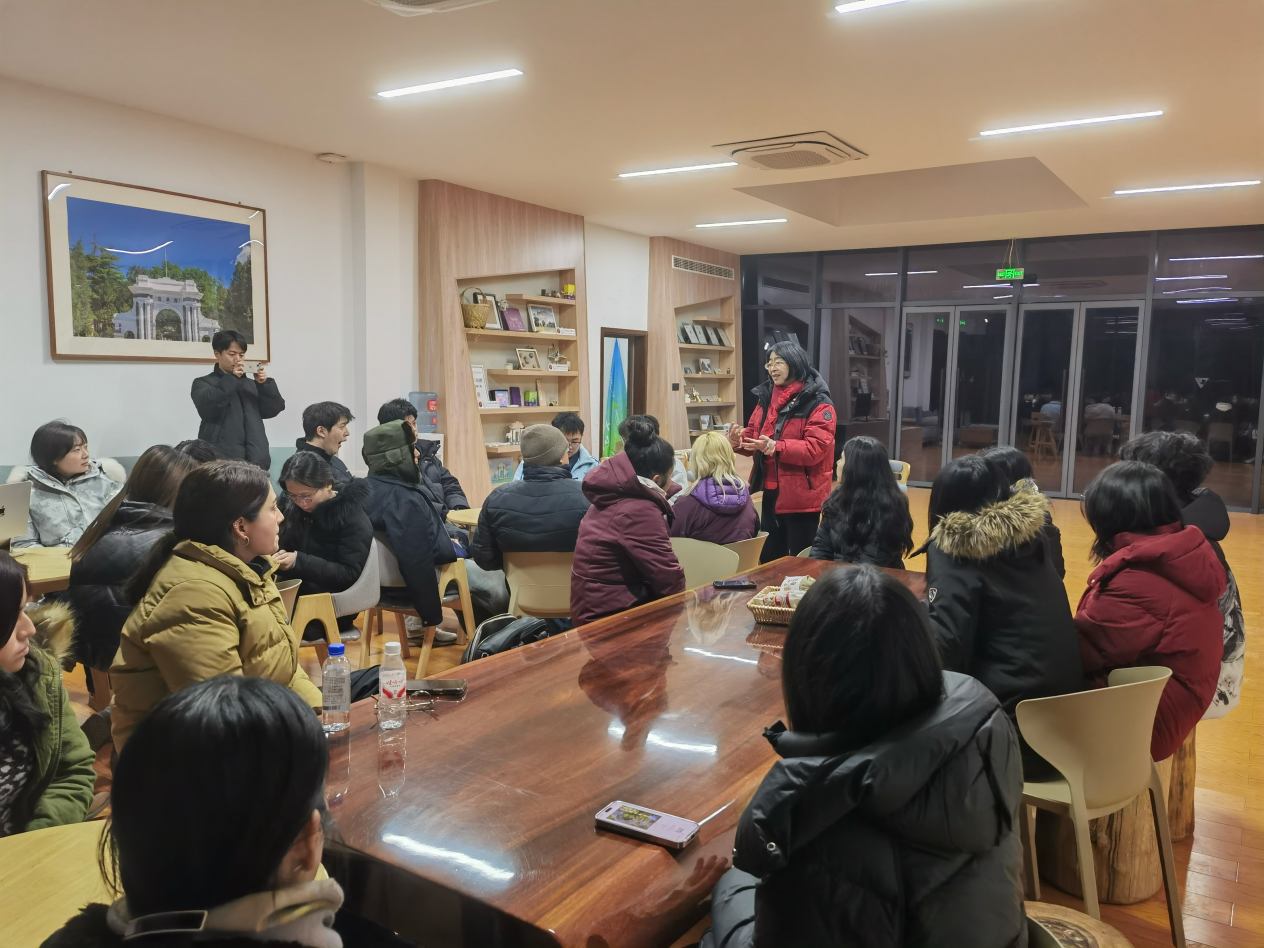
Exchange meeting between Chinese and Latin American teachers and students
Through comparative investigations, the study tour itinerary on the second day presented to Chinese and foreign youth in a three-dimensional way how Chinese villages use local resources to take a distinctive path of culture-tourism poverty alleviation and rural revitalization through conceptual innovation, technological empowerment and market-oriented operation. The youth not only gained knowledge, but also inspired their thinking and enthusiasm for exploring diverse poverty alleviation solutions from a global perspective.