About the 2025 Poverty Alleviation Challenge
Co-hosted by Tsinghua University, the Federal University of Rio de Janeiro in Brazil, the Pontifical Catholic University of Chile, the University of Chile, the Universidad del Pacífico in Peru and Minera Las Bambas S.A., the event attracted the participation of more than 310 teachers and students from 27 universities and enterprises across four countries: China, Brazil, Chile and Peru. The 2025 Poverty Alleviation Challenge is divided into two stages: the Preliminary Competition and the Transnational Final, aiming to promote cross-cultural communication and collaboration, and inspire the innovative thinking and practical capabilities of global youth in the field of poverty alleviation.
On June 7, 2025, the Preliminary Competition of the 2025 Poverty Alleviation Challenge was successfully held, with Tsinghua University as the offline main venue and participants from Latin American countries competing simultaneously in a hybrid online and offline format. After a fierce competition, 12 innovative teams stood out and advanced to the Transnational Final. In August 2025, the Transnational Final of the 2025 Poverty Alleviation Challenge was held in Brazil and Chile successively.
In January 2026, 32 Latin American university students who advanced to the final came to China for cultural immersion activities, including face-to-face exchanges with Chinese teachers and students, visits to China's poverty alleviation bases and institutions, and Chinese cultural tours.
The 2025 Poverty Alleviation Challenge received support from the Chinese Embassy in Brazil, the Consulate-General of China in Rio de Janeiro, the Brazilian Embassy in China, the Chinese Embassy in Chile, the Chilean Embassy in China and the Chinese Embassy in Peru. We sincerely thank renowned domestic and foreign enterprises for their strong support for the event, including Envision Group, CGE, Minera Las Bambas S.A., China Mobile International (Chile), Kuaishou International Business (KSIB) and Banco BOCOM BBM S.A..
On January 23, 2026, teachers and students from Tsinghua University, the Pontifical Catholic University of Chile and the University of Chile embarked on the second phase of the China-Latin America joint practice trip in Gaochun. During the practice, Chinese and Chilean youth gained an in-depth understanding of Gaochun rural areas' exploration achievements in digital economy development and the integration of ecological culture and tourism through on-site visits and exchange research. They perceived the diverse vitality of local rural development through travels and dialogues, and further deepened cross-cultural exchanges and mutual understanding. Through on-site observations of Gaochun's rural poverty alleviation and revitalization practices, the teachers and students formed a more intuitive and in-depth understanding of the practical effects and sustainability of rural poverty alleviation paths.
Visiting Prosperous Villages, Exploring the Charms of Gaochun Together
In the morning, the research team walked into the Agricultural Innovation Park of Shuangyou Village in Gaochun District to learn on-site about the local practical exploration of promoting rural industrial development relying on the digital economy. The exhibition area of the park focused on displaying a variety of local agricultural and sideline products as well as their standardized packaging and brand images. Relevant display boards systematically presented the whole-process operation mode of agricultural products from cultivation and incubation to brand promotion and market connection, vividly showing the specific paths of digital technology empowering rural industries.
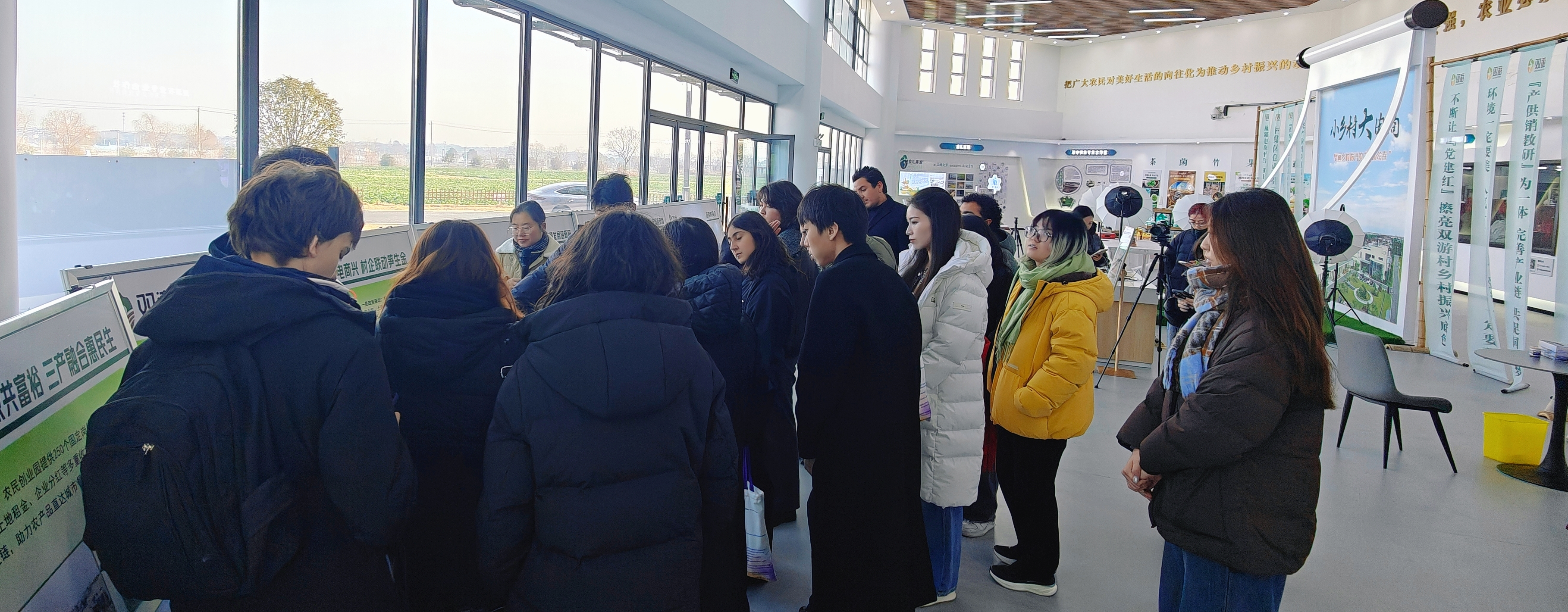
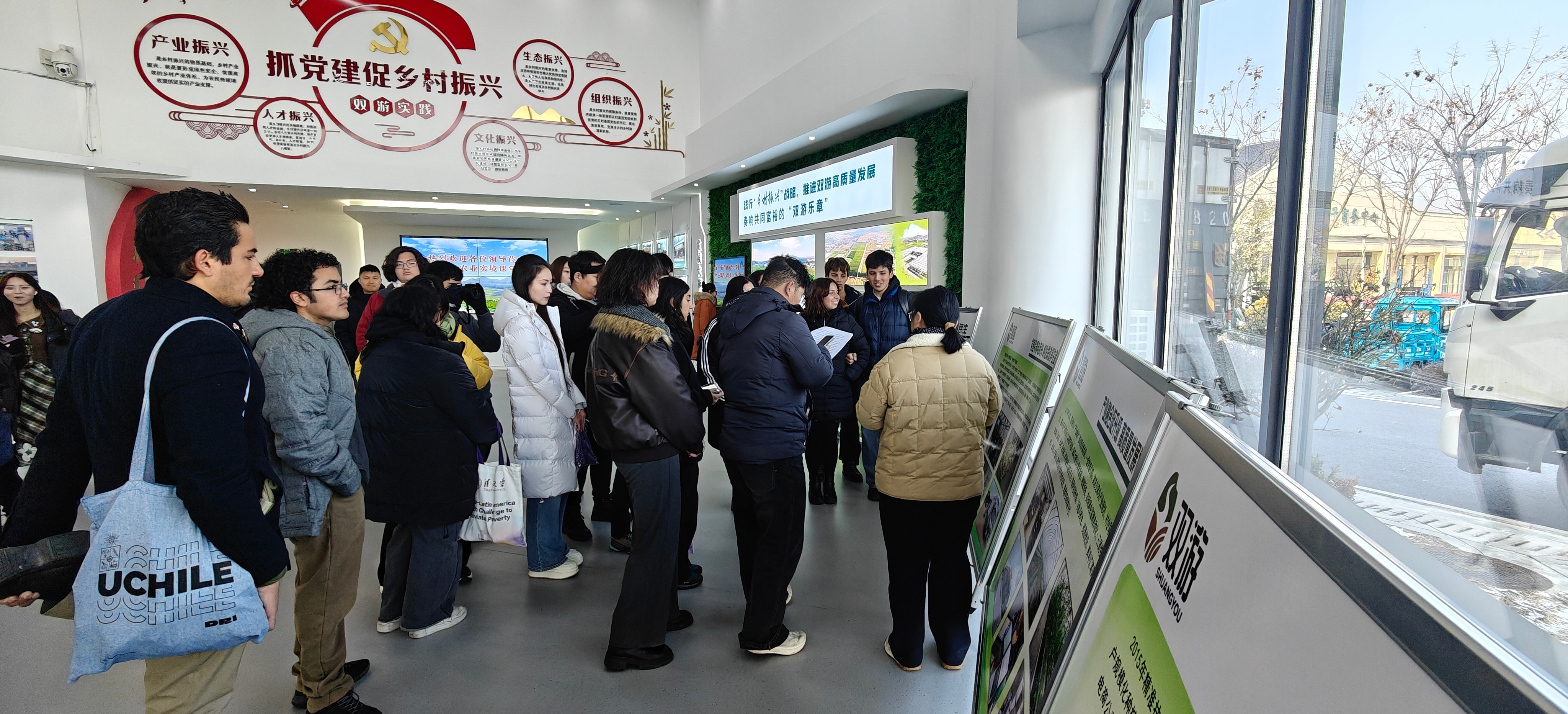
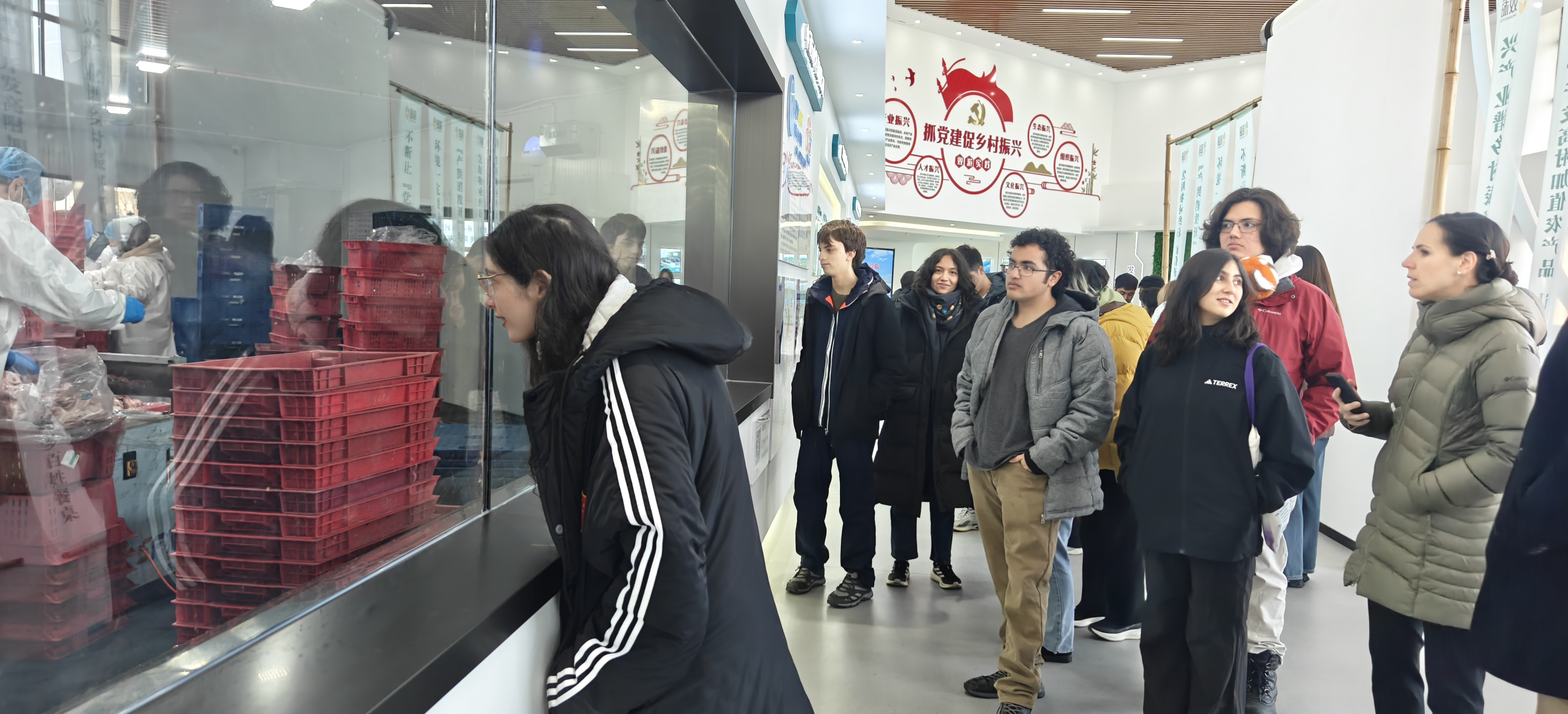
Chinese and Chilean teachers and students visiting the Agricultural Innovation Park
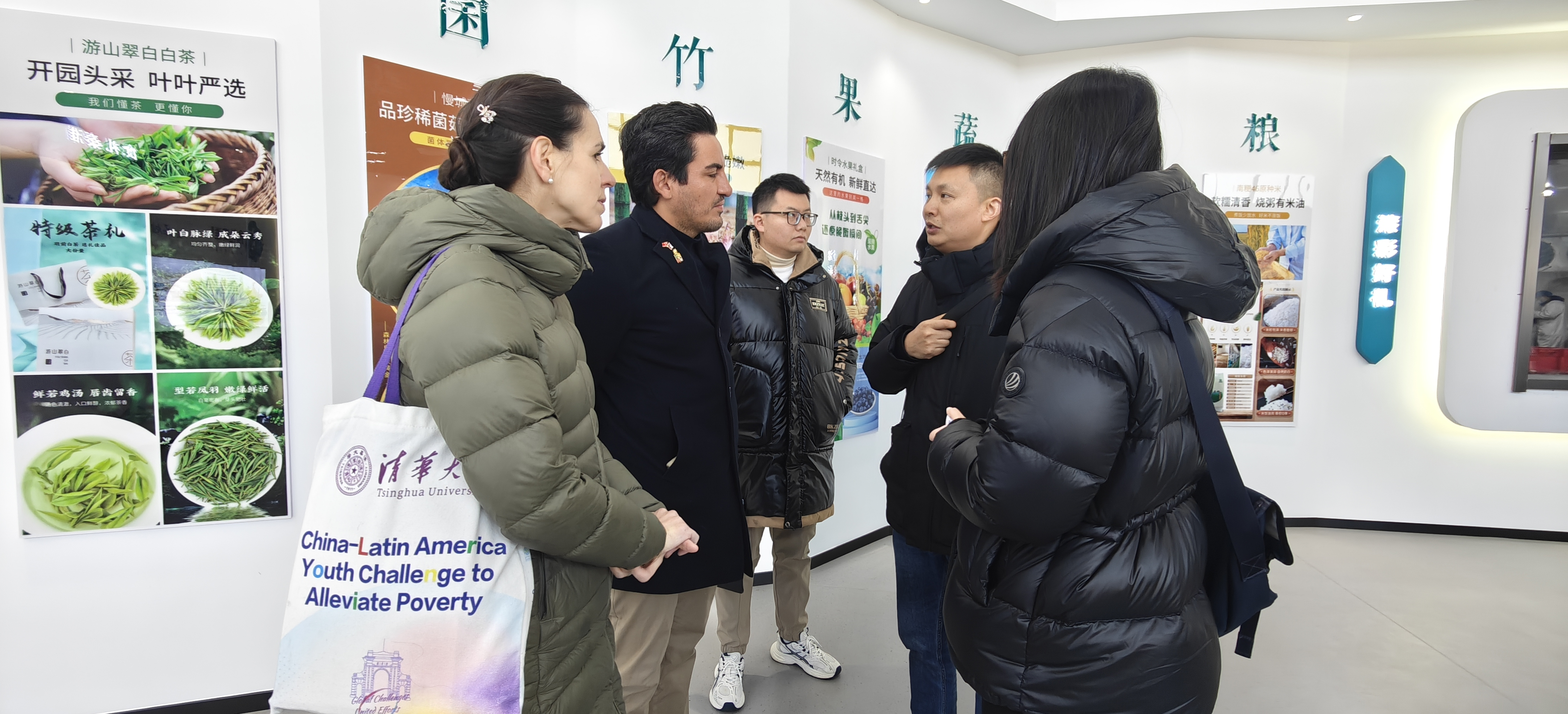
Chilean teachers and students communicating with local government staff
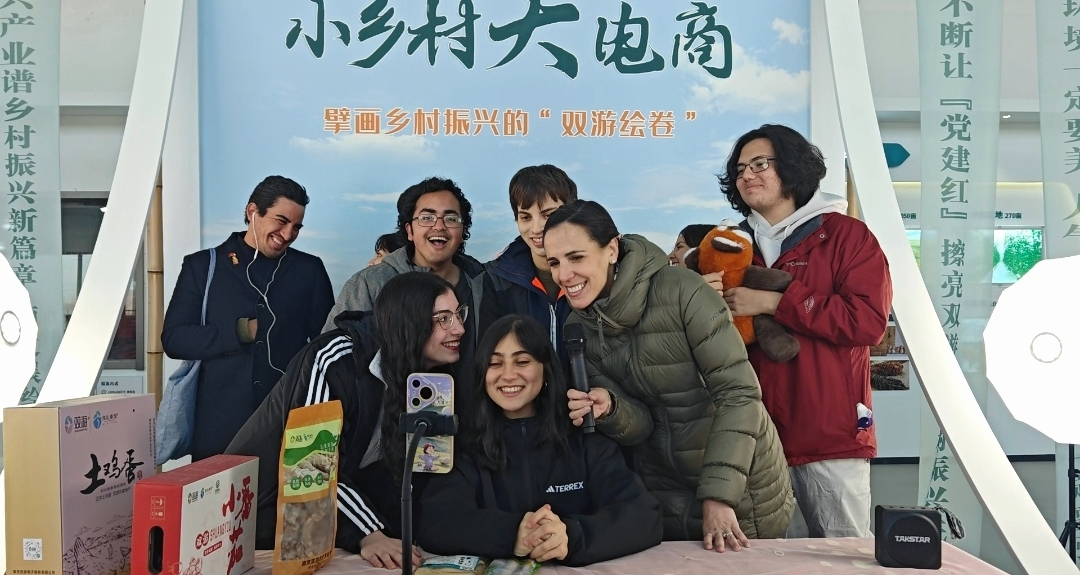
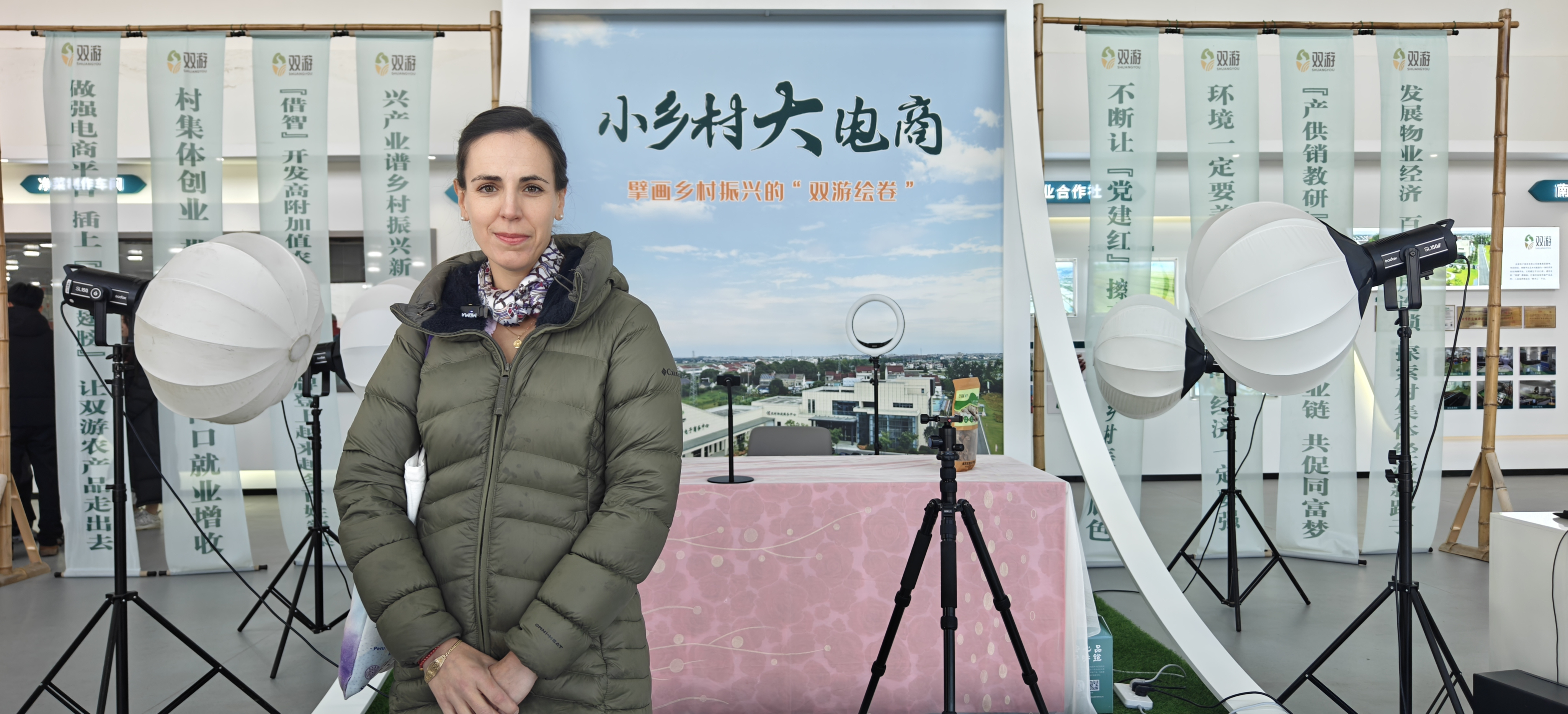
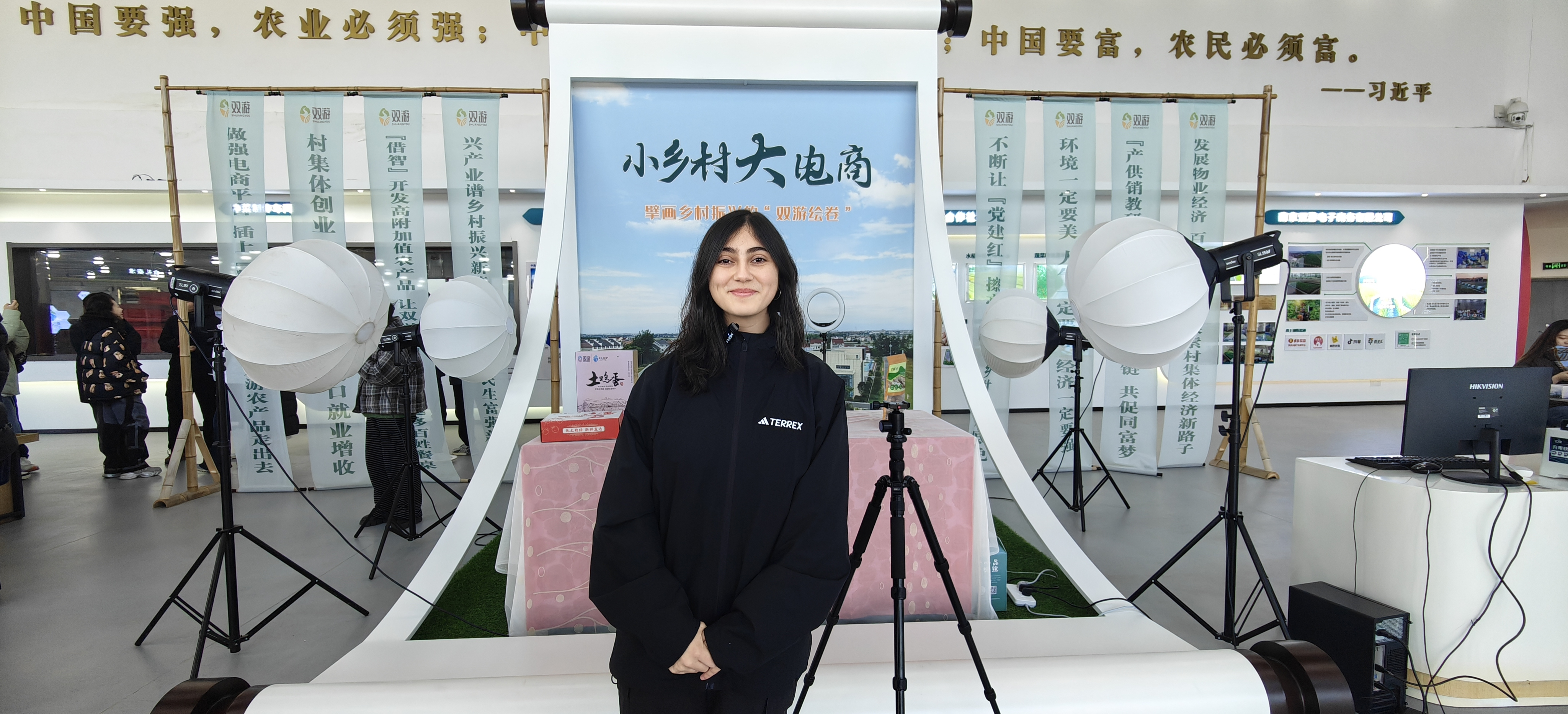
In the live streaming zone of the Agricultural Innovation Park, the research team gathered around the fill lights and mobile phone lenses to experience a unique live stream e-commerce for agricultural products. Tapping the product introduction cards with their fingertips, they tried to recommend Gaochun's special products in both Chinese and English to the camera. Their clumsy yet devoted looks filled the scene with laughter and joy. This experience made Chinese and Chilean youth truly feel how "live streaming helping agriculture" sends local good products to farther places. The on-site communication atmosphere was warm and lively, providing a vivid case for young people to deeply understand digital empowerment for rural revitalization.
Picture: Chilean teachers and students experiencing live stream e-commerce for agricultural products
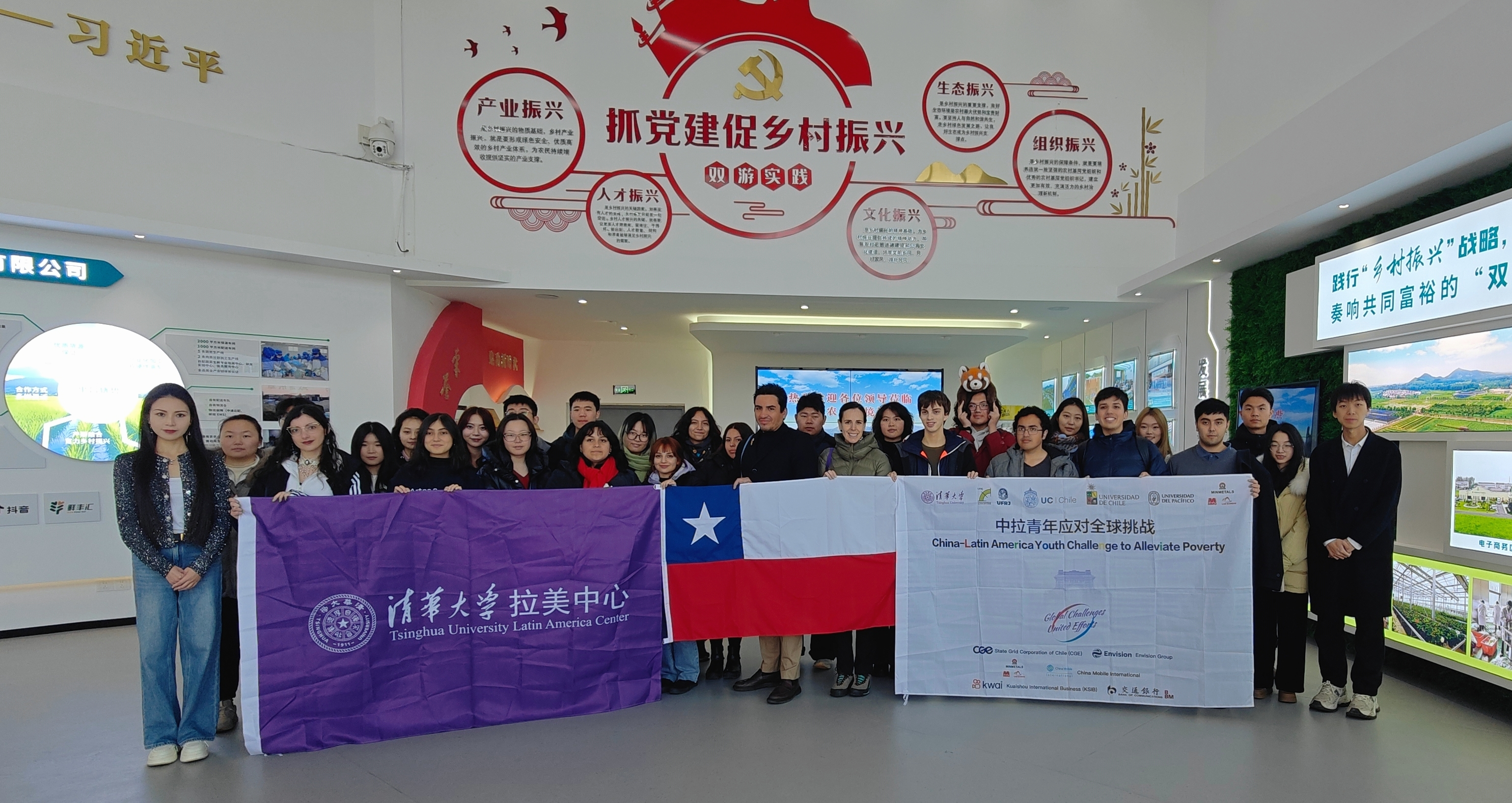
Picture: Group photo of Chinese and Chilean teachers and students at the Agricultural Innovation Park of Shuangyou Village
Subsequently, the research team went to Youzishan Village to visit the development of local characteristic homestays on-site. Integrating wooden architectural style with natural landscapes, the homestays explored the development path of "ecological landscape + rural culture and tourism" relying on the surrounding mountains and water resources. The group sat around the table, tasting homemade bread tea and hand-brewed coffee in the homestay. The wheat fragrance and tea fragrance intertwined in the warm space, letting the poetry and warmth of the countryside flow quietly in every sip.
hinese and Chilean teachers and students experiencing the homestay
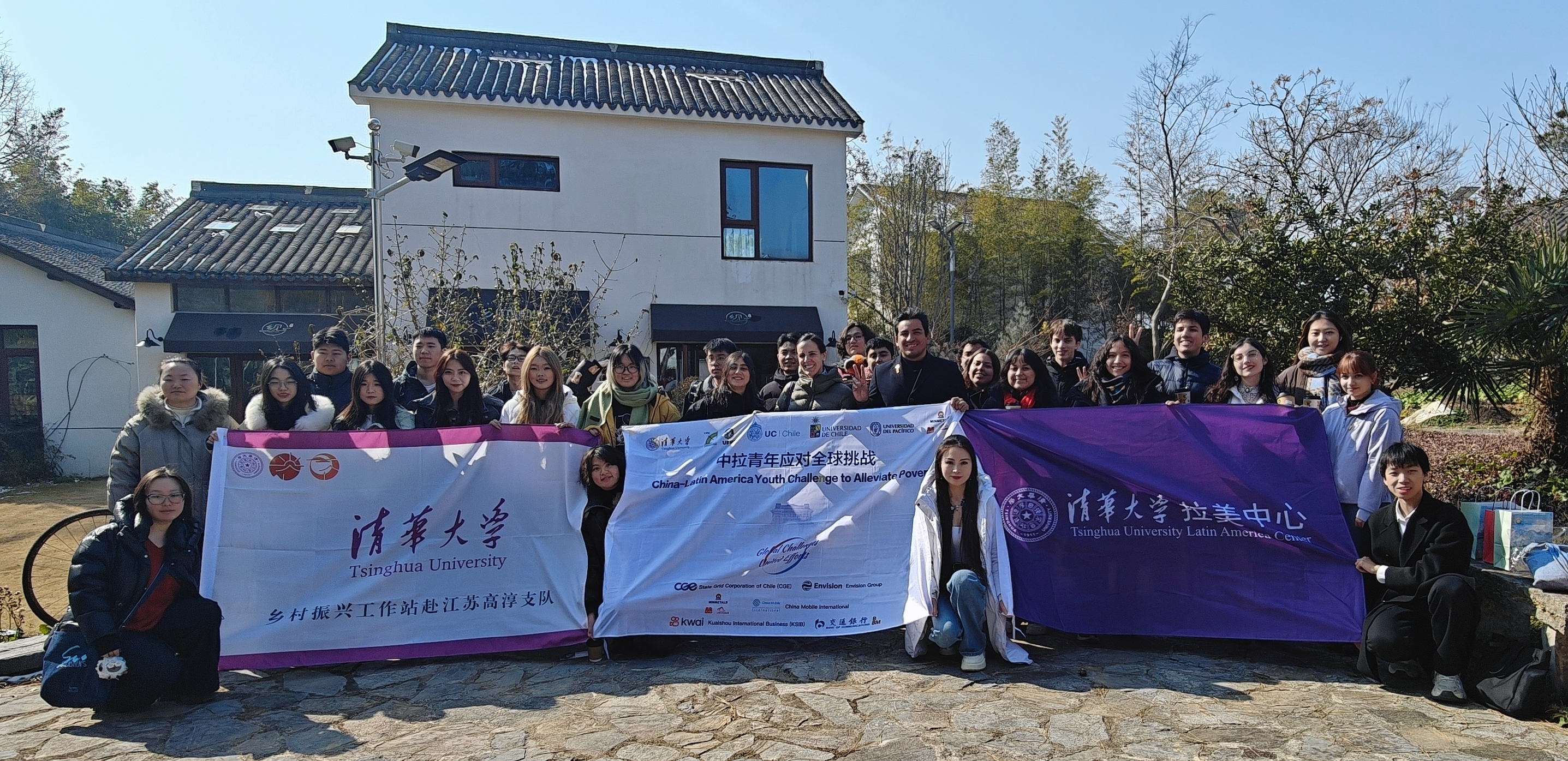
Group photo of Chinese and Chilean teachers and students in Youzishan Village
Tasting Flavors at the Crab Museum, Walking Together in the Slow City
Later, the research team visited the Chinese Mitten Crab Museum. Entering the museum, the teachers and students systematically learned about Gaochun's industrial foundation and development context as the "Hometown of Chinese Crabs" through exhibit specimens and graphic display boards. From crab seed breeding to ecological aquaculture, from traditional fishing to brand operation, the complete industrial chain of the mitten crab industry clearly presented the local practical path of developing characteristic industries and promoting poverty alleviation and income increase relying on water resource advantages. Chinese and Chilean youth stopped in front of the immersive exhibits, touching the life marks of Gaochun.
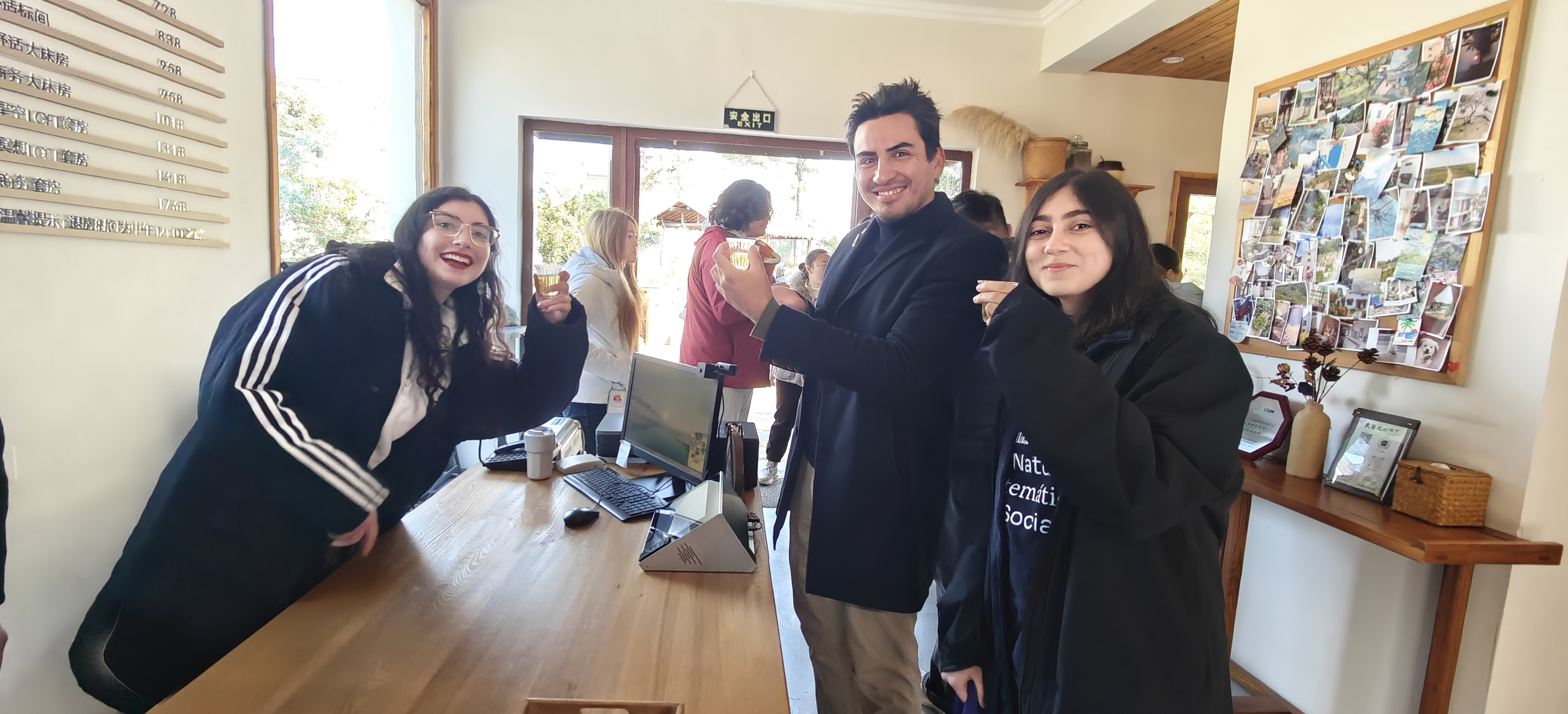
Chilean teachers and students experiencing traditional Chinese folk culture
Group photo of Chinese and Chilean teachers and students at the Chinese Mitten Crab Museum
Walking out of the Chinese Mitten Crab Museum, the research team immediately took a coach to the Slow City to experience the local rural development model oriented to ecological protection and the integration of culture and tourism on-site. Characteristic buildings and landscape nodes were distributed in an orderly manner along the way, showing the unique spatial features and pace of life of the Slow City. Arriving at the Pink Beach, the group got off the bus and stopped to admire the scenery. The soft pink sand glowed with gentle luster in the sun, forming a delightful contrast with the green mountains in the distance and the surrounding characteristic buildings. The youth stopped to take photos on the beach, framing the beautiful moments against the backdrop of mountains, rivers and buildings. The relaxed laughter brought the romance and vitality of the town to them. The youth recorded what they saw and felt during exchanges and visits, and further experienced the practical effects of Gaochun promoting rural development through the transformation of ecological resources in the relaxed interaction.
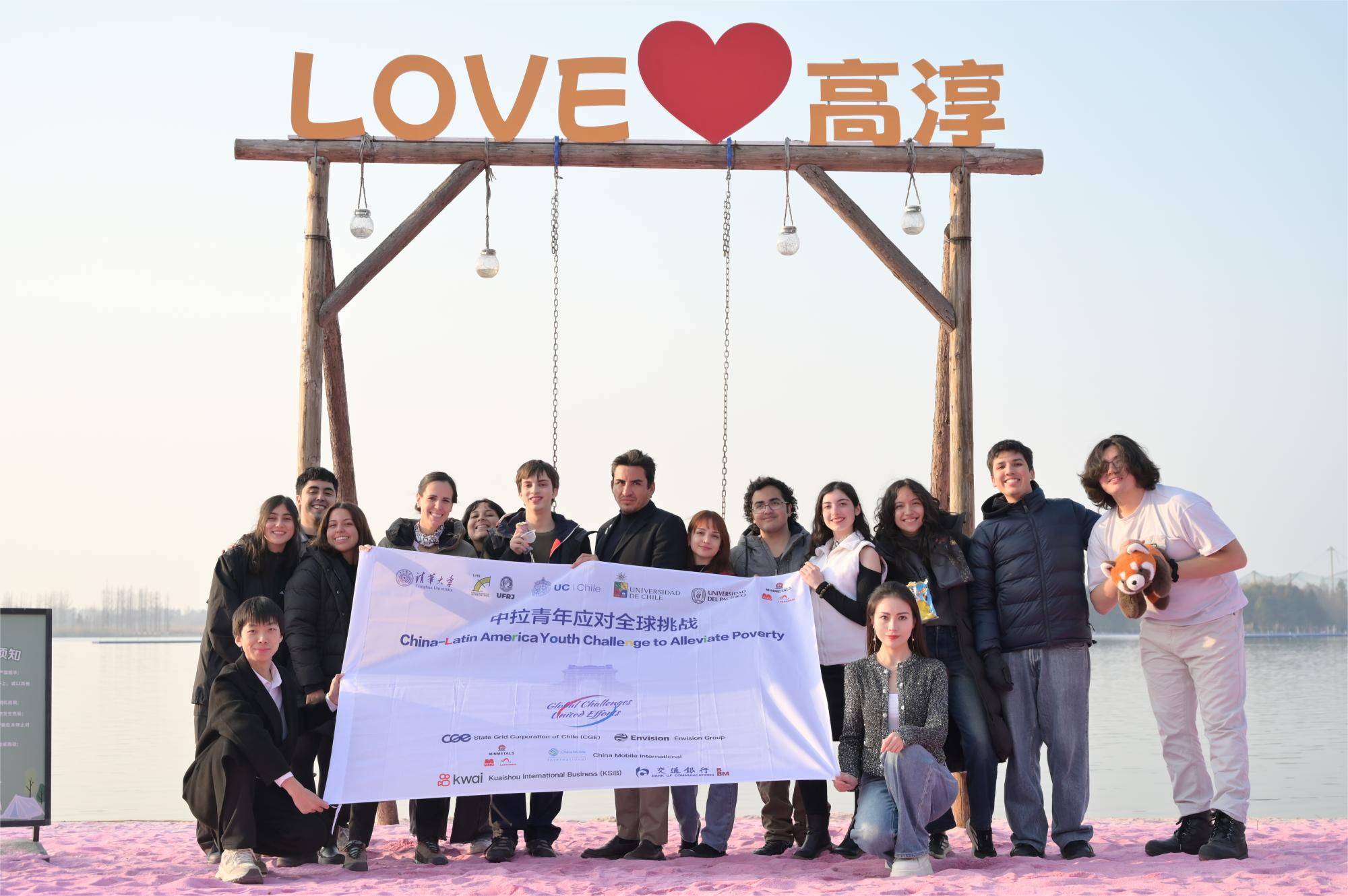
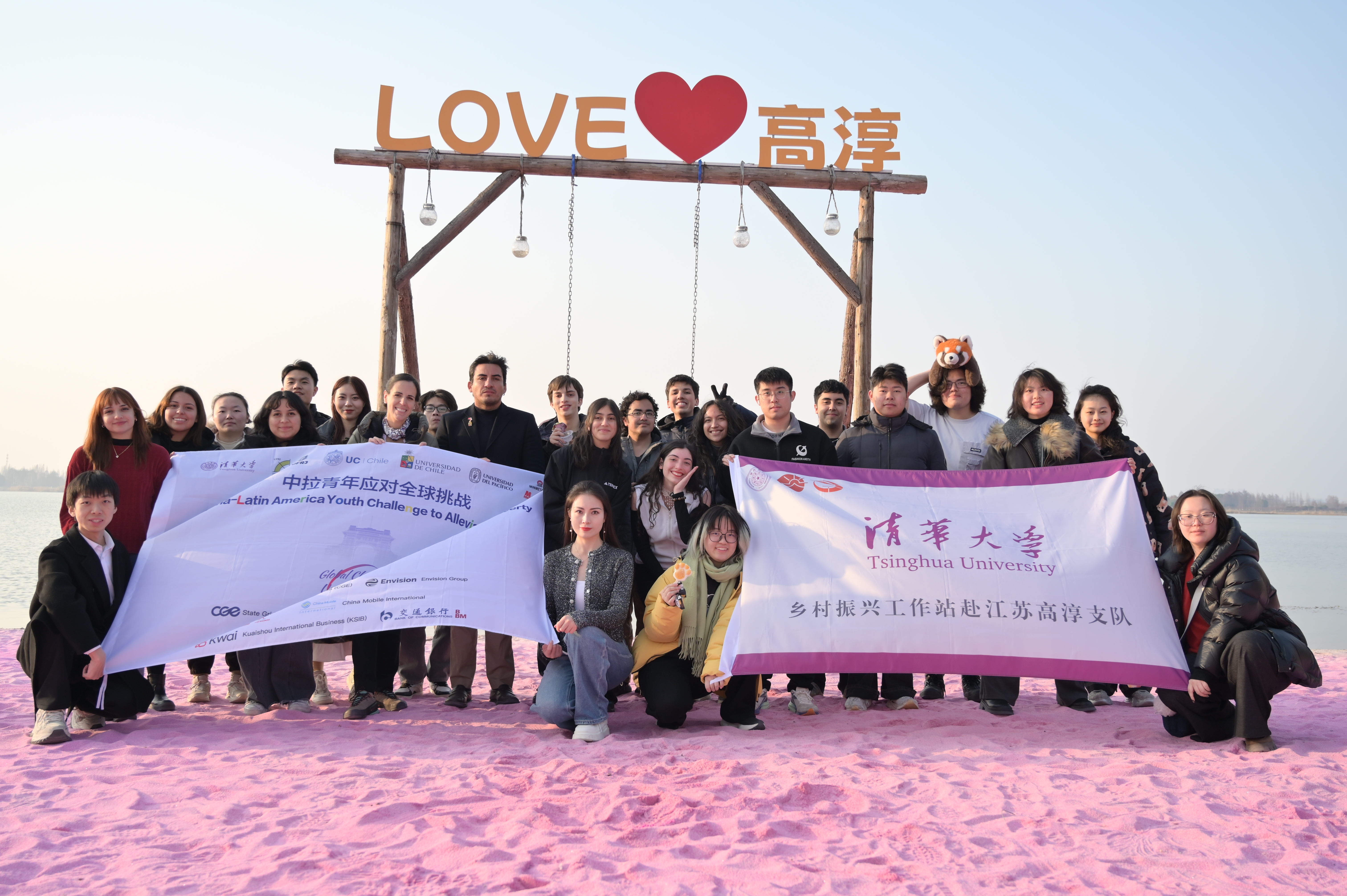
Group photo of Chinese and Chilean teachers and students at the International Water Slow City
After that, the research team walked into the Slow City Zoo for a visit and experience. The rich animal and plant resources in the park provided young people with an opportunity to observe ecological diversity up close. During the visit, the research team learned about the park's exploration and practice in ecological protection and public science popularization. Young people from different cultural backgrounds shared their observations and feelings in communication and interaction, creating a relaxed and harmonious atmosphere on site and adding a unique experience to the day's research activities.
Singing Together at Gaochun Lodge, Sending Affection Through Words
As night fell over Gaochun, the Rural Revitalization Workstation was filled with warmth. An evening gathering across languages and cultures kicked off warmly with laughter and joy. Chinese and Chilean youth sat around together, continuing the sharing session to talk freely about what they had seen and felt, and precipitating the gains of the rural trip in communication. Later, the Chilean youth brought enthusiastic singing and dancing performances. Their vivid dance steps and cheerful melodies ignited the on-site atmosphere, and they also presented special snacks as warm gifts. The simple wishes made the friendship across mountains and seas more genuine.
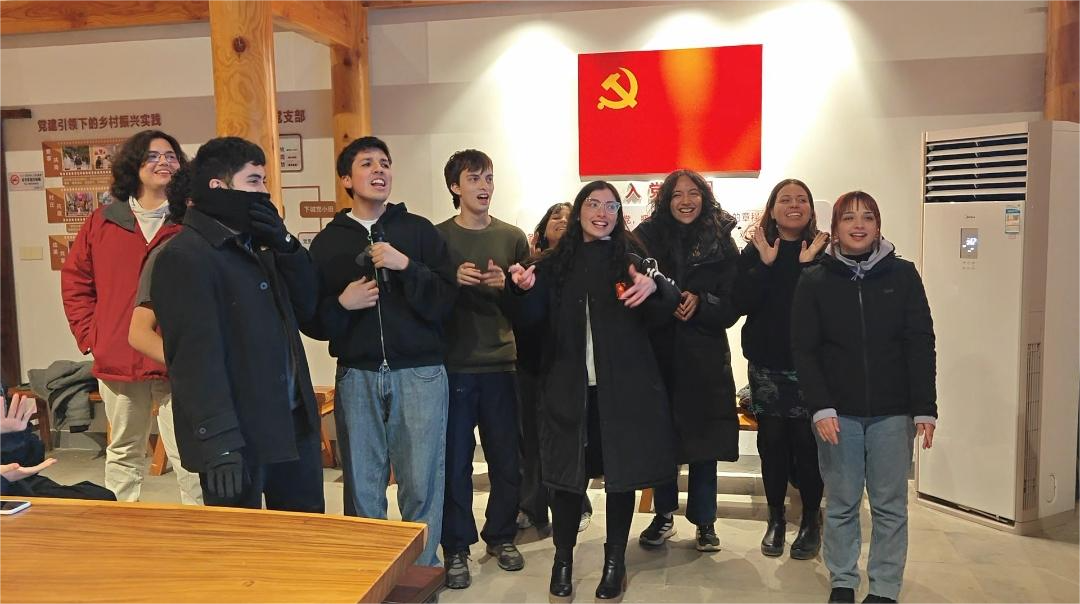
Enthusiastic communication between Chinese and Chilean youth
After the singing and dancing, songs became the link connecting each other. Chinese and Chilean youth started bilingual mutual teaching around the song Dance of the Rising Sun, patiently teaching each other the singing methods in their respective languages, and interpreting the warmth of the same song in every follow-up sentence. Immediately after, everyone sang Auld Lang Syne in their native languages respectively. The melodious melodies intertwined and echoed, fully showing the sincerity of cross-border friendship. The Chilean youth also acted as "music tutors" and taught everyone to sing their favorite songs. The cheerful rhythms and sincere melodies made everyone immerse themselves in the joy of singing. Every earnest follow-up and every tacit chorus pushed the warmth of the night to the extreme, and drew a perfect end to the rural trip of the day.
Summary
Every step taken is a scenery, and the fusion of hearts is better than the first meeting. Centering on rural industrial development, the integration of ecological culture and tourism, and poverty alleviation practices, the Gaochun joint research activity systematically presented the diverse paths of local rural revitalization through on-site visits and immersive experiences. From rural e-commerce and characteristic industries to ecological protection and the integration of culture and tourism, and then to in-depth exchanges and interactions between young people, Chinese and Chilean youth deepened their understanding of each other's development experiences through travels and enhanced cross-cultural recognition through communication. This joint practice not only expanded young people's cognition of rural poverty alleviation and revitalization paths, but also laid a good foundation for the continuous dialogue, mutual learning and practical cooperation between Chinese and Chilean youth.