About the 2025 Poverty Alleviation Challenge
Co-hosted by Tsinghua University, the Federal University of Rio de Janeiro in Brazil, the Pontifical Catholic University of Chile, the University of Chile, the Universidad del Pacífico in Peru and Minera Las Bambas S.A., the event attracted the participation of more than 310 teachers and students from 27 universities and enterprises across four countries: China, Brazil, Chile and Peru. The 2025 Poverty Alleviation Challenge is divided into two stages: the Preliminary Competition and the Transnational Final, aiming to promote cross-cultural communication and collaboration, and inspire the innovative thinking and practical capabilities of global youth in the field of poverty alleviation.
On June 7, 2025, the Preliminary Competition of the 2025 Poverty Alleviation Challenge was successfully held, with Tsinghua University as the offline main venue and participants from Latin American countries competing simultaneously in a hybrid online and offline format. After a fierce competition, 12 innovative teams stood out and advanced to the Transnational Final. In August 2025, the Transnational Final of the 2025 Poverty Alleviation Challenge was held in Brazil and Chile successively.
In January 2026, 32 Latin American university students who advanced to the final came to China for cultural immersion activities, including face-to-face exchanges with Chinese teachers and students, visits to China's poverty alleviation bases and institutions, and Chinese cultural tours.
The 2025 Poverty Alleviation Challenge received support from the Chinese Embassy in Brazil, the Consulate-General of China in Rio de Janeiro, the Brazilian Embassy in China, the Chinese Embassy in Chile, the Chilean Embassy in China and the Chinese Embassy in Peru. We sincerely thank renowned domestic and foreign enterprises for their strong support for the event, including Envision Group, CGE, Minera Las Bambas S.A., China Mobile International (Chile), Kuaishou International Business (KSIB) and Banco BOCOM BBM S.A..
On January 22, 2026, the warm winter sun shone gently on the countryside of Gaochun District, Nanjing City, Jiangsu Province, with black-tiled houses wrapped in a delicate fragrance under the clear winter sky. Members of the Nanjing Gaochun Team of Tsinghua University Rural Revitalization Workstation gathered here with Latin American teachers and students from the Pontifical Catholic University of Chile and the University of Chile to experience the unique charm of China's folk intangible cultural heritage and embark on the journey of China-Latin America joint practice in Gaochun with full enthusiasm.
01 Tracing the Charm of Porcelain in Museums, Exploring Gaochun's History Together
Gaochun Ceramic Museum
On the morning of the 22nd, the research team arrived at the Gaochun Ceramic Museum. Stepping through the gate of the museum, the gentle charm of porcelain, accompanied by the strong life vibes of the Jiangnan region with a thousand-year history, greeted them instantly.
Members of the Gaochun Team of Tsinghua University Rural Revitalization Workstation took the initiative to act as cultural messengers. While following the interpreter to listen to the development history of porcelain craftsmanship, they relayed the legend of the "sky blue after rain" glaze color and the magical firing technique of "turning clay into gold" to the Chilean teachers and students around them in both Chinese and English in real time.
Faced with the introduction of the "contemporary imperial porcelain" on the exhibition wall, the interpreter told the visiting students the stories of "porcelain used at the G20 Summit" and "national gift porcelain for the Belt and Road Initiative", allowing the overseas students to understand the romance and profoundness of oriental craftsmanship in awe.
After the visit, everyone took a group photo in front of the state banquet porcelain display table in the center of the exhibition hall. In the camera, the smiles of Chinese and foreign students complemented the gorgeous charm of porcelain, embodying the cultural resonance between China and Latin America into a warm picture at this moment.
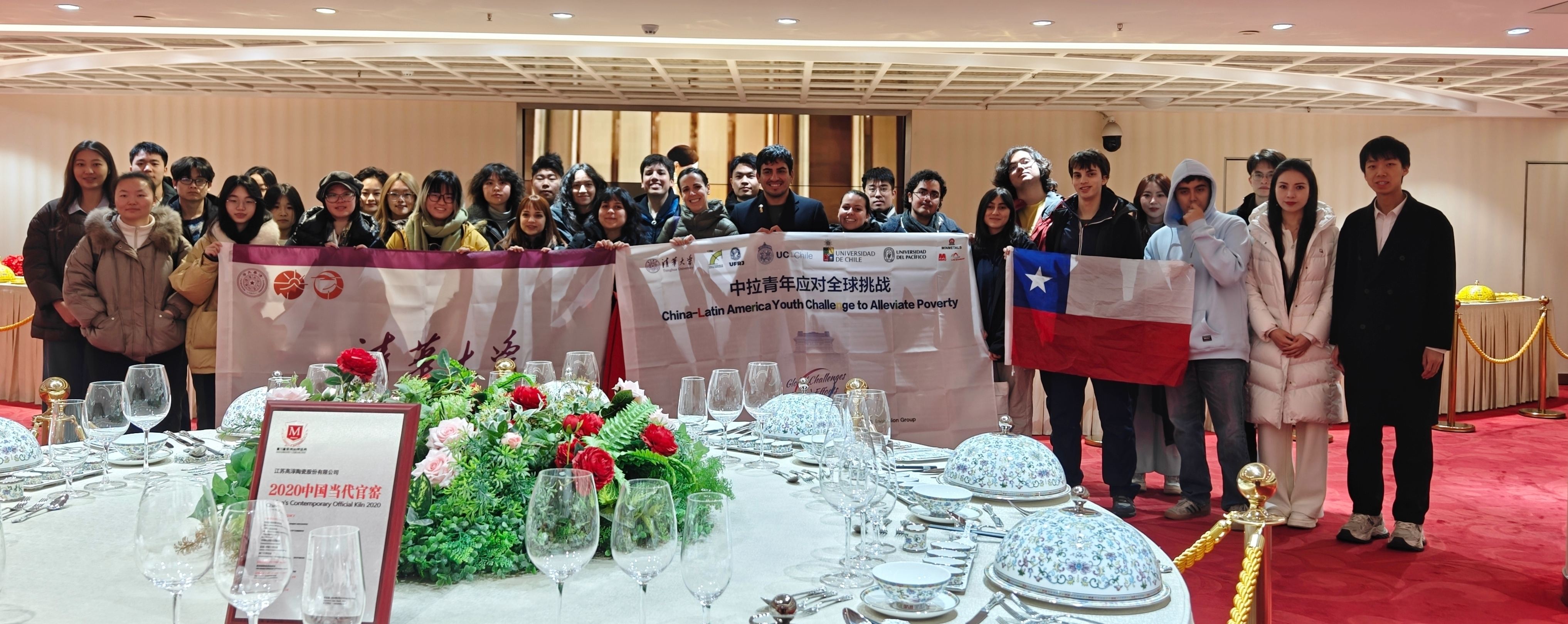
Group photo of Chinese and Chilean teachers and students at the Gaochun Ceramic Museum
Gaochun Museum
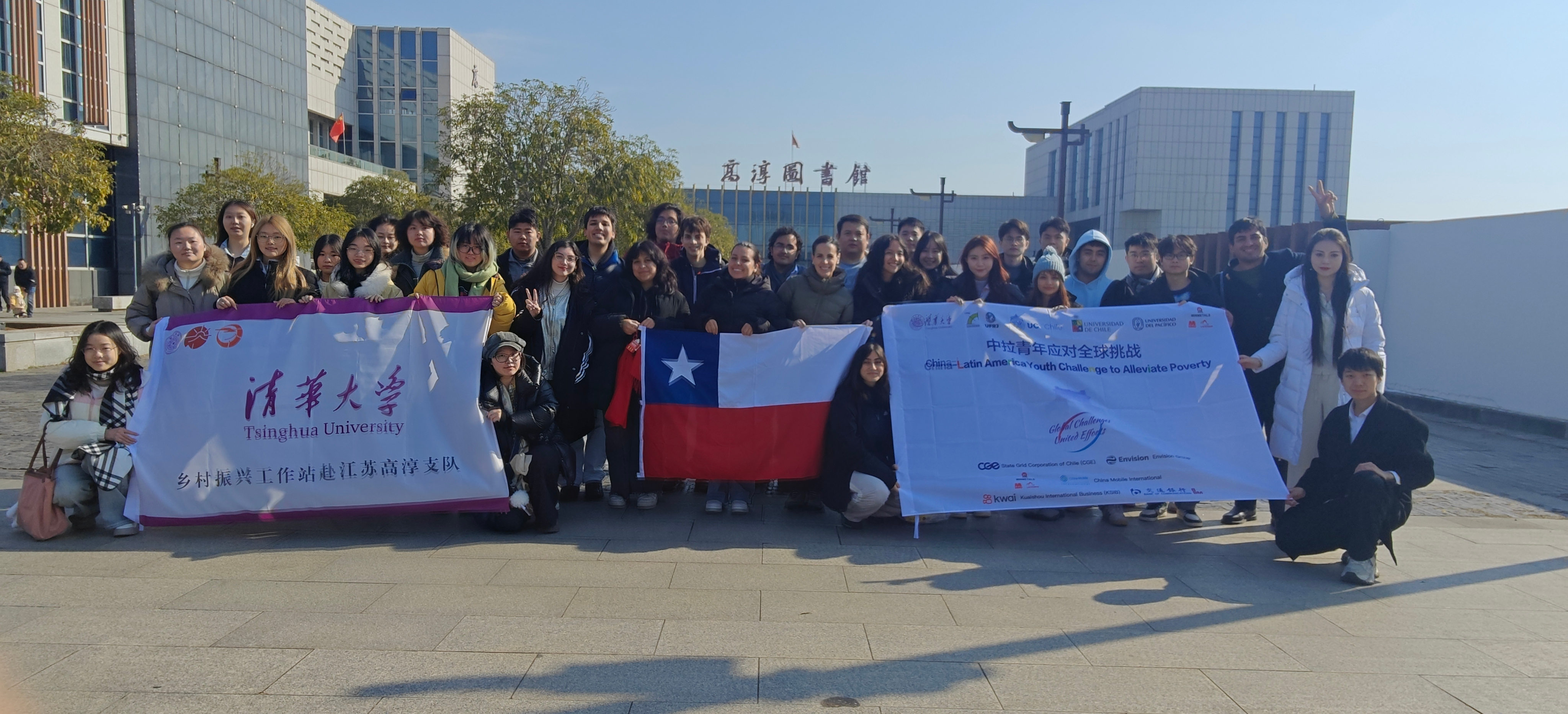
Group photo of Chinese and Chilean teachers and students at the Gaochun Museum
Walking out of the artistic charm of porcelain in the Gaochun Ceramic Museum, the research team immediately stepped into the historical corridor of the Gaochun Museum. Members of the Tsinghua Gaochun Team walked side by side with Chilean youth, touching the historical texture of Gaochun together in front of the exhibition cabinets.
When their eyes fell on the cultural relics marked by time, the Chilean youth gently tugged at the sleeves of the team members beside them to ask about Gaochun's past, and the members softly told the historical memories of Gaochun.
Faced with the rubbings of ancient villages on the exhibition wall, everyone bent down to identify the street pattern of the Jiangnan water town together. The Latin American youth excitedly shared the architecture and local customs of their hometowns, allowing the oriental rural history and Latin American civilization to complete a dialogue across mountains and seas in the gentle communication, and the friendship between each other quietly warmed up in the joint exploration of the past.
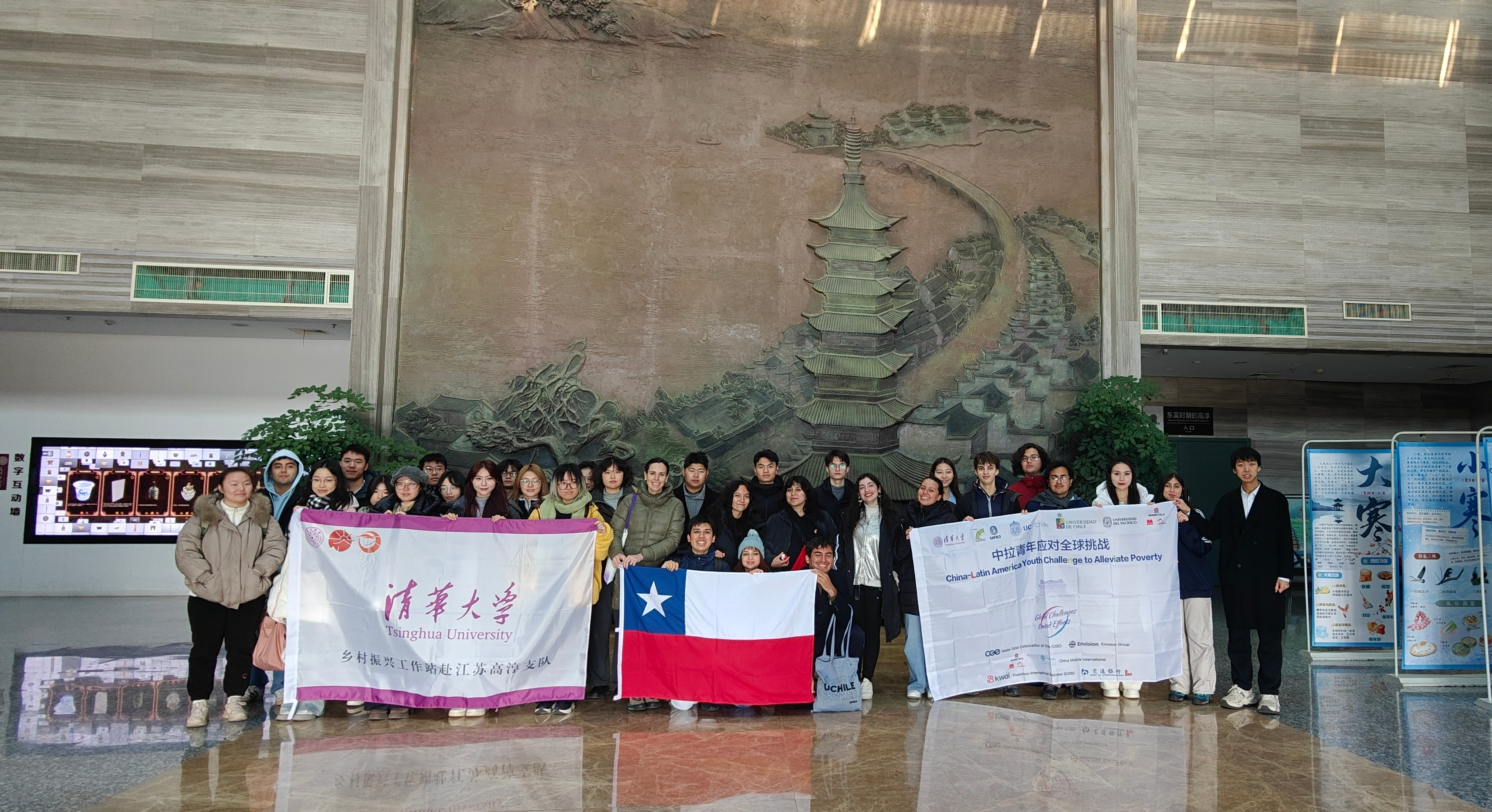
Group photo of Chinese and Chilean teachers and students at the Gaochun Museum
02 Seeking the Charm in the Ancient Street, Inheriting the Spirit of Intangible Cultural Heritage
Subsequently, the research team went to the Gaochun Ancient Street. Stepping on the bluestone roads into the street, time seemed to slow down here. Members of the Tsinghua University Rural Revitalization Workstation and Chilean youth walked together, moving slowly along the streets lined with black-tiled and white-walled houses.
In the handicraft workshops along the street, the woodcarvers' fingers fluttered to create exquisite works, and the pastry shops wafted with the sweet fragrance of rice. The team members took the initiative to introduce the centennial changes of the ancient street to the Chilean youth, from the carved window lattices of the Ming and Qing architecture to the lasting market life passed down from generation to generation, allowing the overseas guests to understand the gentle background of the Jiangnan ancient town while touching the texture of the ancient street.
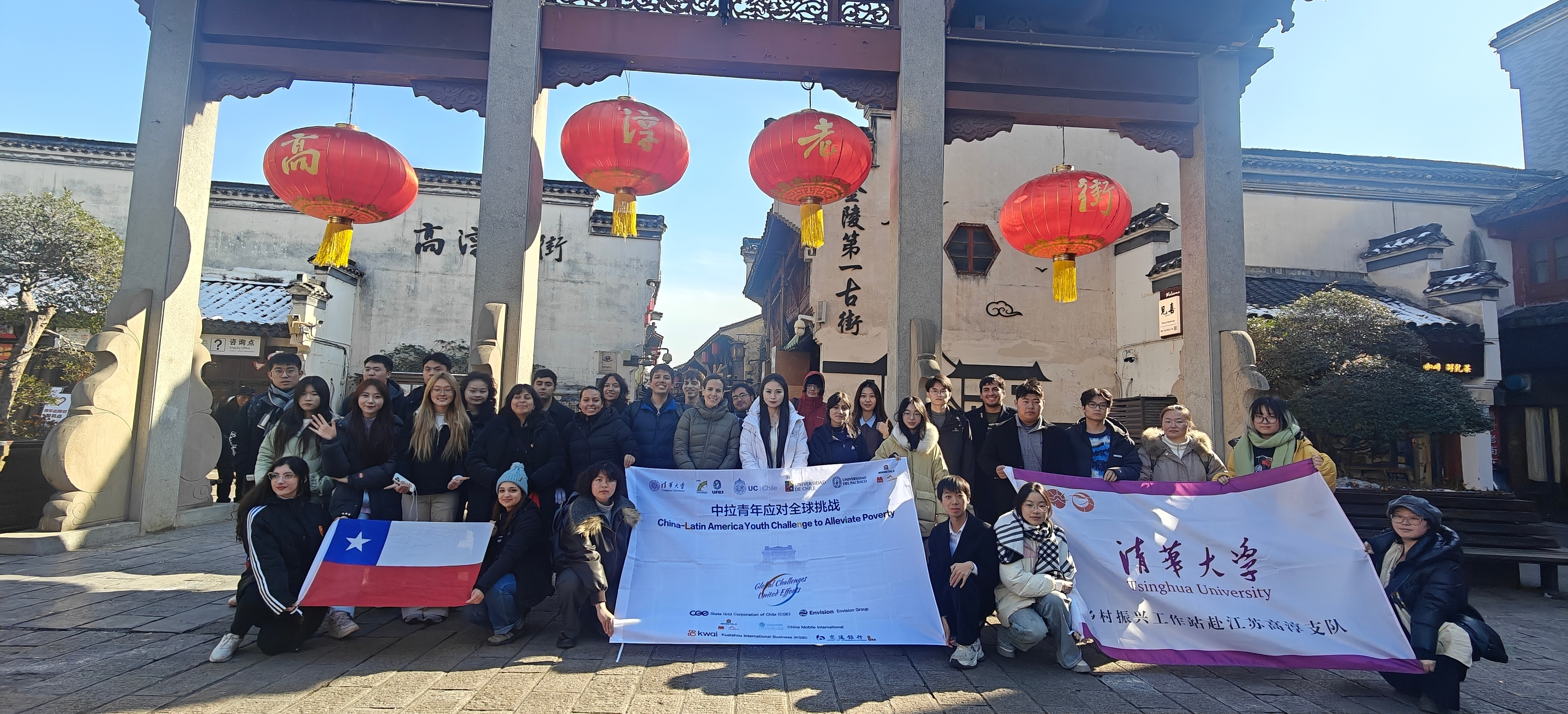
Group photo of Chinese and Chilean teachers and students at the Gaochun Ancient Street
The Chilean youth stopped to take photos from time to time and nodded repeatedly at the intangible cultural heritage handiworks along the street. The language barrier quietly dissipated in the smiling eyes and sincere communication.
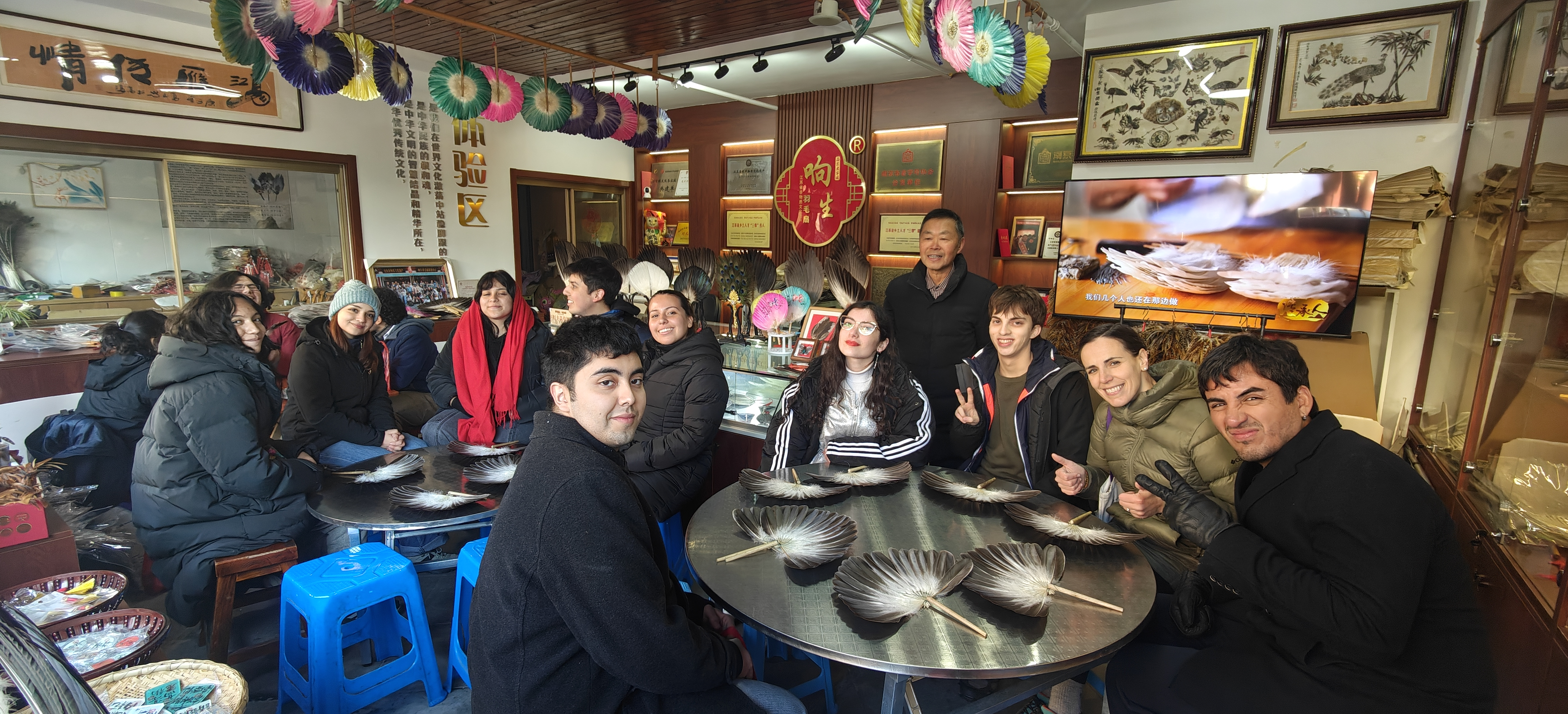
Latin American teachers and students learning to make feather fans
Turning from the ancient street into the Intangible Cultural Heritage Museum, a strong atmosphere of traditional craftsmanship hit them. In the exhibition hall, the light and elegant feather fans, the exquisitely carved woodworks, and the delicate paper-cuttings, each intangible cultural heritage craft made Chinese and foreign students intoxicated.
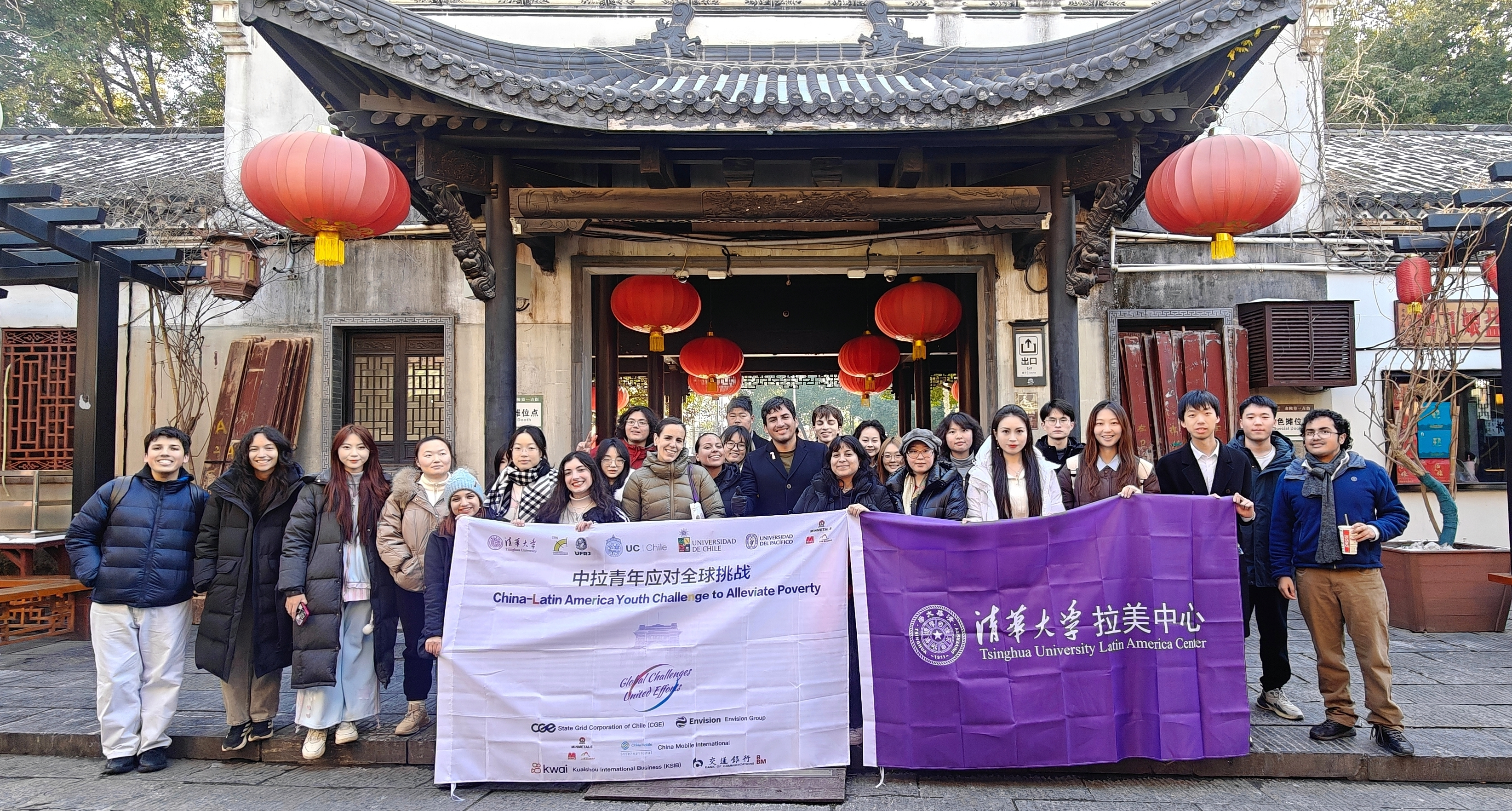
Group photo of Chinese and Chilean teachers and students at the Gaochun Ancient Street
Everyone took a group photo in front of the ancient street, freezing the friendship across mountains and seas and the charm of the millennium intangible cultural heritage in this warm moment together.
03 Evening Talk on Gaochun's Customs, China-Latin America Youth Sharing Aspirations
As dusk fell over the streets and alleys of Gaochun, the walks and explorations during the day turned into free talks and resonance at the evening salon. Members of the Tsinghua Gaochun Team and Chilean youth sat around together, and an exchange salon connecting China and Latin America officially kicked off under the warm yellow light. The Chilean youth took the lead to share, recounting the details of their trip in the past few days with the freshness and enthusiasm of their first encounter with Gaochun. In every word of emotion, they frankly said that this trip had given them a vivid and true understanding of Chinese rural areas. The sincerity and admiration in their words drew bursts of applause from the audience from time to time.
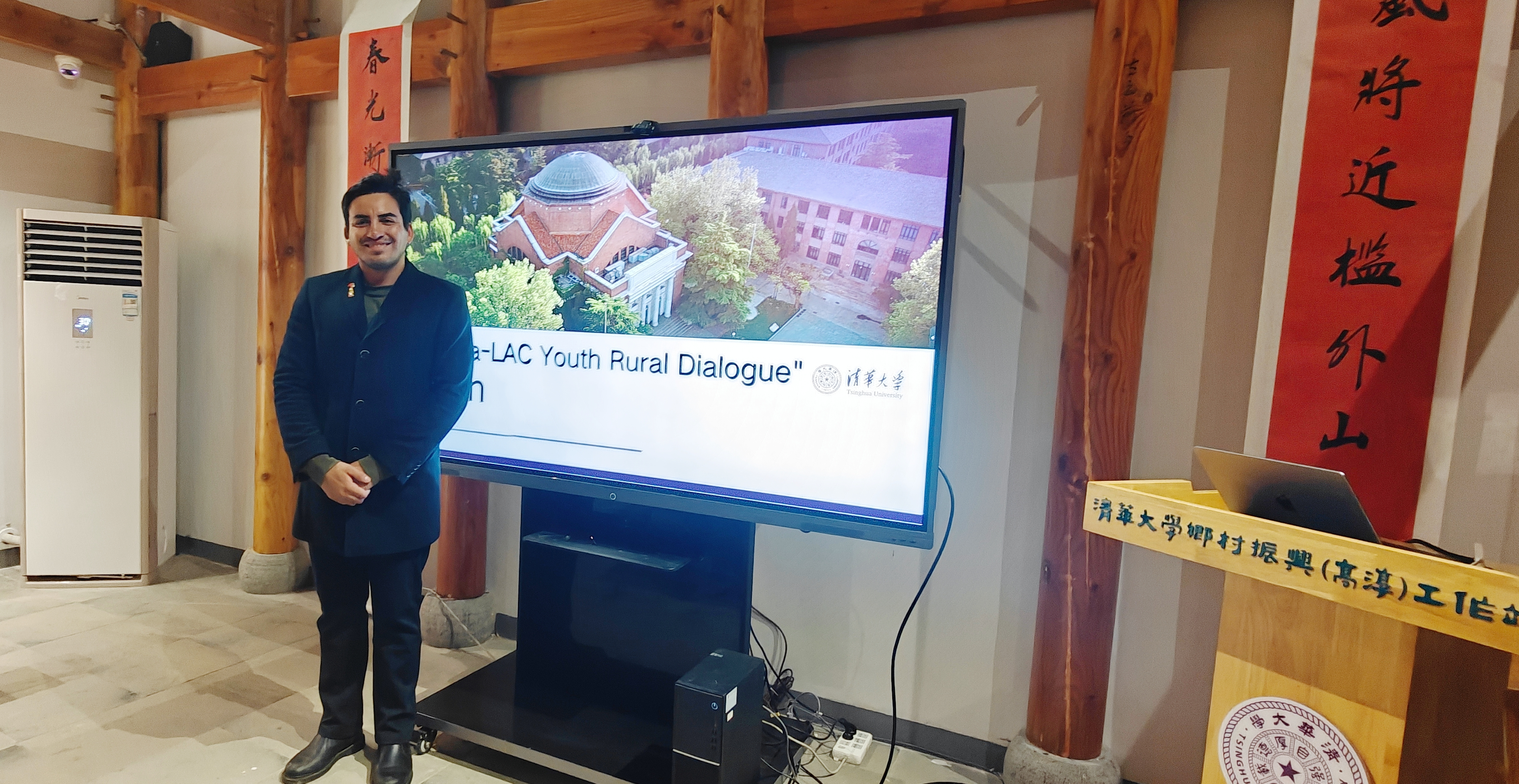
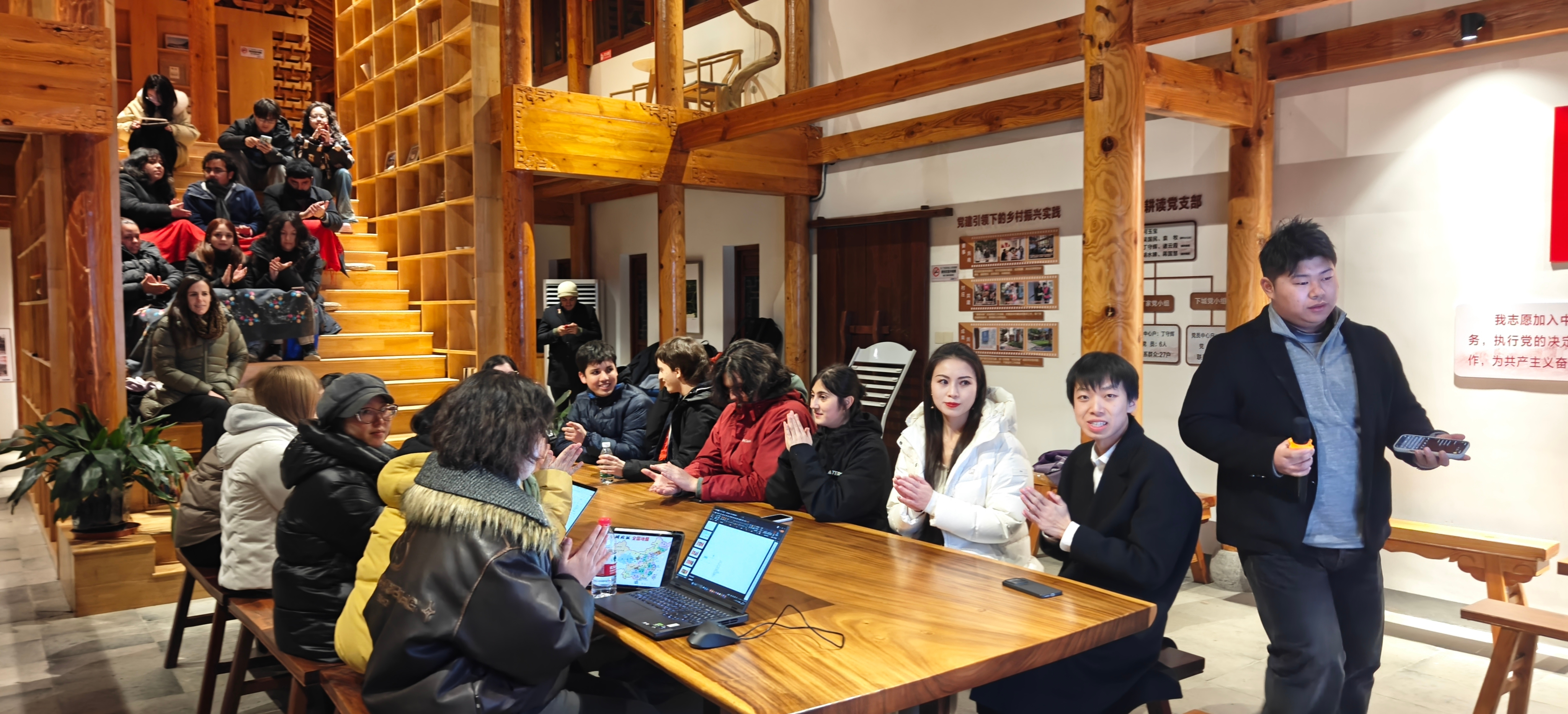
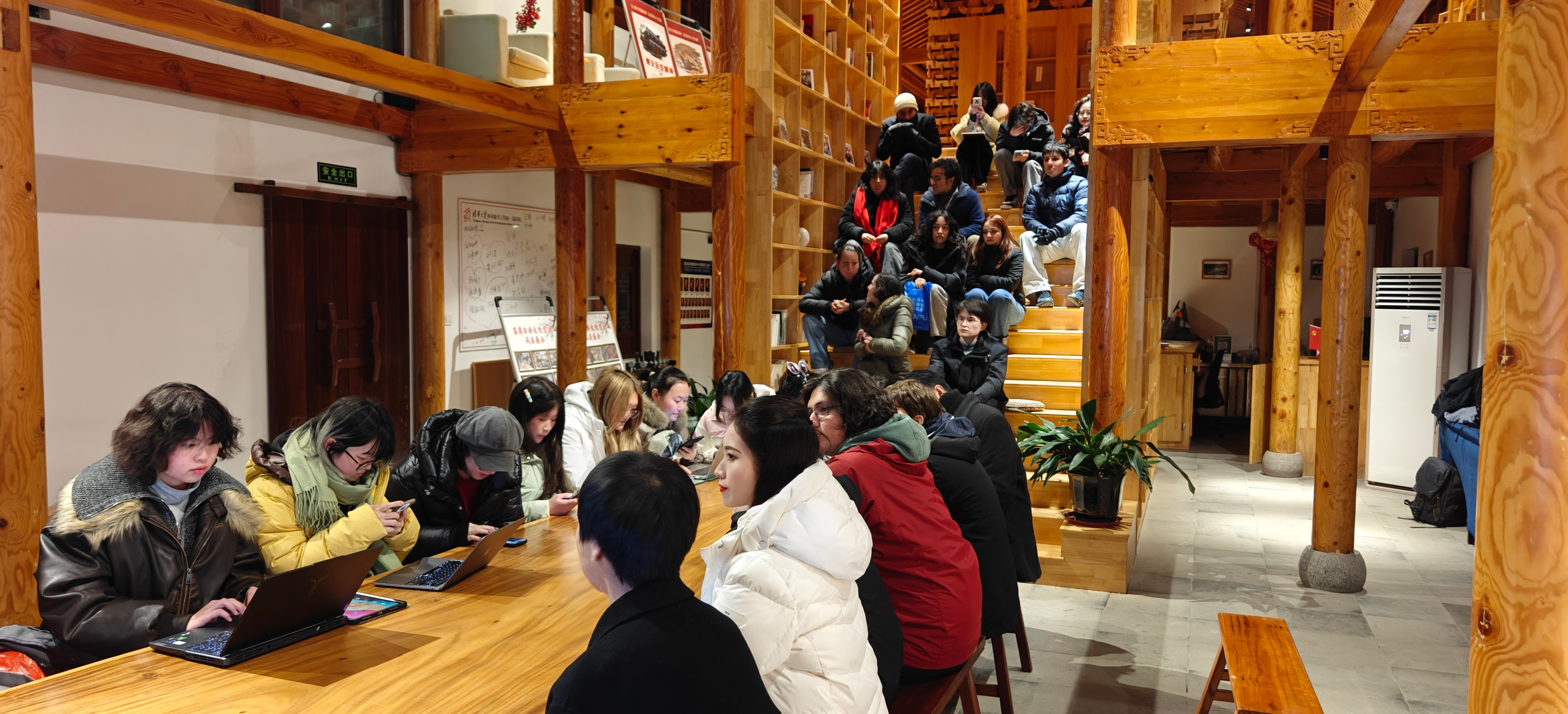
Chinese and Chilean teachers and students conducting exchanges
After the Chilean youth's sharing, the team members took over the conversation and shared the local exploration of rural revitalization combined with their practical experience in rural revitalization. From the activation and inheritance of intangible cultural heritage skills, to the research and excavation of rural industries, and then to the protection and renewal of the style of ancient villages, the team members used rooted practical cases to tell the story of young students boosting rural development with the power of youth. During the sharing, the Chilean youth raised questions from time to time, ranging from rural industrial models to the market development of local specialties, and the team members answered them in detail one by one. The two sides also discussed the similarities and differences between Latin American rural development and Chinese rural revitalization, with sparks of ideas colliding from different cultural perspectives. This salon across mountains and seas transcended language barriers, leaving only the connection of hearts. The friendship forged by walking side by side during the day became more profound in the late-night talks, and also gathered more cross-cultural understanding and consensus for the subsequent joint practice.
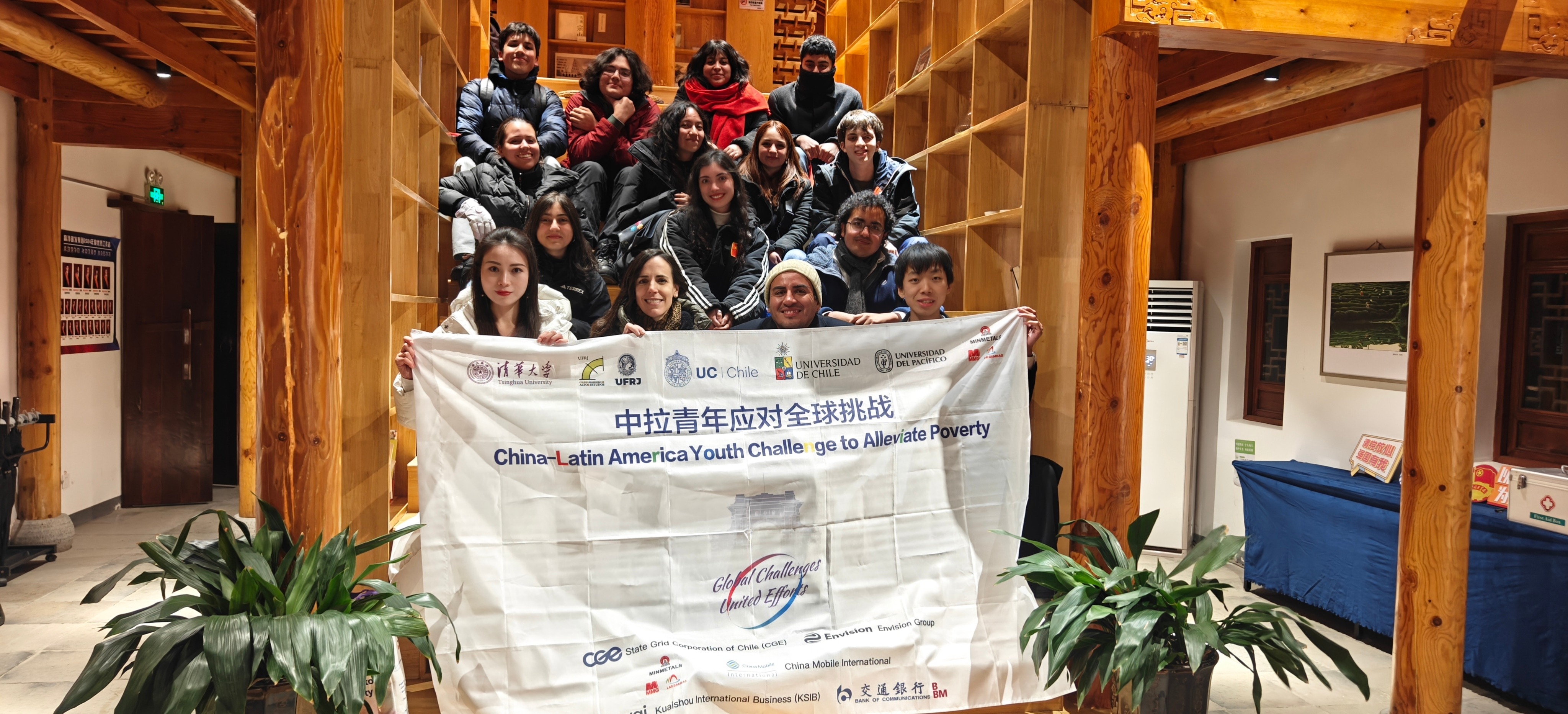
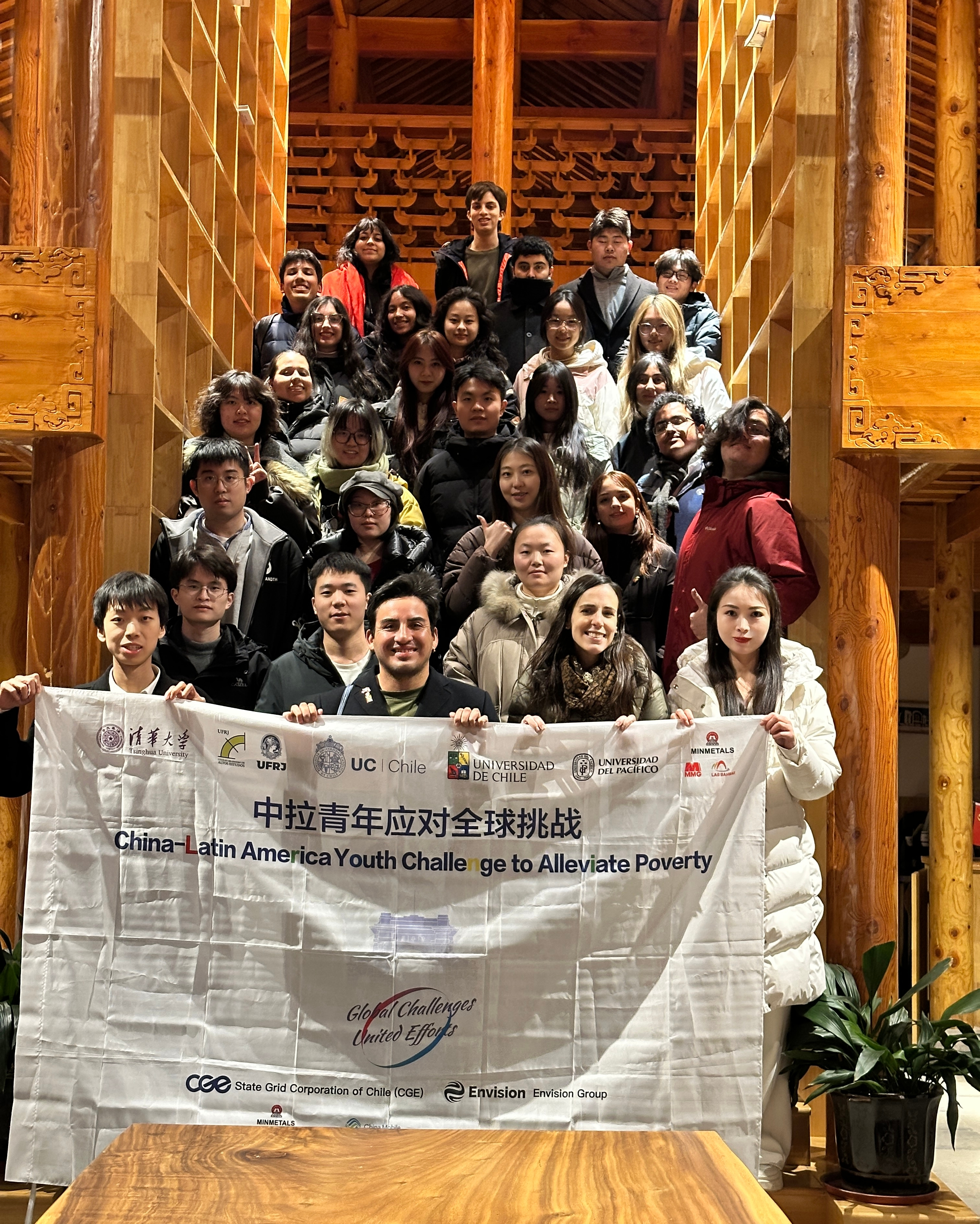
Group photo of Chinese and Chilean teachers and students
The one-day itinerary came to an end, and the warmth of friendship lingered on. Members of the Tsinghua Gaochun Team and Chilean youth walked hand in hand, from tasting the millennium porcelain charm in the Ceramic Museum and exploring the rural historical context in the Gaochun Museum, to wandering the Gaochun Ancient Street to embrace the lively life of Jiangnan and entering the Intangible Cultural Heritage Museum to inherit the craftsman spirit. They paired up for communication and provided cross-language explanations all the way, making walking a bridge for cultural connection. The China-Latin America salon in the evening further condensed the experiences into in-depth talks: the Chilean youth shared their true perceptions of the trip to Gaochun, and the team members told the practical stories of rural revitalization, with Chinese and foreign perspectives colliding and hearts connecting seamlessly.
The exploration on the first day allowed Chinese and Latin American students to know and accompany each other across mountains and seas, laying a solid foundation for joint practice in cultural mutual learning, and also making the vision of youthful power and rural revitalization more vivid in the sincere steps towards Gaochun.