China-Latin America Youth Responding to Global Challenges: 2026 Poverty Alleviation Challenge
Chile Station Final: Mentoring Session
About the “Poverty Alleviation Challenge”
Poverty alleviation is a universal challenge for developing countries and a shared concern for the entire world. In 2024, the Tsinghua University Latin America Center, the Research Center for China-Latin America Management Studies, School of Economics and Management, Tsinghua University, and the Center for Global Competence Development at Tsinghua University, in collaboration with Latin American university partners, successfully launched and implemented the “China-Latin America Youth Responding to Global Challenges — 2024 Poverty Alleviation Challenge” (hereinafter referred to as the “Poverty Alleviation Challenge”) in China (Tsinghua), Brazil, and Chile. This initiative sparked a wave of university-led poverty alleviation dialogues across China and Latin America. In November of the same year, during President Xi Jinping’s state visit to Brazil and his attendance at the 19th G20 Leaders’ Summit, Party Secretary Qiu Yong of Tsinghua University and the Rector of Universidade Federal do Rio de Janeiro (UFRJ) signed a cooperation agreement on the “China-Latin America Youth Responding to Global Challenges” program. This agreement was included in the official list of outcomes of President Xi’s visit to Brazil, becoming a landmark initiative for China-Latin America win-win development led by Tsinghua University. The 2026 Poverty Alleviation Challenge is co-hosted by founding organizers including Tsinghua University, Universidade Federal do Rio de Janeiro (UFRJ), Pontificia Universidad Católica de Chile (UC), Universidad de Chile, and Universidad del Pacífico (Peru). The program is jointly organized by the Embassy of China in Brazil, the Fundação Getulio Vargas (FGV) EAESP, Universidad de Santiago de Chile (USACH), and Pontificia Universidad Católica del Perú (PUCP).
The 2026 Poverty Alleviation Challenge has attracted more than 666 youth participants from 88 universities and organizations in countries such as China, Chile, Brazil, and Peru, forming a total of 119 teams. The challenge is structured into two stages—the “Preliminary Round” and the “Transnational Finals”—aiming to foster cross-cultural communication and collaboration while stimulating the innovative thinking and practical skills of global youth in the field of poverty alleviation. In June 2026, the preliminary round of the 2026 Poverty Alleviation Challenge was successfully conducted. With Tsinghua University serving as the primary offline venue, participants from Latin American countries joined through a hybrid online and offline format. After intense competition, 12 innovative teams stood out and advanced to the transnational finals. The Chile Final is being held in Santiago, Chile, from August 17 to 19, Chile Standard Time. During this final phase, participating teams will engage in a series of challenging activities, including ice-breaking sessions, field research, poverty alleviation seminars, mentoring, and the design and presentation of poverty alleviation solutions.
The 2026 Poverty Alleviation Challenge received support from the Chinese Embassy in Brazil, the Chinese Consulate-General in Rio de Janeiro, the Embassy of Brazil in China, the Chinese Embassy in Chile, the Embassy of Chile in China, the Chinese Embassy in Peru, and the Embassy of Peru in China. Leading Chinese and international companies and institutions, including Envision Group, CGE Group (Chile), Minera Las Bambas S.A., Zhongshan (Beijing) Cultural Industry Co., Ltd., DiDi, China Mobile International (Chile), Kuaishou International Business (KSIB), and the Luksic Foundation, also provided important support for the program.
On the afternoon of August 18, 2026, Chile Standard Time, approximately 50 mentors and contestants participated in the Mentoring Session of the 2026 Poverty Alleviation Challenge at Pontificia Universidad Católica de Chile (UC). A number of experts from Chinese and Latin American universities, enterprises, and relevant institutions were invited to serve as mentors for the event. The mentors included Flavia Zacconi, Associate Professor of the Institute of Biological and Medical Engineering at UC; Alex Parnas Hausmann, Director de Emprendimiento at Centro de Innovación UC; Patricio Bustamante, Professor at the Faculty of Medicine, Universidad de Chile; Jose Manuel Morales, Professor at the Institute of International Studies, Universidad de Chile; Daina Bellido, Associate Academic at the Faculty of Administration and Economics, Universidad de Santiago de Chile (USACH); and René Garrido, Associate Academic at the Faculty of Administration and Economics and former Director of the Department of International and Inter-University Relations at USACH; Eduardo Albornoz Lagos, Innovation Unit Specialist at FOSIS; Karen James Maldonado, International Cooperation Specialist at FOSIS; and Valeria Olivos, Deputy Director of Financial Management at CGE; Zhao Daqi, Director and Researcher at the Institute for Rural Constructions and the Innovation and Entrepreneurship Center of the Rural Revitalization Workstation at Tsinghua University; Jiao Yang, Researcher at the Future Laboratory, Tsinghua University; Gu Xiaohong, former Senior Executive at Bank of China (Peru); and Tan Yang, Founder of ZorroLibre.ai (distributed energy and AI platform) and CodeCity.lat (AI multi-agent platform). The session was moderated by Maribel Florez, Director of the Global Learning Office of the Office of the Vice President for International Affairs at Pontificia Universidad Católica de Chile.
Maribel Florez extended a warm welcome to all faculty and students, stating that the session was designed to promote cross-cultural exchange and enhance the practical skills of young students in the field of poverty alleviation. She encouraged participants to establish close links between their professional knowledge and social innovation practices.
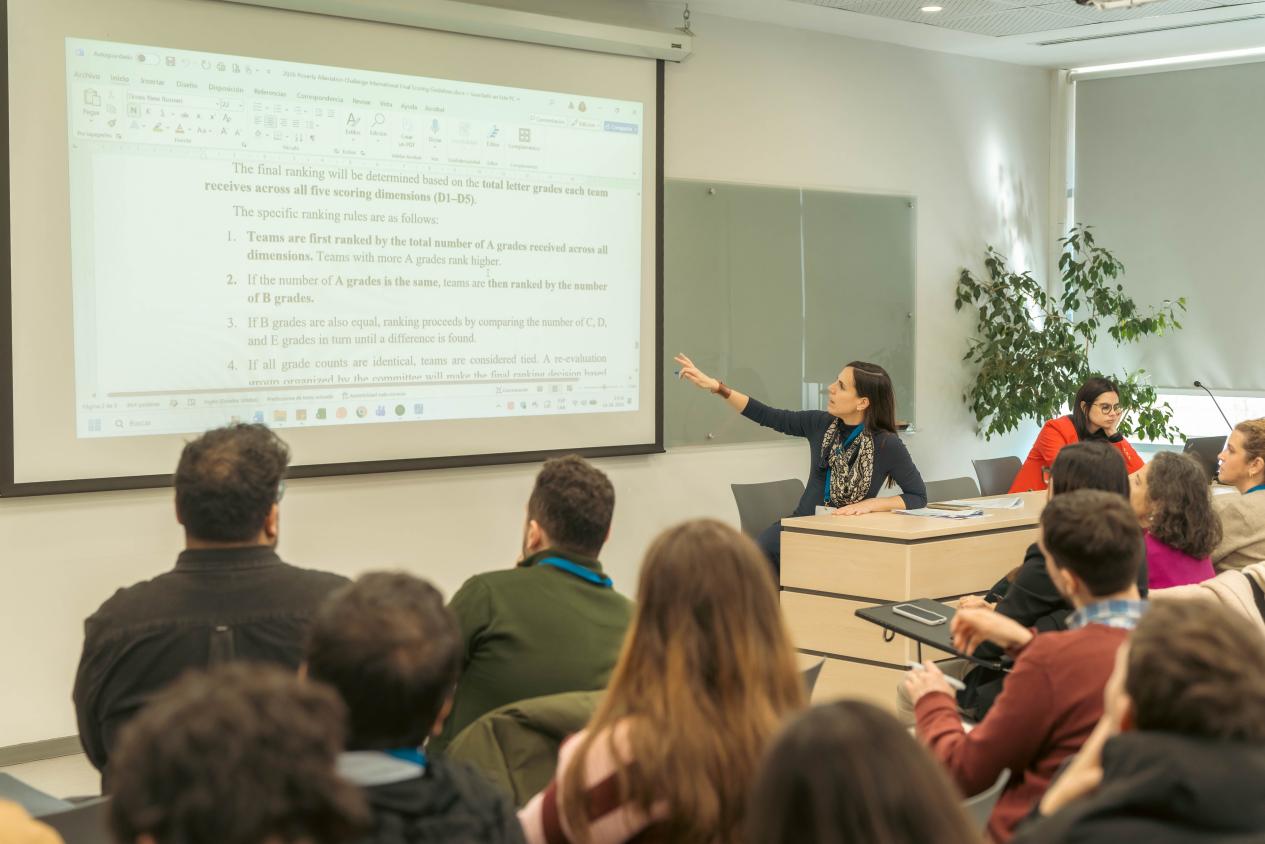
Figure: Maribel Florez, Director of the Global Learning Office of the Office of the Vice President for International Affairs at Pontificia Universidad Católica de Chile (UC), moderating the mentoring session
The mentoring session was conducted in the form of round-table meetings, where each participating team engaged in in-depth exchanges with four different mentors. Discussions revolved around multiple dimensions, such as defining target populations, the depth of research, and the feasibility of the solutions. The involvement of mentors from different fields provided teams with multi-disciplinary perspectives and practical experience, while also prompting each team to re-examine their project assumptions. This helped them further clarify their project logic and optimize implementation paths, ensuring their poverty alleviation concepts more closely met actual needs.
The youth and the mentors engaged in vibrant discussions regarding project concepts, the application of the Poverty Alleviation Analysis Toolkit, and the practical implementation of the poverty alleviation solutions. Mentors provided guidance on project design logic, feasibility analysis, and social impact assessment. They also offered constructive suggestions on project implementation strategies, helping students continuously refine their poverty alleviation plans and increase the practical value and social contribution of their solutions.
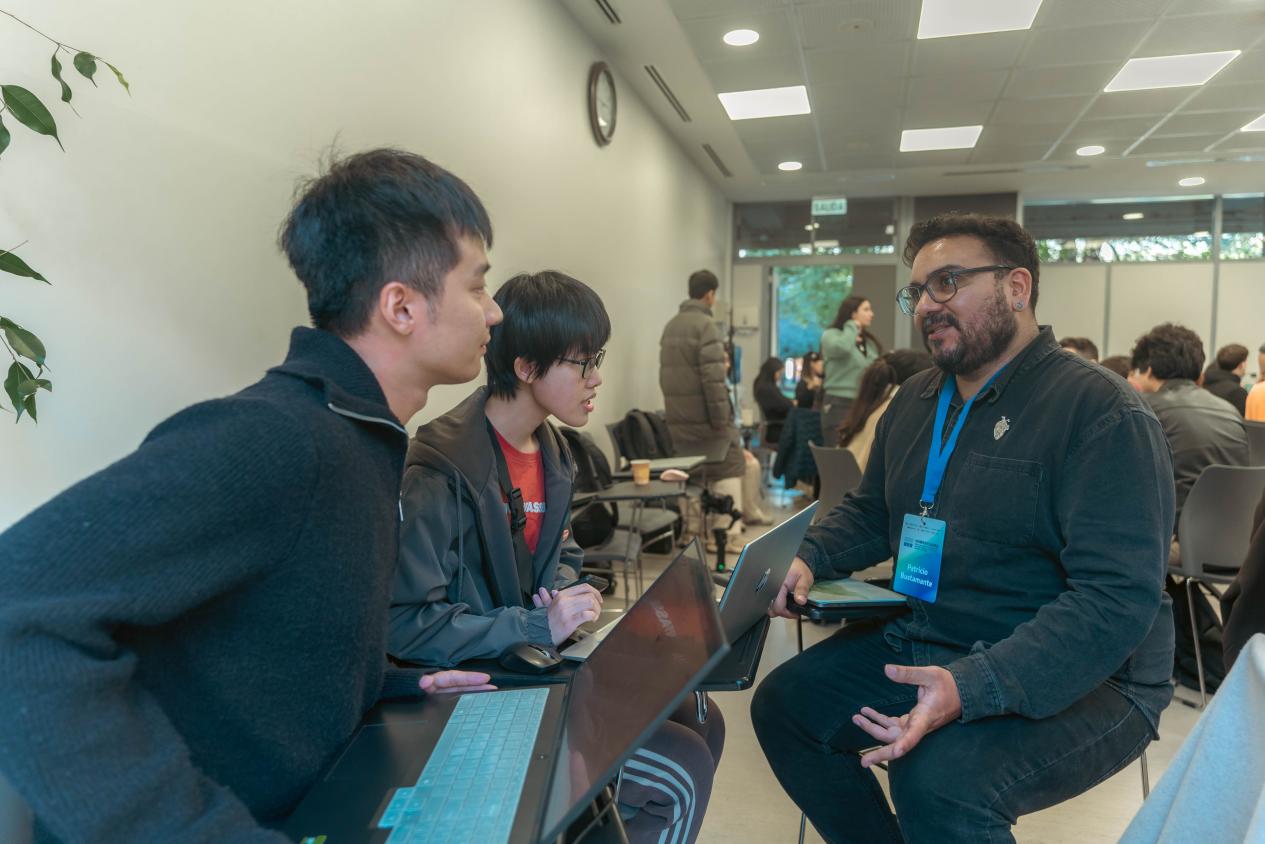
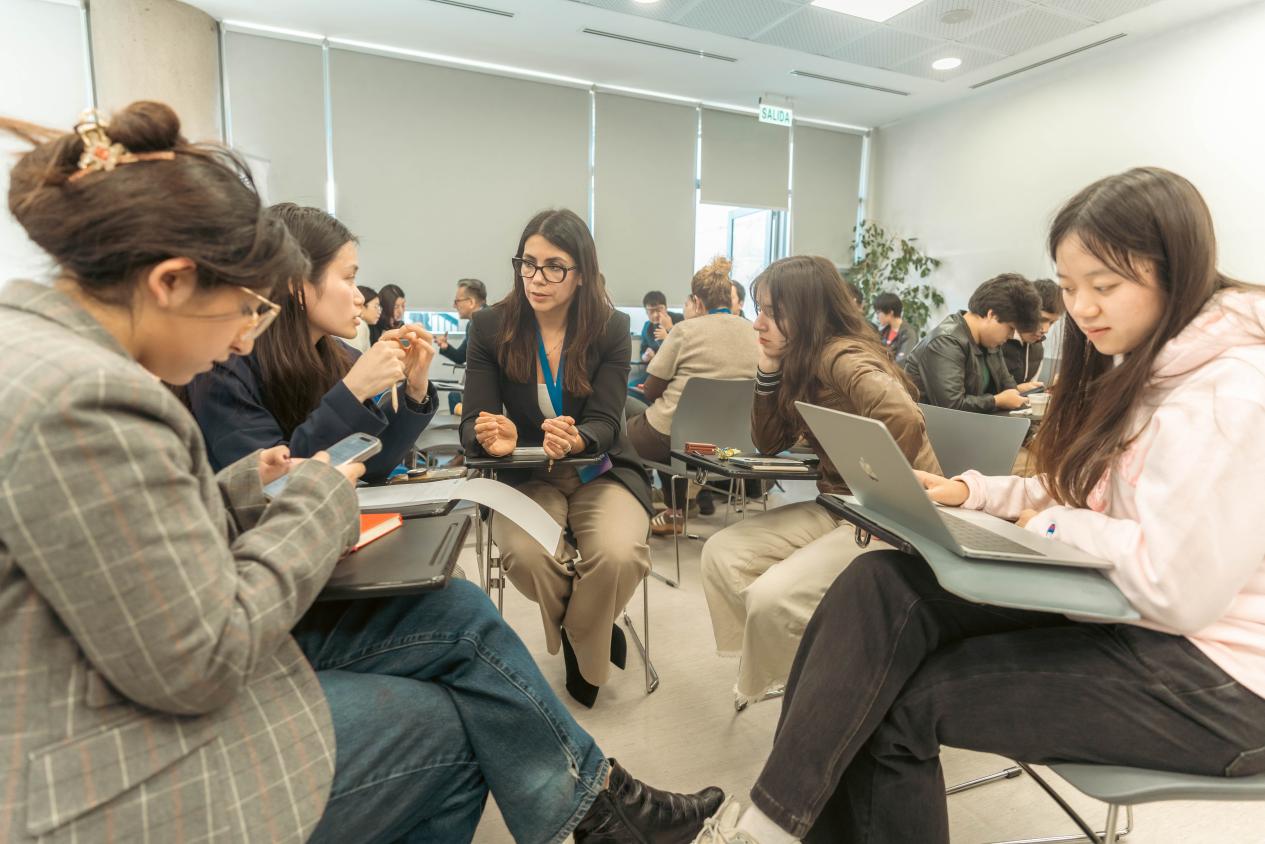
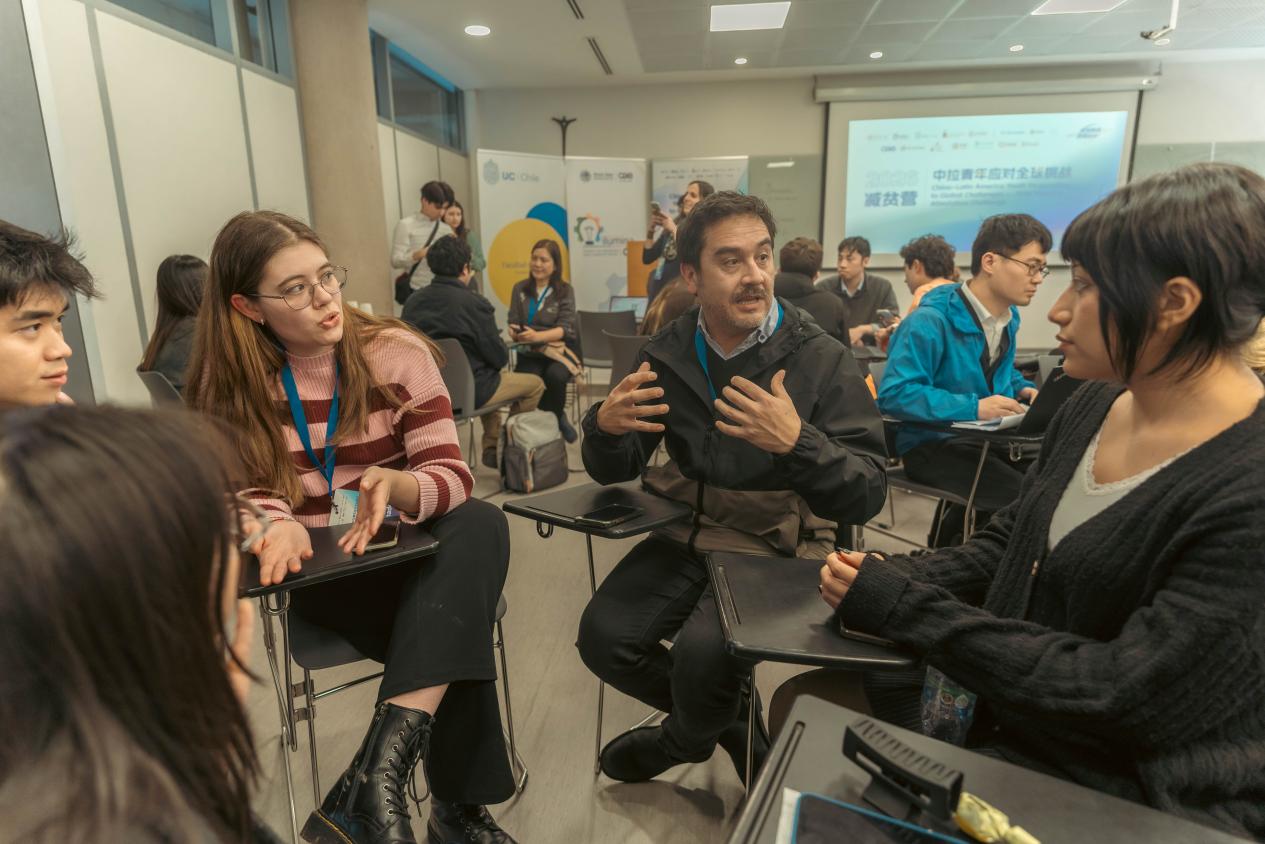
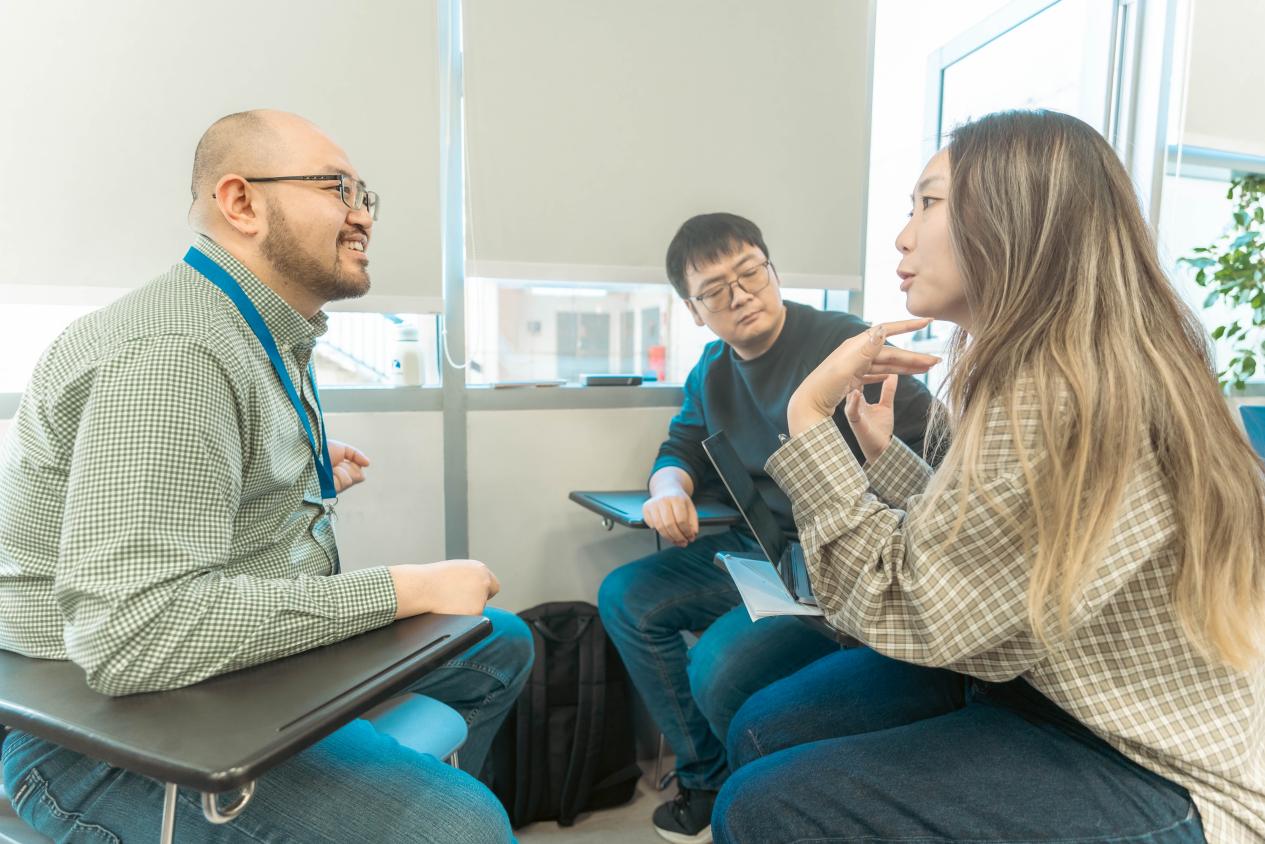
Figure: Mentoring Session
In the concluding session, mentors acknowledged and encouraged the innovative thinking and practical capabilities of the participating youth. Participants remarked that the cross-disciplinary mentoring not only helped the teams refine their proposals but also enhanced their communication skills and cross-cultural understanding.
The mentoring session of the 2026 Poverty Alleviation Challenge Chile Final concluded successfully amidst enthusiastic discussions between faculty and students. The professional guidance and cross-disciplinary exchanges from the mentors not only broadened the students' thinking—enabling them to further refine their project designs and implementation strategies—but also enhanced the innovation, feasibility, and implementability of their proposals, providing a valuable learning and exchange platform for the youth.