Degree Program: Master’s student
Academic Unit: School of Architecture, Tsinghua University
Field of Study: Urban and Rural Planning
Delegation Role: Communications Team
Project:
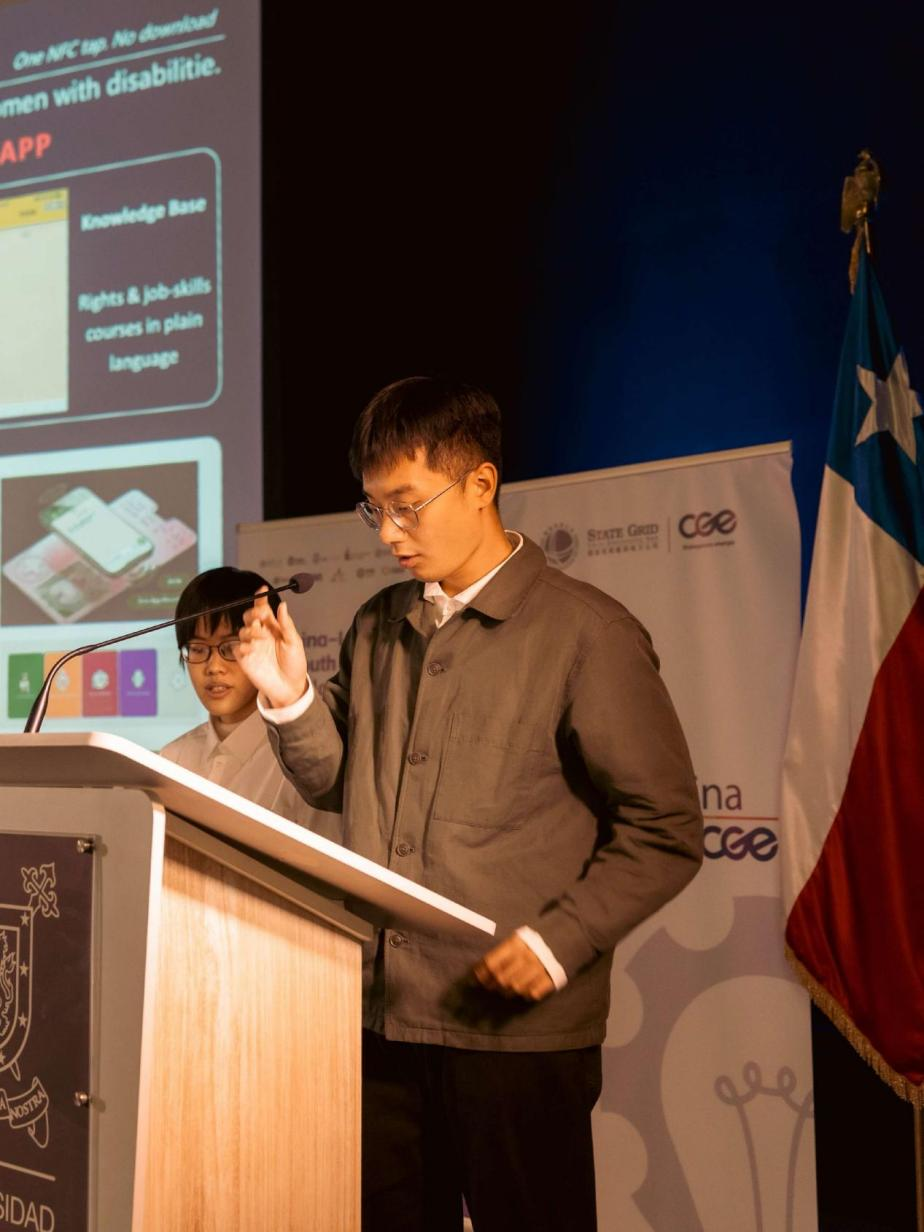
Toque-Saúde: An Accessible NFC Health Information System for Women with Disabilities in Brazil
Award: Distinction Award
Reflection:
Reflection as a Volunteer: I helped welcome Latin American faculty and students on visits to Tsinghua University think tanks and served as a project assistant during mentoring sessions at the 2026 Poverty Alleviation Challenge. These roles gave me a chance to contribute to exchanges between young people from China and Latin America, both face to face and behind the scenes. I accompanied visiting friends as they learned about China’s poverty reduction practices and coordinated across time zones to connect international teams with their mentors.
My role as a volunteer was small, but those encounters let me experience the warmth of cross-cultural exchange firsthand. I am grateful that the experience broadened my view of the world and taught me to approach what comes next with a more open mind.
Reflection as a Contestant: Our project, Toque-Saúde, focuses on access to information. For Latin American women with disabilities living in poverty, timely access to health and legal information and guidance on where to seek help can be a first step toward changing their circumstances. We designed an NFC card that costs only a few cents. A tap with a phone opens a WhatsApp chat where an AI assistant offers clear, easy-to-understand guidance. We distribute the cards through trusted channels such as local women’s networks and community organizations, in the hope of reaching the people who need the information most.
The competition gave me a more concrete understanding of how technology can support poverty reduction. There are many ways to use technology in this work. We focused on accessibility and affordability, adapting established tools to meet real needs while keeping costs and barriers to use as low as possible. Working with our Latin American teammates helped us better understand how communities are organized and how people go about their daily lives, so we could bring the project closer to the realities its users face.
Our work continues after the competition. We are still studying how the card would be used and refining the design. We look forward to staying in touch with local schools, institutions, and communities so that a single tap can become part of more people’s daily lives. I am grateful to the camp for giving ideas developed across borders a chance to take shape and for the friendships and experience of working together that I gained along the way.