China-Latin America Youth Responding to Global Challenges - 2026 Poverty Alleviation Challenge
Mentor Interview · Special Feature
China and Latin America join hands to advance poverty alleviation; empower with wisdom, and achieve far-reaching impact through action.
China-Latin America Youth Responding to Global Challenges - 2026 Poverty Alleviation Challenge has invited senior mentors from academia, public welfare and industry to provide full-cycle professional guidance for participating teams.
In this issue, we talk with Mentor Xu Chengtao to share his insights on China-Latin America youth innovation for poverty alleviation, his understanding of the competition model, and his sincere message for youth development.
---
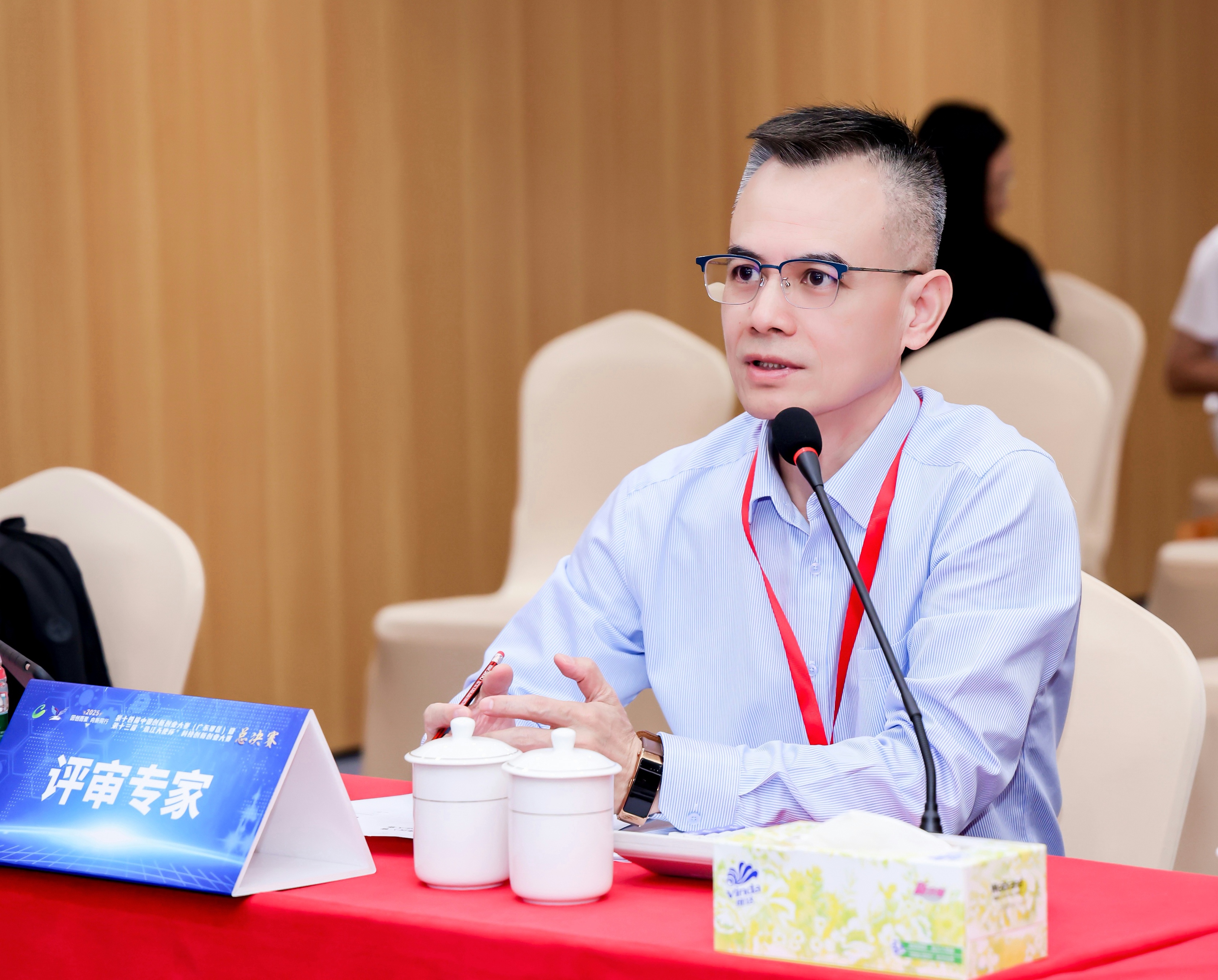
Mentor Profile
Deputy Secretary-General of Qianhai Industrial Think Tank
Vice President of Shenzhen Entrepreneurship and Innovation Association
Secretary-General of Shenzhen Branch of Guangdong Angel Investment Association
Deputy Secretary-General of Shenzhen Enterprise Technology Innovation Promotion Association
Deputy Secretary-General of Shenzhen Qiji Qianhai Technology Industry Research Institute
CEO of Shenzhen Zoudou Sci-Tech Enterprise Service Co., Ltd.
Founder of the "Tao Ge Industrial Insights" IP brand,
independent angel investor, and seasoned startup mentor
Research / Practice Areas:
Early-Stage Investment in TMT, Consumer Services, and Cultural Creativity Sectors; Research on the Internetization of Traditional Industries and Industry Implementation; Management of the IT Industry and Decoding the Logic of New-Quality Productivity Enterprises; Practical Experience in Early-Stage Project Equity Design and Strategic Planning.
Preferred tutoring areas:
Full-cycle entrepreneurship methodology for startups; Fundraising guidance and business plan (BP) logic optimization; Practical application of equity incentives and equity structure consulting; Industry resource connection, network expansion, and capital matchmaking.
---
Exclusive Interview
Q1: Why did you participate in the 2026 Poverty Alleviation Challenge and serve as a mentor?
Serving as a mentor for the 2026 Poverty Alleviation Challenge of Tsinghua University Latin American Center is not only of profound social value, but also a cross-border dialogue that combines knowledge and practice. Its significance lies in: contributing wisdom to the global poverty alleviation cause. As a mentor, I have lived and worked in Shenzhen for more than 30 years, and I have witnessed Shenzhen grow from a poor small fishing village into a prosperous international metropolis. As a senior entrepreneurship mentor, I have coached a large number of innovation and entrepreneurship projects over the years, with rich experience in entrepreneurship coaching. I can inject these valuable experiences into the global poverty alleviation cause, combining the successful development experience of Shenzhen with the actual situation of Latin America, to output replicable and scalable practical experience. I hope to guide and inspire young people's wisdom, help them deeply understand complex poverty issues, and transform innovative poverty alleviation solutions from concepts into practical implementation, cultivating a new generation of global poverty alleviation talents.
Q2: How do you interpret the 'integration of learning, competition, and research' model in this edition of the event?
The "integration of learning, competition, and research" model of the Poverty Alleviation Challenge is an innovative model that breaks the boundaries between traditional teaching, competition and research, and builds a complete, interconnected and progressive training chain, allowing participants to improve their capabilities through theoretical knowledge, practical training and in-depth research. It closely combines knowledge input, practical implementation and output. The Poverty Alleviation Camp is not only a competition, but also an incubator. Through the "integration of learning, competition, and research" model, it promotes competition through learning, drives research through competition, and sublimates through research, forming a complete closed loop. It ensures that participants not only learn knowledge, but also use knowledge to solve real problems and produce results with social value, which is also an effective way to cultivate young talents with global competence.
Q3: What do you think are the three key qualities that make an outstanding Poverty Alleviation Challenge team?
In my opinion, an outstanding team should have three core qualities: 1. Cross-border collaboration capability: An excellent team can achieve in-depth perspective integration of cross-national members, break geographical and cultural barriers, and conduct in-depth insight into social pain points, policy environments and cultural customs of different countries to discover and define problems. 2. Scientific and rigorous methodology: Be good at using tools to decompose complex problems. The team should proficiently use theoretical frameworks such as the "5W1H+ Poverty Alleviation Toolbox" to analyze poverty issues layer by layer, instead of staying on the surface, but digging into the root causes of poverty. 3. Ability to design practical and implementable poverty alleviation solutions: The team should not pursue overly broad and empty theories, but focus on a specific pain point (such as water shortage, power shortage) and propose innovative solutions. In short, let members from different countries truly "integrate" together, use scientific tools to "decompose" the problems, and use practical technologies to "implement" the solutions.
Mentor's Message
Seek change and innovation, breakthe cocoon and become a butterfly,and dare to take responsibility!