About “Poverty Alleviation Challenge”
Poverty alleviation is a common challenge faced by developing countries and a shared concern for the entire world. In 2024, the Tsinghua University Latin America Center; Research Center for China–Latin America Management Studies, SEM, Tsinghua University; and the Center for Global Competence Development at Tsinghua University, together with partner universities in Latin America, jointly launched the “China–Latin America Youth Responding to Global Challenges — 2024 Poverty Alleviation Challenge” program in China, Brazil, and Chile. The initiative sparked a vibrant dialogue on poverty alleviation led by universities across China and Latin America. In November 2024, during President Xi Jinping's state visit to Brazil for the 19th G20 Leaders' Summit, Tsinghua University Party Secretary Qiu Yong signed a cooperation agreement with the President of the Federal University of Rio de Janeiro on the "China-Latin America Youth Responding to Global Challenges" program. This agreement was included in the outcomes of Xi Jinping's visit and became a significant example of China-Latin America collaboration. Building on this foundation, the “2025 Poverty Alleviation Challenge” program, jointly organized by Tsinghua University and the Latin American partners, attracted more than 310 students and faculty members from 27 universities and enterprises across four countries in China and Latin America.
The “2026 Poverty Alleviation Challenge” program will further expand and innovate upon the 2025 program, injecting new momentum into global poverty alleviation efforts. Through international team formation, challenge competitions, and field research opportunities, the initiative aims to bring together young talents from China and Latin America to jointly explore innovative solutions to poverty alleviation. Outstanding teams will also have the opportunity to participate in research and exchange programs between China and Latin America. If you aspire to contribute fresh ideas to global poverty alleviation, the best time to embark on this journey is now.
01 Get Involved and Assemble Your Team Now
“2026 Poverty Alleviation Challenge” program is about to launch! Take the lead now—assemble your team early and unlock these advantages:
- Preparation Advantage: Teams will have sufficient time to build cohesion and refine project topics, enabling to tackle competition challenges with more mature and well-developed proposals.
- Resource Support: The organizing committee will provide supporting materials, including templates for team and individual presentations, roadshow recruitment guides, and the official competition handbook. These resources introduce the competition schedule, rules, tools, cross-country team formation methods, and incentive mechanisms, offering comprehensive support for your team’s preparation.
- Competitive Advantage: Cross-country teams composed of Chinese and Latin American members are strongly encouraged and can receive “Cross-cultural Bonus Points”. Acting early will lay a solid foundation for international teamwork and enhance your competitive edge.
02 Team Formation Process
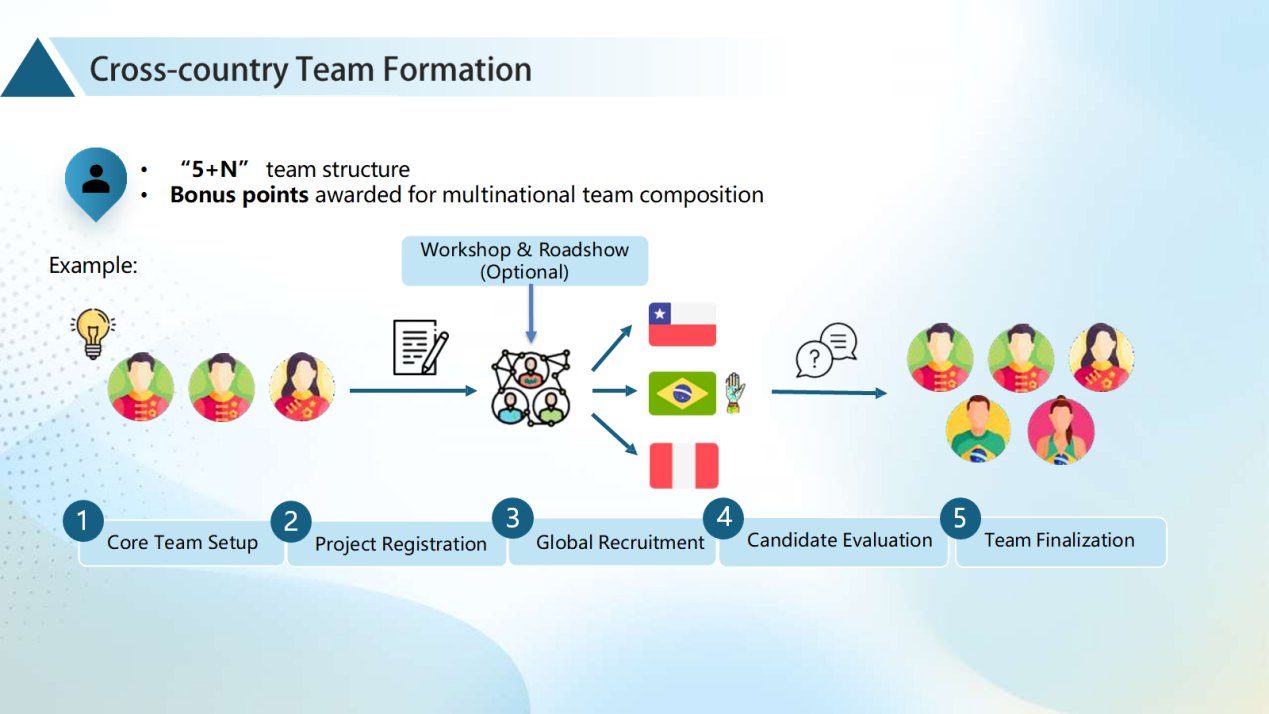
The competition adopts a “5+N” team structure:
- Each team should include five core members from eligible universities or enterprises in China and Latin America.
- Up to two optional members (N≤2) from relevant institutions in China or Latin America.
- In principle, team members should not all come from the same country. Cross-country teams are eligible to apply for “Cross-cultural Bonus Points” and may qualify to compete for “Cross-cultural Competence Award”.
03 Incentive Mechanism
All participating teams will receive incentive support:
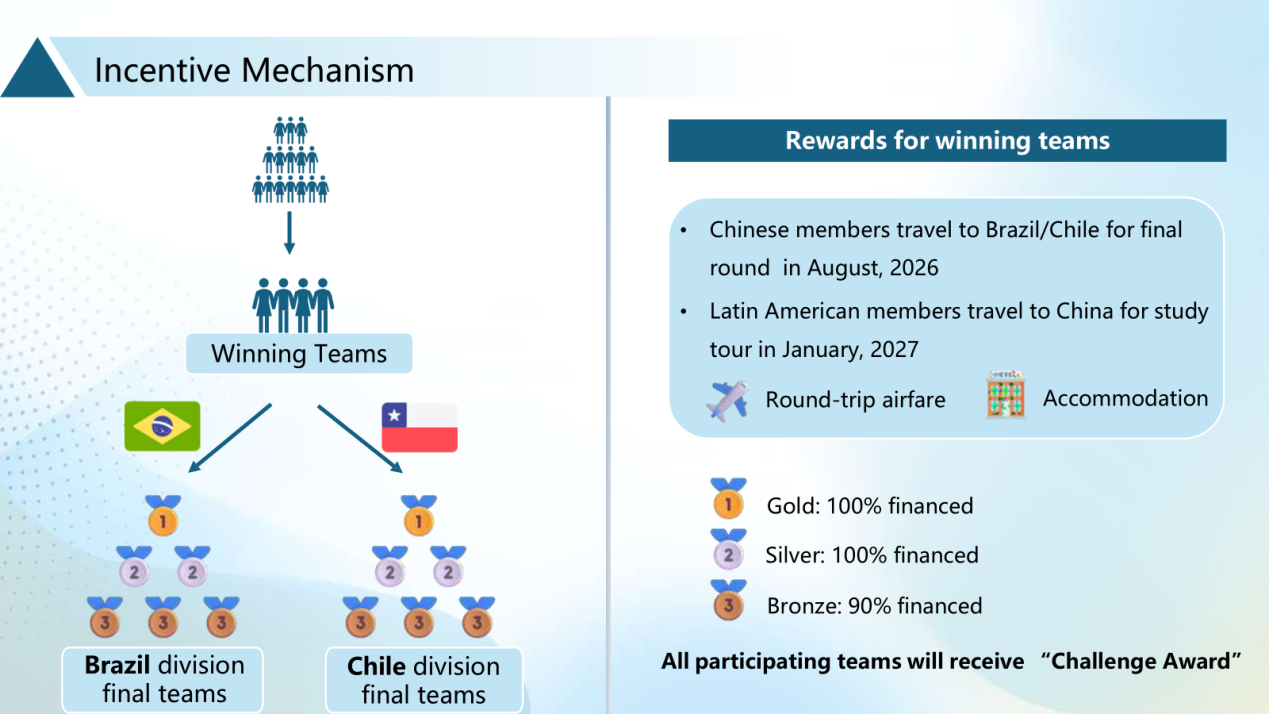
- All teams participating in the Preliminary Round will receive the “Challenge Award”.
- Participants that qualify for preliminary incentives during the Preliminary Round will receive a 70% reimbursement of the expenses for the study visit to Brazil or Chile for field research and participation in the international finals.
- In addition to the preliminary incentives, Gold and Silver Award teams in the Final Round will receive full reimbursement, while Bronze Award teams will receive up to 90% reimbursement of the expenses.
04 Key Timeline for Team Formation
- Early April: Teams that have formed the core group and determined the research topic may initiate project roadshows and open recruitment for additional teammates. The organizing committee will provide full support materials.
- April 11: Official registration opens. The proposed topics will be released, and cross-country team networking will begin simultaneously.
- April 11–May 15: Teams complete the cross-country team formation and submit the topics and basic introductions to the course teaching assistants.
- May 15: The team formation phase concludes. The organizing committee will review and confirm team information, and the competition will proceed to the online mentoring stage.
For more details about the competition background, incentive mechanisms, and team formation procedures, please refer to the official announcement: “Competition Registration | Launch of the China-Latin America Youth Responding to Global Challenges – 2026 Poverty Alleviation Challenge”.
Join Now and Build Your Team Efficiently!
Please scan the QR code to join the group, access the registration channel directly and learn more about registration (joining one group is sufficient; please do not join multiple groups).
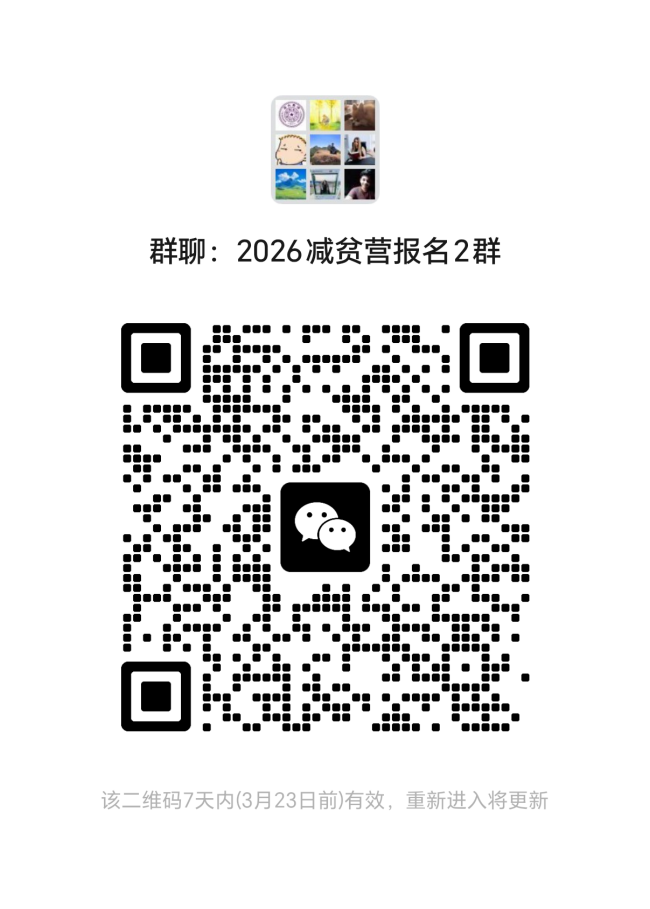
You can also add the official WeChat work account of the Tsinghua University Latin America Center below and leave a note with [Affiliation + Full Name]. After review and approval by the administrative staff, you will be invited to join the 2026 Poverty Alleviation Challenge competition group.

Global Challenges, United Efforts
Join the 2026 Poverty Alleviation Challenge!