On the afternoon of December 12, 2025, Peru time, the Tsinghua University Latin America Center team conducted an exchange with representatives from Ceproder, Peru. The meeting was held at the Charhuahuacho community office in Peru. Attendees included Chen Taotao, Professor of Finance Department of School of Economics & Management, Tsinghua University, Director of the Tsinghua University Latin America Center, and Director of Center for China-Latin America Management Studies, School of Economics and Management, Tsinghua University; as well as Rong Yu, a postdoctoral researcher, and Feng Jian and Qiao Ziyi, PhD candidates from the School of Economics and Management, Tsinghua University. Also present from Ceproder were Carlos Enrique Juro Basilio, Regional Coordinator; Alfredo Bravo Guevara, Forestry Project Coordinator; Jamez Ancco Cabrera, Coordinator for the Cattle, Sheep, and Small Livestock Value Chain Project; and Lenin Pumayali Camacho, Forestry Project Expert.
During the meeting, the Ceproder team systematically introduced the community development projects it implements for the association of the mining company Minera Las Bambas S.A., with a particular focus on the technical measures undertaken and the results achieved in the three key areas of forestry, animal husbandry, and crop cultivation. These projects have tangibly helped local residents enhance their self-development capabilities through continuous technical training and knowledge transfer. Professor Chen Taotao highly commended the approach of the Ceproder team. She also shared practices of Chinese enterprises in implementing corporate social responsibility projects in other Latin American countries, pointing out that this approach aligns with the core concept of "teaching people to fish rather than giving them fish" in China's poverty alleviation practice.
Both parties engaged in in-depth discussions focusing on the development challenges of resource-dependent regions, the operational mechanisms of community projects, and collaborative models among enterprises, professional institutions, and the government. Both sides agreed that fostering specialized collaboration and building capacity within local communities to create diversified livelihood sources for residents form a crucial foundation for effectively reducing the community's reliance on a single mining industry and building regional sustainable development.
Both parties engaged in in-depth discussions focusing on the development challenges of resource-dependent regions, the operational mechanisms of community projects, and collaborative models among enterprises, professional institutions, and the government. Both sides agreed that fostering specialized collaboration and building capacity within local communities to create diversified livelihood sources for residents form a crucial foundation for effectively reducing the community's reliance on a single mining industry and building regional sustainable development.
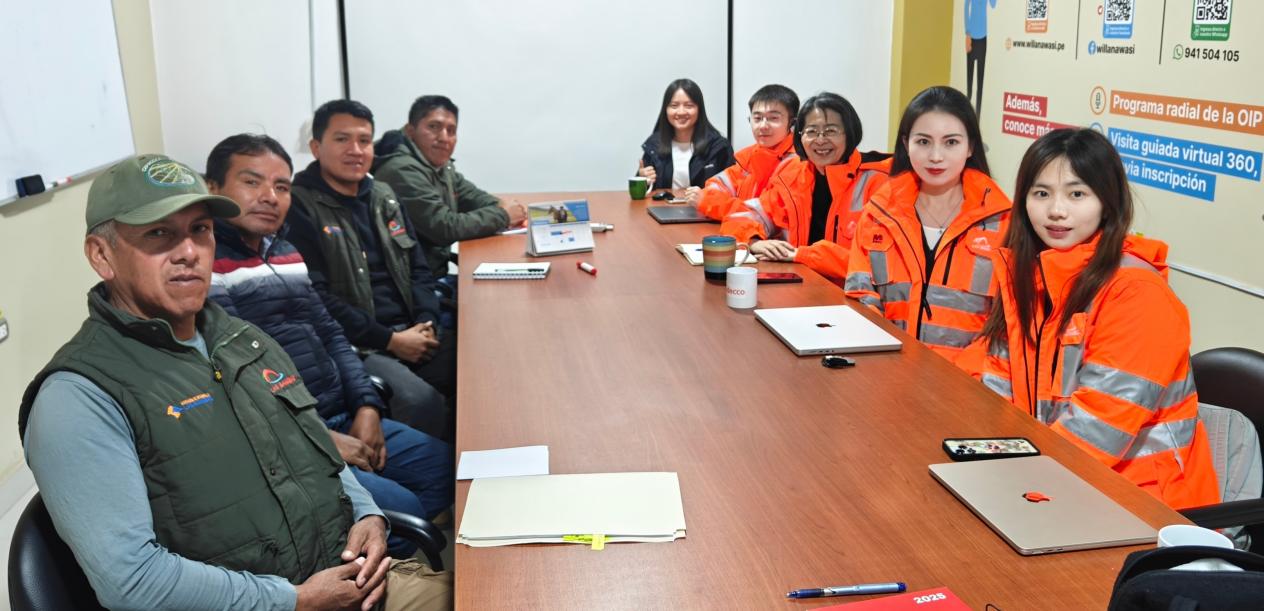
Meeting Venue
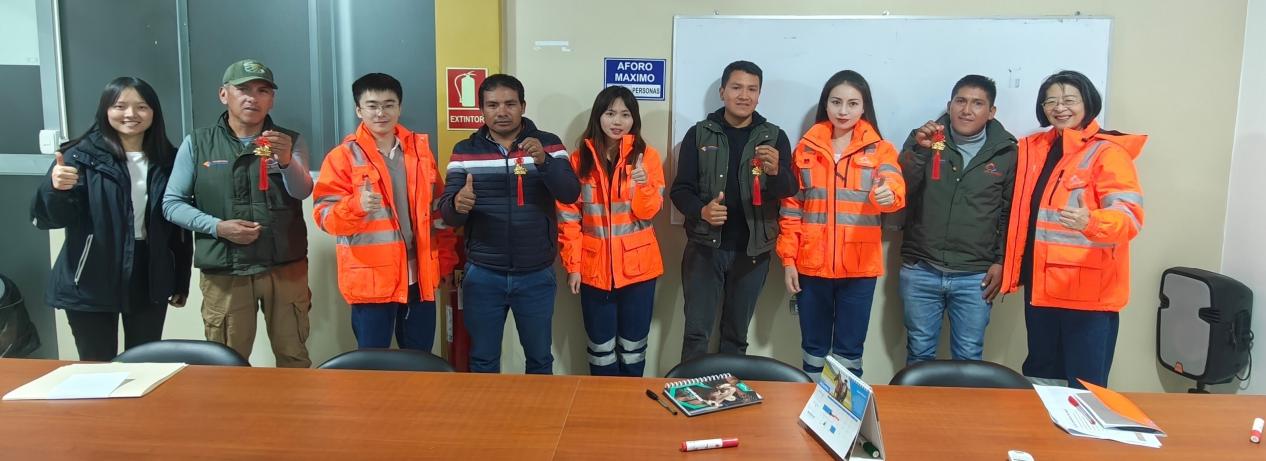
Group Photo of Participants