Editor's Note
In January 2026, six University of Chile students who won the "China-Latin America Youth Responding to Global Challenges – 2025 Poverty Alleviation Challenge" traveled to China for a study tour. During this competition, University of Chile students won multiple awards for their proposals on issues such as energy accessibility, disaster response, and employment integration. Teachers and students from the University of Chile stated that this competition experience not only allowed them to put their knowledge into practice through interdisciplinary cooperation, but also enhanced their personal abilities and confidence, and deepened their understanding of the value of youth participation in global issues. This article is translated from a report on the official website of the University of Chile and is published with official authorization from the University of Chile.
Original link: https://uchile.cl/noticias/236665/estudiantes-ganadores-del-poverty-alleviation-challenge-viajan-a-china
University of Chile Students Win Awards at the "China-Latin America Youth Responding to Global Challenges – 2025 Poverty Alleviation Challenge"
and Travel to China for Exchange
Published on Friday, January 16, 2026
Six University of Chile students will depart for Tsinghua University on January 16 to participate in activities related to the "China-Latin America Youth Responding to Global Challenges – 2025 Poverty Alleviation Challenge". The program aims to explore poverty alleviation pathways through innovation and cooperation, cultivate students' global competence, promote academic collaboration, and facilitate cross-cultural exchanges between young people from Latin America and China.
The six students—undergraduates from the International Studies program María José Oñate, Francisca Burgos, América Carvajal, and Mariadaniela Corro, as well as Benjamín Jara from Mining Engineering and Mateo Arenas from Industrial Engineering—will travel to China to present their projects and exchange experiences at Tsinghua University, exploring poverty alleviation solutions through social innovation, interdisciplinary collaboration, and multicultural cooperation.
The teams these students belong to were among the six finalist teams of the second edition of the "China-Latin America Youth Responding to Global Challenges – Poverty Alleviation Challenge". Hosted by Tsinghua University, the competition is co-organized with the Abdul Latif Jameel Poverty Action Lab (J-PAL) and the Tsinghua University Latin America Center. Based on the United Nations Sustainable Development Goals, the program addresses poverty as a multidimensional issue through global and innovative solutions. The competition attracted over 100 undergraduate and graduate students from China, Brazil, Peru, and Chile.
Osvaldo Guzmán, Deputy Director of the Office of International Relations at the University of Chile, stated: "Participating in this challenge as a university has effectively strengthened the ties between the University of Chile and Tsinghua University. The program combines academic cooperation, applied innovation, and talent cultivation in an international environment."
According to the organizers, the program builds a bridge of communication between young people from China and Latin America, with universities as the core of cooperation. It promotes direct exchanges between international experts and young talents, and cultivates young professionals with a global perspective through the integration of theory and practice, as well as the integration of scientific research and competition.
The "2025 Poverty Alleviation Challenge" consists of two stages: the Preliminary Round and the International Final. The competition has established an integrated operational mechanism connecting major divisions in China, Brazil, and Chile, and has attracted the participation of professionals from government, industry, and academia, including representatives from multiple Latin American countries such as Peru and Ecuador, thereby promoting exchanges and cooperation in poverty alleviation practices between China and Latin America.
The Preliminary Round was held at Tsinghua University in China in June 2025, adopting a hybrid format of online and offline participation. Winning teams received full funding to travel to Brazil and Chile for the International Final held in August. Meanwhile, winning teams from Latin America in the International Final also received full funding to travel to China for exchange.
Guzmán pointed out: "Online exchanges enable students to develop key competencies such as teamwork, cross-cultural communication, and critical thinking, and to address complex issues like poverty that require an interdisciplinary approach. The exchange trip to China further deepens this learning experience, allowing students to personally understand Tsinghua University's scientific research and innovation ecosystem and establish an international network for future cooperation."
Projects with a Global Perspective
To address issues related to income, education, health, digital access, social cohesion, migration, biodiversity, and rural development, students from the University of Chile collaborated with international students from Tsinghua University, the Pontifical Catholic University of Chile, the University of the Pacific (Peru), and the Federal University of Rio de Janeiro (Brazil) to propose innovative solutions.
The Gold Award was won by the team including María José Oñate and Francisca Burgos, students from the International Studies program at the University of Chile. They will receive full funding for their exchange trip to China. Their participating project, titled "Fuente de Sueños Resplandecientes" (Brilliant Source of Dreams), was carried out in collaboration with Tsinghua University. The project aims to develop off-grid small-scale solar energy systems for rural areas in Chile. Through a three-in-one model of "energy-service-financing", it provides clean and sustainable energy for households with unstable electricity supply, thereby improving the quality of life of local residents.
Francisca Burgos said: "This experience allowed us to apply our knowledge and ideas to real-world problems. As students, we don't always have the opportunity to participate in solving real social issues, so this is a rare chance to think from an interdisciplinary perspective and propose innovative solutions."
María José Oñate added: "I am eager to participate in projects that seek solutions to social problems in an interdisciplinary environment. I believe that when talking about projects, solutions, and public policies, the social dimension cannot be ignored. We should not only say 'action is needed', but also concretize and contextualize the problems to truly help those most affected."
The Silver Award was won by the team including Mateo Arenas, a student from the Industrial Engineering program at the University of Chile, who also received full funding for the exchange trip to China. His participating project, titled "Resilio", was jointly developed by students from the Federal University of Rio de Janeiro (Brazil) and Tsinghua University. The project designs an emergency shelter system that can serve as temporary housing during disasters and be converted into community service facilities in daily life, helping vulnerable groups in Latin America better respond to natural disasters.
Mateo Arenas said: "Young people are willing to contribute. We may not have the final answers yet, but we are willing to participate and promote positive social change. Our project aims to provide disaster victims with more dignified transitional housing options."
The Bronze Award was won by the project "Pega Paga Bien" (Fair Pay for Fair Work), participated by América Carvajal, a student from the International Studies program at the University of Chile. Jointly developed by Tsinghua University and the University of Chile, the project is a digital platform aimed at expanding employment opportunities for migrants and young people, helping them better integrate into society and improve their living conditions. She said: "I enjoyed collaborating with people who truly want to drive social change. Participating in seminars, interacting with professors, and communicating with mentors throughout the process have all benefited me greatly."
The team including Benjamín Jara, a student from the Mining Engineering program, won the Bronze Award and the Audience Choice Award with their project "Minova". Completed by students from the Pontifical Catholic University of Chile, the University of Santiago, and Tsinghua University, the project is committed to producing sustainable building materials using mining waste, thereby promoting local development and the circular economy in communities surrounding mining areas. He said: "When preparing the project, we communicated with multiple regional government departments, municipal governments, and professors from different faculties of the university. Although the project originated in the engineering field, it is directly related to social and local development issues."
In addition, Mariadaniela Corro, a student from the International Studies program, also won the Bronze Award. Her participating project is "Integrated Workshop—AI-Assisted Craft Employment Platform for People with Disability", an employment platform that uses artificial intelligence technology to help people with disabilities engage in craft work, thereby increasing their income and promoting social integration.
During this trip to China, the six University of Chile students will meet with their team members again at Tsinghua University, visit the campus, continue to advance their projects, exchange experiences, and establish new international cooperation networks. The exchange activity will last for two weeks.
América Carvajal said: "Participating in the Poverty Alleviation Challenge has had a positive impact on my professional development and academic growth, and has also promoted the internationalization of my major. At the same time, it has enhanced my social and networking skills."
Mateo Arenas believes that this experience allows participants to immerse themselves in understanding how to carry out interdisciplinary projects with social impact and provides new directions for future career development.
María José Oñate stated that the project has greatly improved her soft skills, enabling her to complete projects in another language in a cross-cultural environment, evaluate their feasibility, and cooperate and communicate with people from different academic backgrounds.
Francisca Burgos finally said: "This experience gave me the opportunity to practically use my Chinese and prove that I can do it. I rarely participated in such activities before because I was always afraid of failure. But winning the competition made me realize that sometimes you have to take bold steps. This project has made me more confident in my abilities and more confident about entering the workplace in the future."
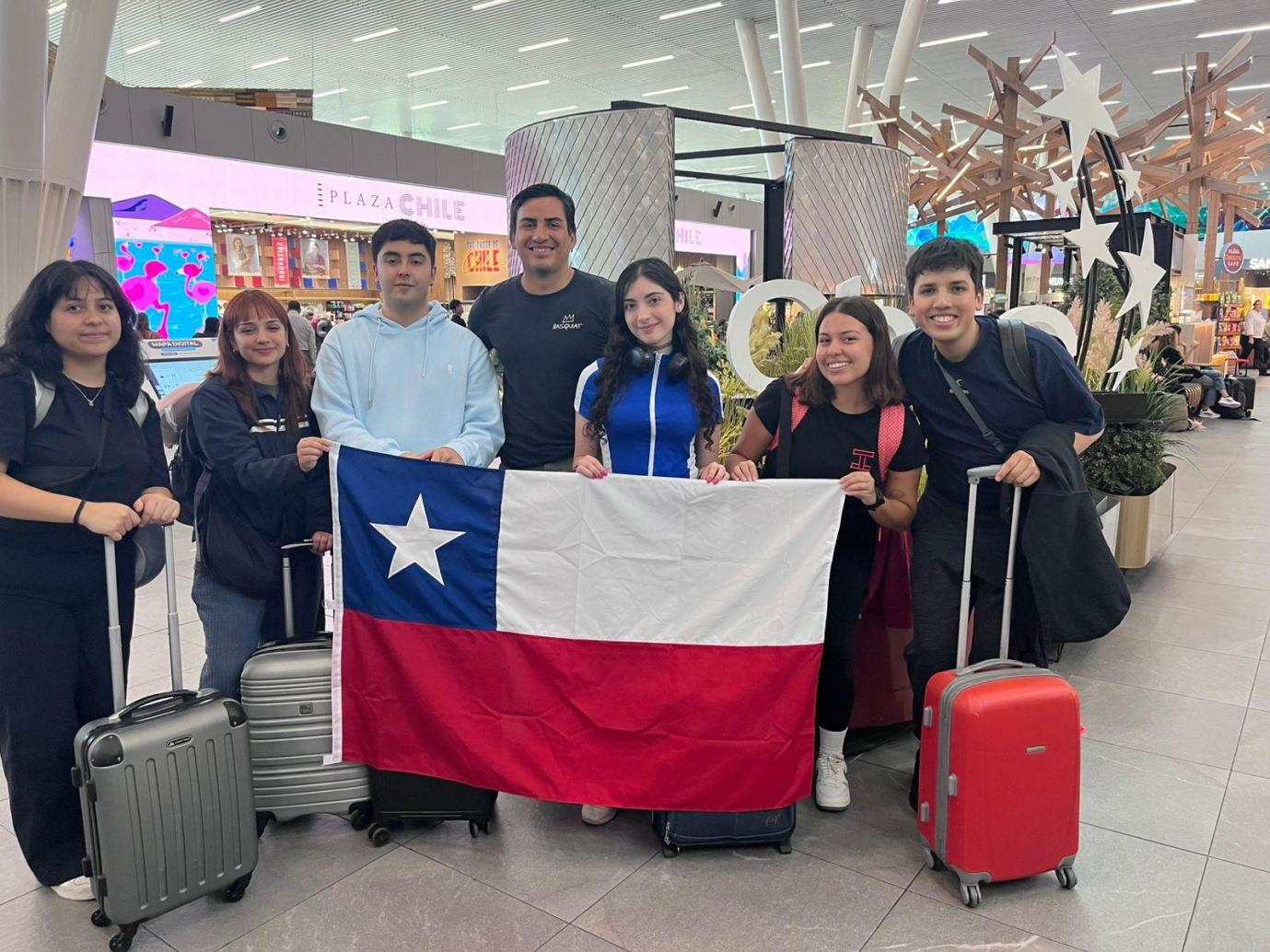
Students from the University of Chile traveled to China on January 16 to meet with students from Tsinghua University, exchange experiences and projects, attend lectures, communicate with teachers, and visit multiple cultural and tourist attractions in China.
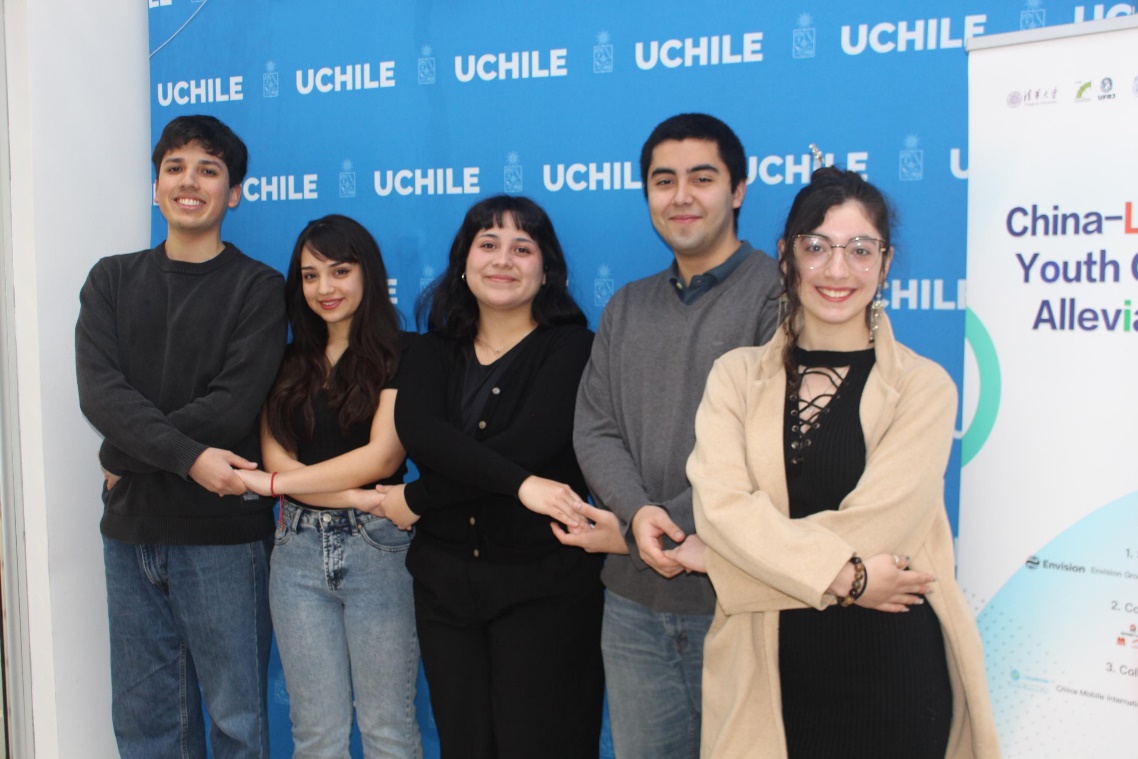
Students from the University of Chile designed and proposed project solutions focusing on issues such as income, education, health, digital access, social cohesion, migration, biodiversity, and rural development.
Osvaldo Guzmán, Deputy Director of the Office of International Relations at the University of Chile, will accompany the student delegation on their two-week visit to China. He said: "The Office of International Relations will continue to promote such projects to facilitate the internationalization of the academic and professional development of University of Chile students, while continuously creating more meaningful international exchange opportunities for them."
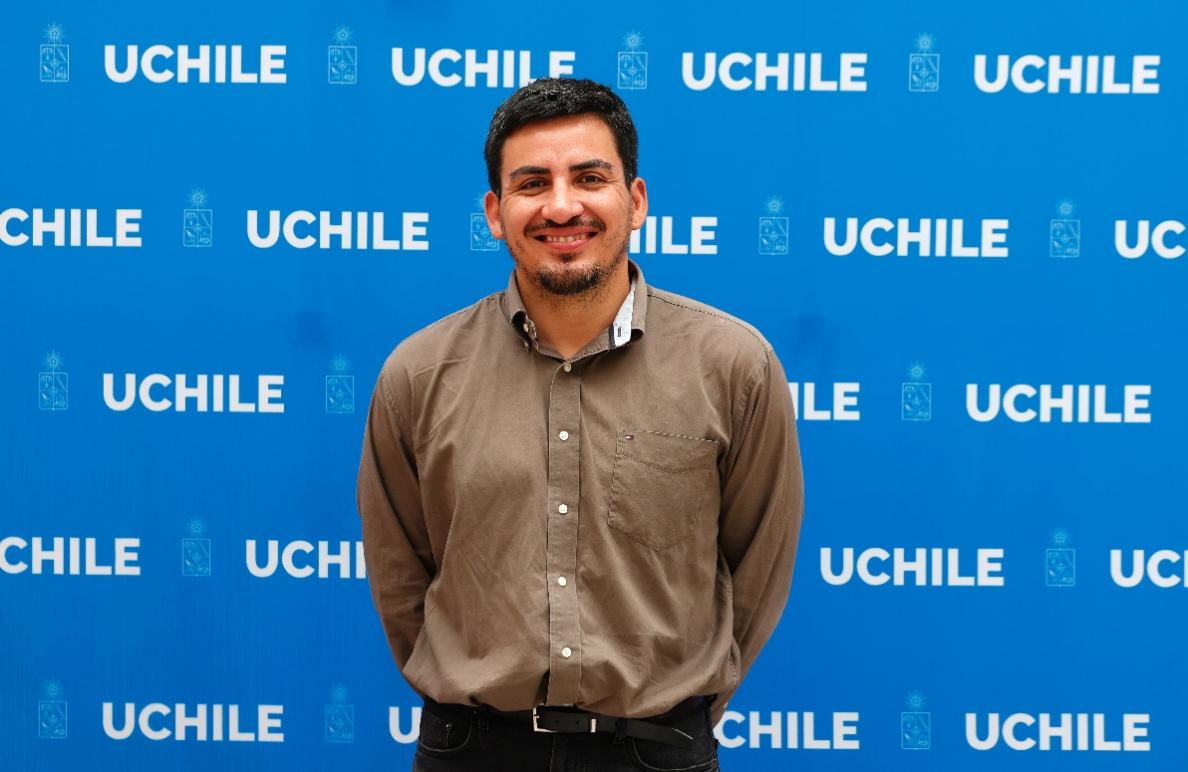
Francisca Burgos, a student from the International Studies program and Gold Award winner, said: "For me, poverty is a real problem facing this country. I see it every day on my way to university, and I myself have experienced a period of being in a vulnerable environment. Therefore, this project seems to me a great opportunity to step out of what we do in the classroom, think from a more professional perspective, and contribute now while not forgetting to continue working towards it in the future."
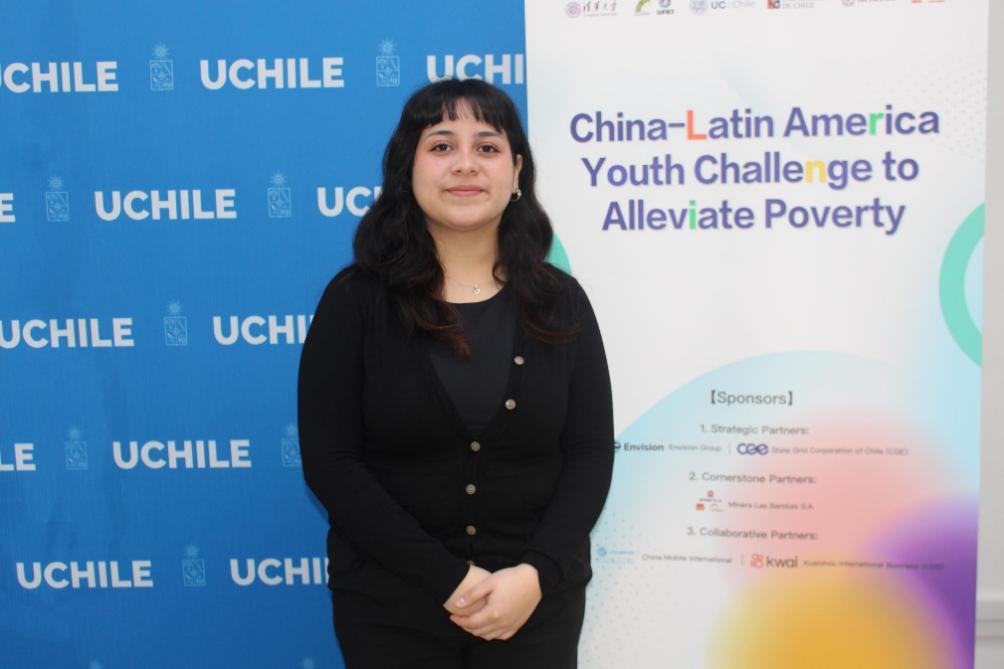
María José Oñate, a student from the International Studies program and Gold Award winner, said: "Being able to communicate with students from China, get to know each other, and share the real experiences of our daily lives in Chile in collaborative projects is a very rich cross-cultural experience. In addition, all teams that entered the final won the opportunity to travel to China for exchange, which I think has also encouraged everyone to focus more on cooperation and contribution, and work together to make the world a better place, rather than just focusing on the competition of winning the first place."
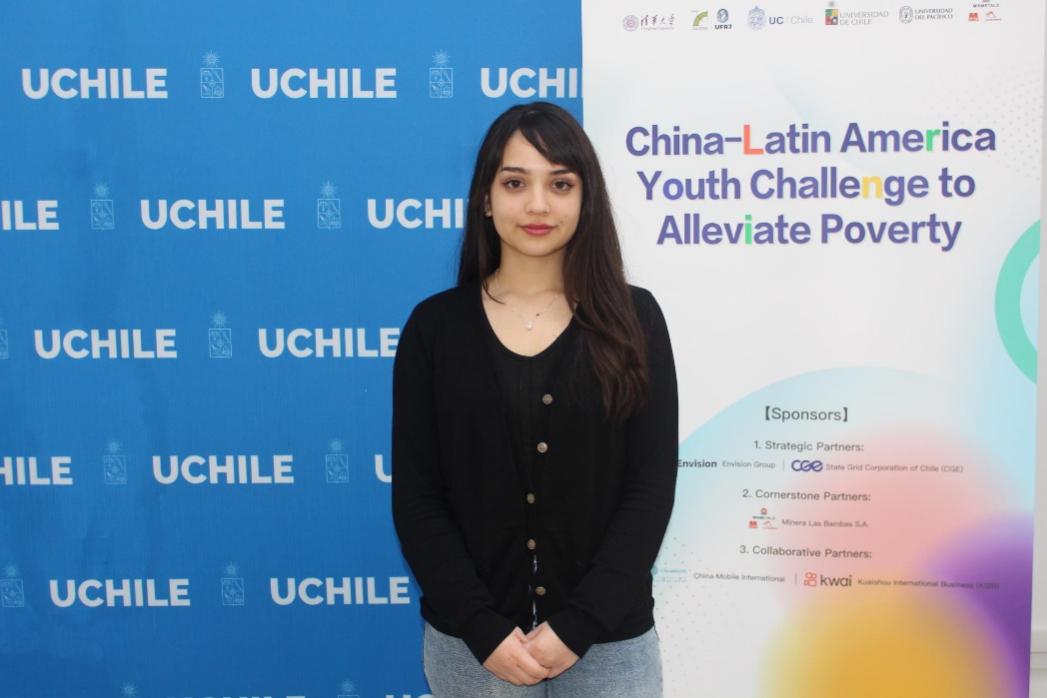
Mateo Arenas, a student from the Industrial Engineering program and Silver Award winner, said: "Although I originally thought there might be some differences between us and participants from different countries and cultural backgrounds, in fact, these differences are not many. Even if they exist, they gradually disappear in communication, because we are ultimately just students sharing laughter, ideas, knowledge, and culture. In addition, this project has further strengthened my interest in participating in such projects and continuing to develop in this field."
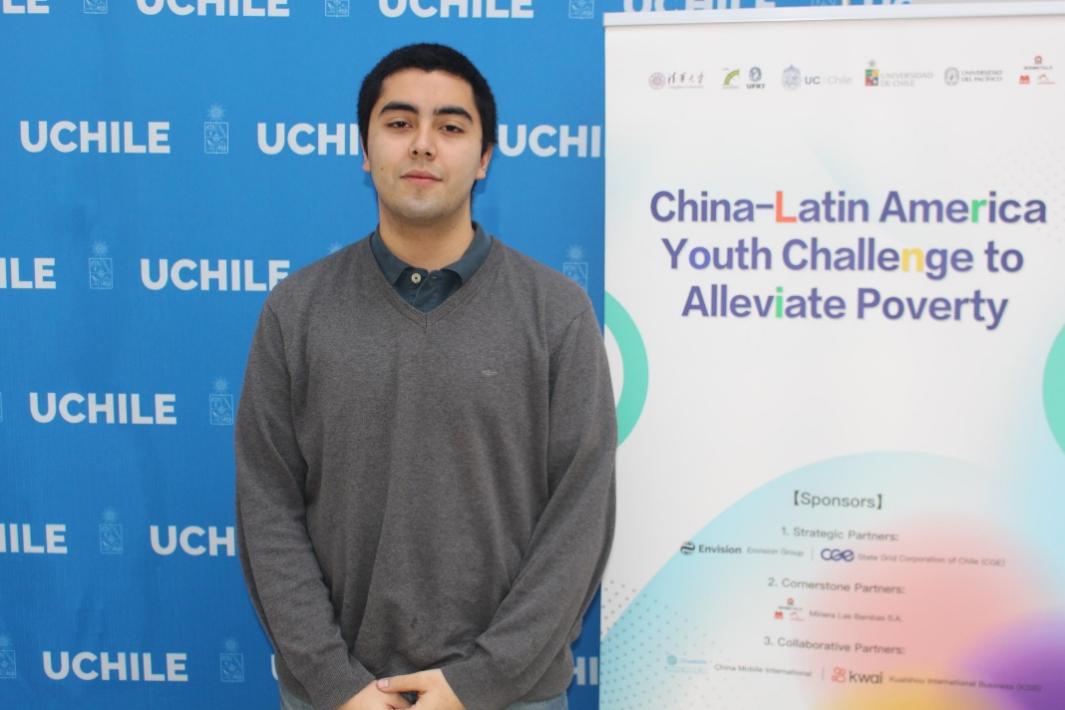
Benjamín Jara, a student from the Mining Engineering program and Bronze Award winner, said: "I participated because of an invitation from a friend. I didn't have high expectations at first, but we still invested in the project and formed a team with students from China. We worked hard for nearly a semester, everyone did their best, and finally achieved results. I am very excited about this upcoming trip to China."
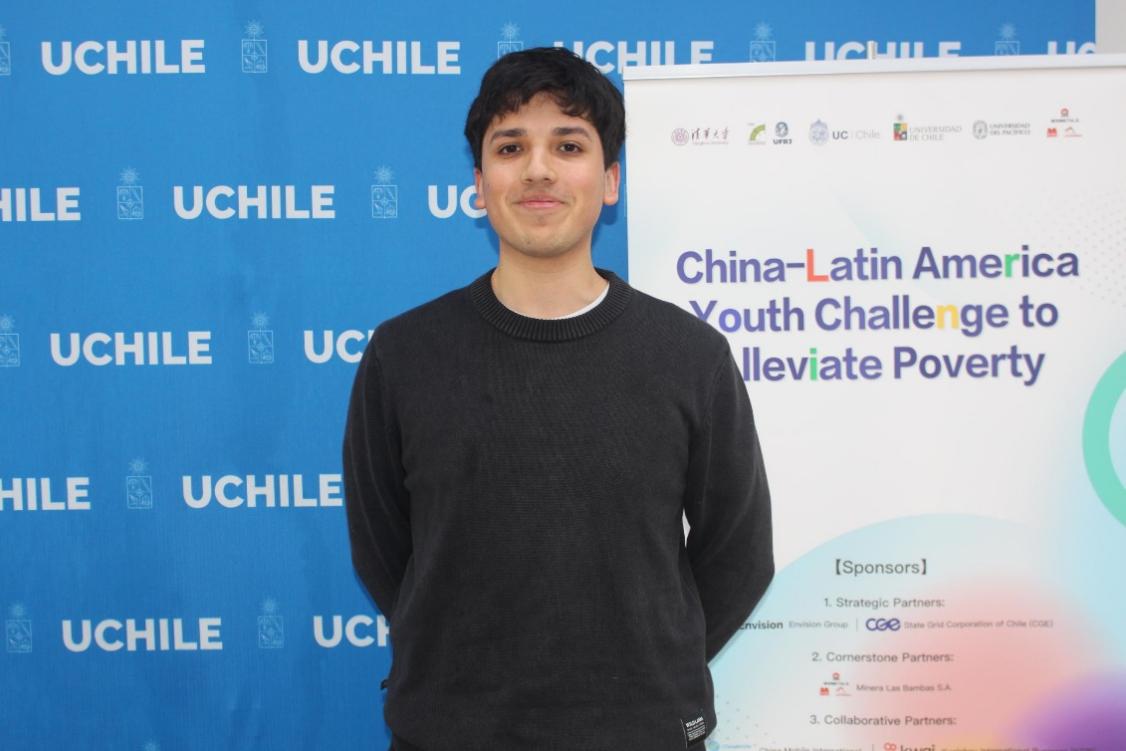
América Carvajal, a student from the International Studies program and Bronze Award winner, said that this project is very meaningful to her both professionally and as a citizen, because people from different parts of the world have the opportunity to learn more about Chile.
She said: "The experience itself is a very rare opportunity. I had a very pleasant time and enjoyed the whole process very much. What makes me particularly happy is that students and scholars from China came to Chile to learn about our country and reality, because I love Chile very much."