About the 2025 Poverty Alleviation Challenge
Co-hosted by Tsinghua University, the Federal University of Rio de Janeiro in Brazil, the Pontifical Catholic University of Chile, the University of Chile, the Universidad del Pacífico in Peru and Minera Las Bambas S.A., the event attracted the participation of more than 310 teachers and students from 27 universities and enterprises in four countries: China, Brazil, Chile and Peru. The China-Latin American Youth Responding to Global Challenges — 2025 Poverty Alleviation Challenge is divided into two stages: the Preliminary Competition and the Transnational Final, aiming to promote cross-cultural communication and collaboration, and inspire the innovative thinking and practical abilities of global youth in the field of poverty alleviation.
On June 7, 2025, the Preliminary Competition of the 2025 Poverty Alleviation Challenge was successfully held, with Tsinghua University as the offline main venue and participants from Latin American countries competing simultaneously in a hybrid online and offline format. After a fierce competition, 12 innovative teams stood out and advanced to the Transnational Final. In August 2025, the Transnational Final of the 2025 Poverty Alleviation Challenge was held in Brazil and Chile successively.
In January 2026, 32 Latin American university students who advanced to the final came to China for cultural immersion activities, including face-to-face exchanges with Chinese teachers and students, visits to China's poverty alleviation bases and institutions, and Chinese cultural tours.
The 2025 Poverty Alleviation Challenge received support from the Chinese Embassy in Brazil, the Consulate-General of China in Rio de Janeiro, the Brazilian Embassy in China, the Chinese Embassy in Chile, the Chilean Embassy in China and the Chinese Embassy in Peru. We sincerely thank renowned domestic and foreign enterprises for their strong support for the event, including Envision Group, CGE, Minera Las Bambas S.A., China Mobile International (Chile), Kuaishou International Business (KSIB) and Banco BOCOM BBM S.A..
On January 24, 2026, Chinese and Brazilian teachers and students from Tsinghua University's 2025 Poverty Alleviation Challenge and the 10th "Rural Entrepreneurship +" Innovation and Creativity Camp visited Jiangzhiji in Xizhou Ancient Town of Dali. As a core research session specially added by Tsinghua University's "Rural Entrepreneurship +" project to deepen cross-cultural poverty alleviation practices, an intangible cultural heritage (ICH) study tour themed "Mutual Learning in Poverty Alleviation Practices, Youth Walking Hand in Hand" was held. Leveraging the profound cultural heritage of the Bai ethnic group in Xizhou Ancient Town, the study tour group systematically learned about the inheritance context and contemporary expression of traditional crafts through visiting the ICH Museum and participating in traditional papermaking practices.
In immersive experiences and exchanges, Chinese and Brazilian youth discussed issues such as ICH protection, activation and utilization, and poverty alleviation empowerment, and reflected deeply on the practical value of traditional cultural resources in rural revitalization and sustainable development, injecting youth perspectives and practical thinking into China-Latin America poverty alleviation cooperation.
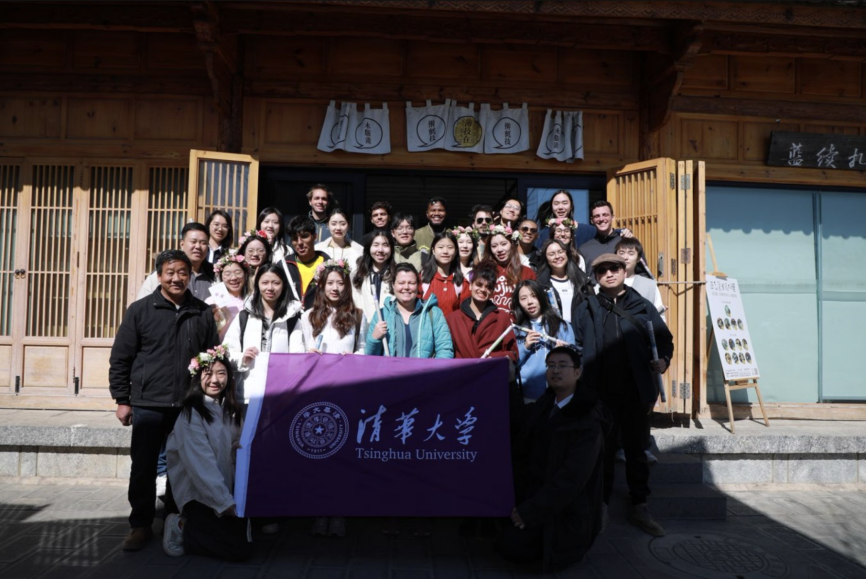
Group photo at Jiangzhiji
Exploring the Ingenuity of Intangible Cultural Heritage, Appreciating the Essence of Traditional Crafts
In the morning, Chinese and Brazilian teachers and students gathered at Jiangzhiji in Xizhou Ancient Town of Dali. As an ICH cultural and artistic space integrating display, experience and exchange, Jiangzhiji features a unique layout of "Two Museums and One Street", systematically presenting eight major folk crafts of the Bai ethnic group including pottery making, textile art, metalwork and traditional papermaking. It fully showcases the profound handcraft tradition and local culture of Dali, providing a vivid carrier for Chinese and Brazilian youth to conduct ICH study and exchanges.
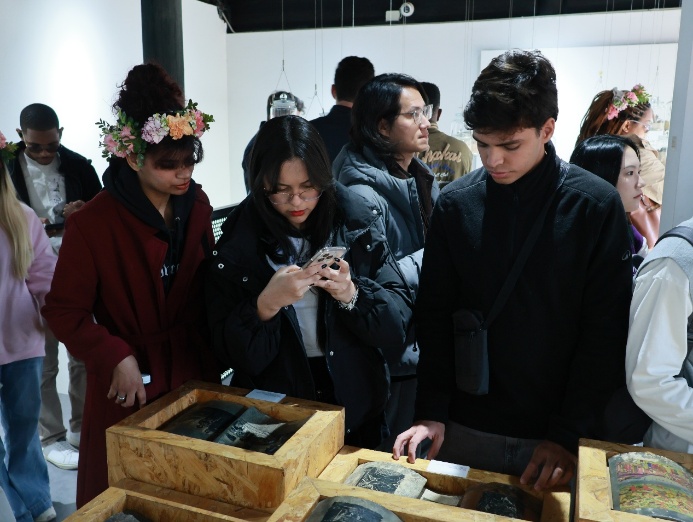
Brazilian youth experiencing Chinese intangible cultural heritage
Under the guidance of Mr. Jiang Lin, the Operation Director of Jiangzhiji, Chinese and Brazilian youth visited each craft exhibition area one by one, observed the delicate textures of handcrafted fine works up close, and gained an in-depth understanding of the distinctive characteristics of Bai ethnic handicrafts: "using local materials and creating art according to the properties of materials". The deep integration of traditional crafts with natural endowments and folk life – from the local isatis root used for tie-dyeing to the paper mulberry bark fiber relied on for papermaking – gave the youth a more intuitive understanding of "culture taking root in the countryside". They often stopped to admire the works and exchanged ideas in low voices, feeling the profound heritage of Chinese traditional culture through touching and gazing.
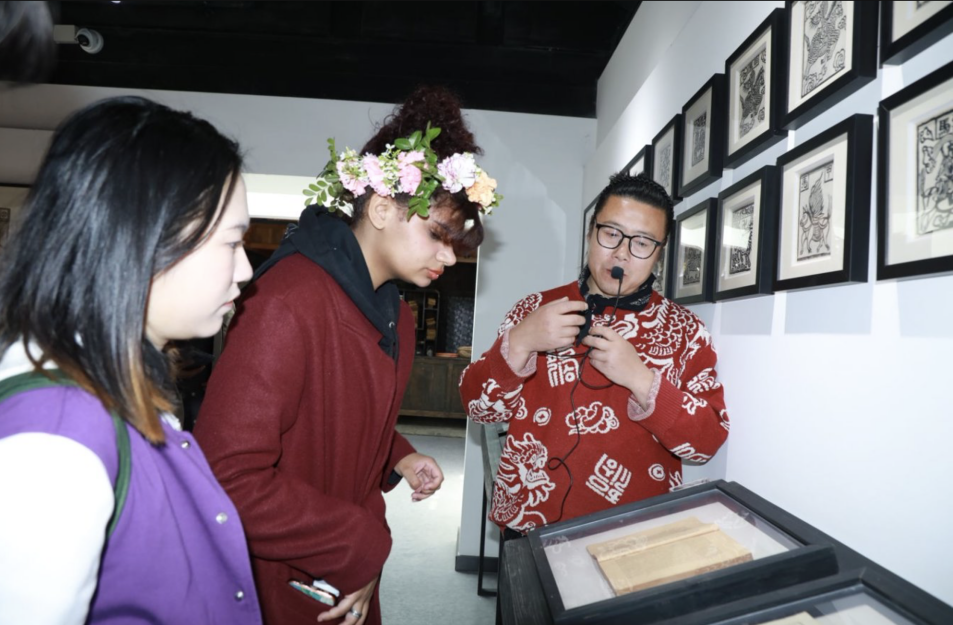
Mr. Jiang Lin giving an explanation
Subsequently, Mr. Yin Wangsong, a provincial-level ICH inheritor, delivered a professional and vivid in-depth explanation, unlocking the millennial secrets of traditional papermaking for Chinese and Brazilian youth. Starting from the historical origin of Yunnan hand papermaking, Mr. Yin carefully disassembled the core processes such as paper mulberry bark collection, purification, beating and pulping, making everyone deeply appreciate the perseverance of craftsmanship that "fine work takes time" behind each piece of traditional handmade paper. The inheritance story of "adhering to tradition and pursuing innovation simultaneously" he shared made the youth understand the endless vitality of craftsmen. After the explanation, Mr. Yin demonstrated the key steps of papermaking on site, and his exquisite techniques and focused expression won rounds of applause from teachers and students.
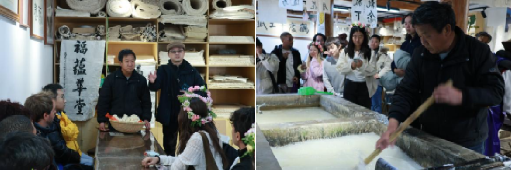
Mr. Yin Wangsong demonstrating traditional papermaking techniques
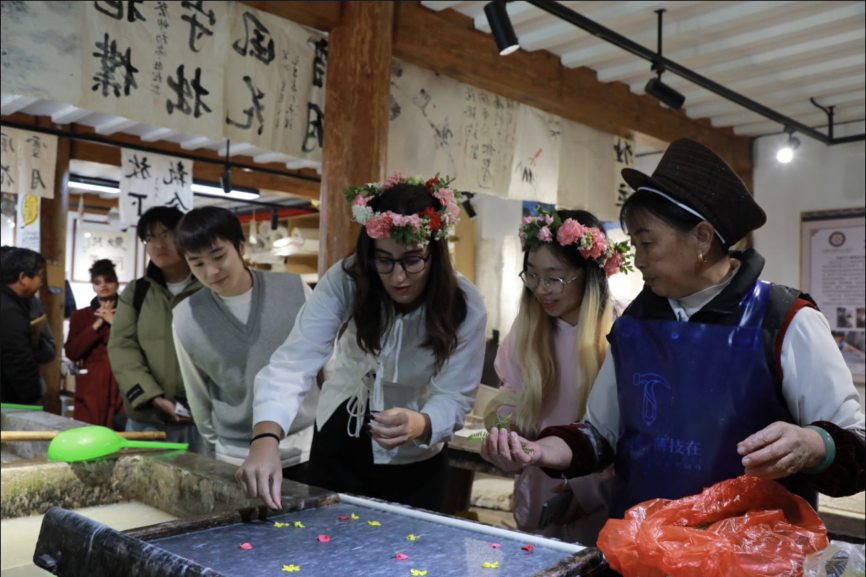
Brazilian students experiencing traditional papermaking
Discussing Rural Revitalization Practices, Forging Consensus for Cross-Ocean Cooperation
The salon exchange session in the afternoon became a highlight of cross-cultural collisions between Chinese and Brazilian youth. On the basis of summarizing the previous trip in Nanjian, Chinese and Brazilian youth expressed their views freely and shared their thoughts openly around the core theme of "Youth Mission and Rural Revitalization: Understanding, Practice and Responsibility".
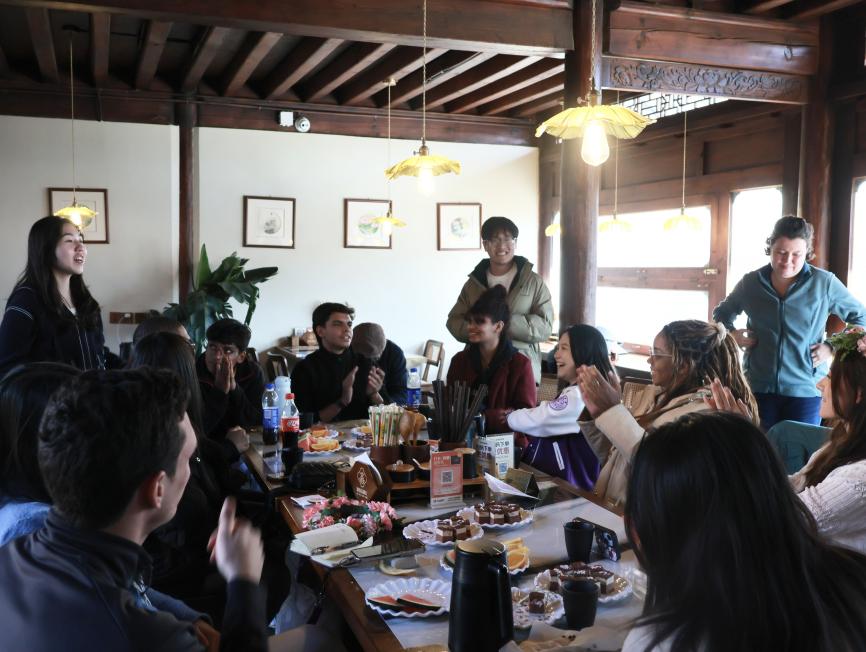
Salon discussion
Combined with the regional characteristics of Nanjian, Chinese youth explored how to activate the endogenous driving force of rural areas through resource integration and innovative design, and make local culture an engine for revitalization, from the dimensions of cultural inheritance, industrial integration and talent cultivation. Brazilian youth brought the practical experience of their country in sustainable agriculture, community development and youth returning to their hometowns to start businesses, and put forward the viewpoint that "rural revitalization is not only economic improvement, but also the optimization of lifestyle and the reshaping of cultural confidence".
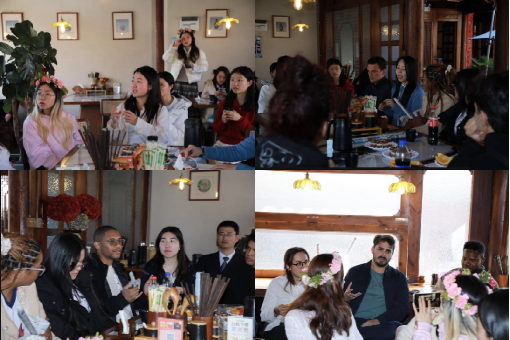
Heated exchanges between Chinese and Brazilian youth
During the exchange, the two sides conducted in-depth discussions on the theme of "Youth Mission and Rural Revitalization: Understanding, Practice and Responsibility". The participating youth unanimously agreed that young people are both practitioners in the process of rural revitalization and an important link connecting rural areas with the future. They should absorb and learn from diverse development experiences with an open vision on the basis of relying on local resources and cultural characteristics. Similar development concerns under different cultural backgrounds sparked constant ideological sparks in the exchanges. A Brazilian youth student said in the sharing that the adherence to processes and quality in the traditional papermaking craft reflects the profound value of traditional skills, and the innovative exploration of inheritors in practice provides useful enlightenment for the activation and development of traditional skills in modern society.
This dialogue not only built a bridge for cultural mutual learning between Chinese and Brazilian youth, but also forged a consensus of "empowering the countryside with the power of youth", providing international ideological inspiration for rural revitalization in Nanjian.
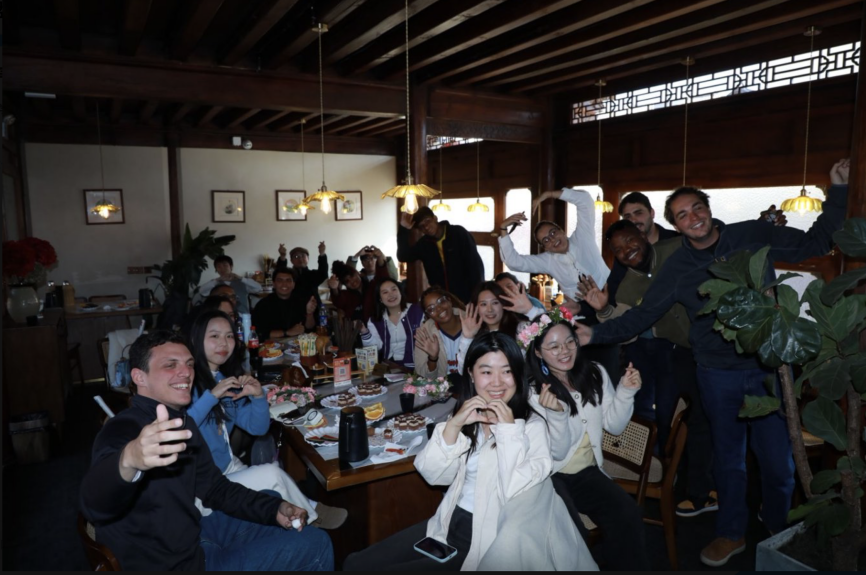
Group photo for memory
The study tour in Xizhou on that day was a vivid practice of exchanges between Chinese and Latin American youth, and an important exploration of China-Latin America poverty alleviation cooperation. Through visiting ICH exhibition halls and participating in in-depth salons, Brazilian teachers and students gained a comprehensive and multi-angle understanding of Dali's practical experience in ICH activation and rural revitalization. Chinese and Brazilian youth precipitated their thinking in cultural immersion, broadened their horizons in ideological collisions, and deepened their understanding of "cultural empowerment for rural areas".
In the future, Chinese and Brazilian youth will take this harvest and insight, integrate the experience of ICH activation and the wisdom of cross-cultural exchanges into practice, take innovation and creativity as the brush, and jointly depict a new picture of rural revitalization. May the flower of China-Latin America friendship bloom in the joint progress of the younger generation, and may the achievements of poverty alleviation cooperation benefit more people in China and Latin America.