
Prof. Chen Taotao
Director of Tsinghua University Latin America Center
Director of Center for China-Latin America Management Studies,School of Economics and Management, Tsinghua University.
Professor of School of Economics & Management, Tsinghua University

Xin-Yu Gong
Ph.D. Candidate, Tsinghua University School of Economics and Management
Ph.D. Researcher, China-Latin America Management Research Center, Tsinghua University School of Economics and Management

Zi-Yi Qiao
Ph.D. Candidate, Tsinghua University School of Economics and Management
Ph.D. Researcher, China-Latin America Management Research Center, Tsinghua University School of Economics and Management

Jian Feng
Ph.D. Candidate, Tsinghua University School of Economics and Management
Ph.D. Researcher, China-Latin America Management Research Center, Tsinghua University School of Economics and Management
In previous articles of this series, we have successively explored topics such as whether enterprises should undertake social responsibility, how to view the boundaries of corporate social responsibility, and how to understand the connotation of corporate social responsibility. These discussions form the basis for understanding the concept of corporate social responsibility. However, in practice, enterprises still face challenges in fulfilling social responsibility—especially for multinational enterprises investing overseas, fulfilling social responsibility in host countries is no easy task. Just as multinational investing enterprises need to build operational capacity in host countries, enterprises investing overseas also need to develop the capacity to fulfill corporate social responsibility in host countries. Therefore, this paper focuses on key ideas for multinational enterprises to build responsibility performance capacity in host countries. In the remaining sections, we first review the definition and connotation of responsibility performance capacity and relevant research on its development, then propose our framework for building responsibility performance capacity of multinational enterprises, and finally conclude the paper.
1. Definition, Connotation and Research on the Development of Responsibility Performance Capacity
(1) Definition of Responsibility Performance Capacity
Responsibility performance capacity is not an entirely new concept. In fact, many scholars have mentioned concepts similar to "the capacity to undertake corporate social responsibility" in the literature (Evans, 2007; J.T. Campbell et al., 2012; Wu Fangfang, 2013; Xiao Hongjun, 2014), and a small number of studies have directly defined and further researched enterprises' responsibility performance capacity. This indicates that enterprises' responsibility performance capacity has begun to attract scholarly attention. Intuitively, responsibility performance capacity refers to an enterprise's ability to fulfill social responsibility—that is, its capacity to carry out corporate social responsibility activities (E.-M. Lee et al., 2016), also known as "corporate social responsibility (CSR) capacity". The concept of capacity is well-established in strategic management research: capacity is a unique combination of knowledge, skills, and processes across organizational levels that enables the execution of activities in workflows (Teece et al., 1997). Accordingly, based on the definition of capacity, "CSR capacity" is generally defined as a unique combination of organizational knowledge, skills, and processes in planning, implementing, and evaluating CSR activities (E.M. Lee et al., 2013; E.-M. Lee et al., 2016; Hsieh et al., 2022). In addition, some scholars have proposed related concepts. For example, Black and Härtel (2004) put forward the concept of CSR management capacity, defining it as an enterprise's ability to adapt to the social environment, identify, and effectively respond to responsibilities between the company and stakeholders. Black (2006), from a social responsiveness perspective, equated an enterprise's capacity to recognize and fulfill social responsibility with the capacity required for social responsiveness.
(2) Connotation of Responsibility Performance Capacity and Its Development
Regarding the connotation of responsibility performance capacity, although relevant research is limited, some scholars have conducted valuable studies and elaborations. First, based on the elements of planning, implementation, and evaluation in the general definition of responsibility performance capacity, E.M. Lee et al. (2013) designed a scale measuring CSR capacity across three dimensions: Plan, Do, and See, unpacking responsibility performance capacity at different stages. Plan refers to enterprises' efforts to understand stakeholders' needs; Do refers to the capacity to manage CSR activities; See involves systematically evaluating CSR activities and disclosing evaluation results and implementation progress to the public. Hsieh et al. (2022) adopted a similar approach, emphasizing three dimensions of responsibility performance capacity: CSR planning, CSR implementation, and personal development through CSR engagement. This measurement framework implies that responsibility performance capacity exists in the pre-activity planning stage, mid-activity implementation stage, and post-activity effectiveness evaluation stage of CSR initiatives.
Several case studies also reflect scholarly exploration of enterprises' responsibility performance capacity across these three stages. For instance, Gifford et al. (2010), using Newmont Peru Mining Company as a case, found that before formal CSR implementation, the company collaborated with universities to conduct thorough research on stakeholders' demands and propose corresponding responsibility fulfillment suggestions—reflecting the pre-implementation planning stage of CSR activities. Jenkins & Obara (2008) studied two mining companies operating in Africa and found that their CSR practices generally followed two stages: sufficient pre-implementation communication and consultation with local communities, and mid-implementation delivery of responsibility projects. However, the authors emphasized the lack of evaluation of the success or failure of CSR practices, meaning the post-implementation effectiveness evaluation stage is relatively underemphasized.
In response to the connotation of responsibility performance capacity, scholars have offered insights into how enterprises can build such capacity. For example, Nie Luling and Xu Peng (2009) argued that CSR capacity building can be carried out in five areas: CSR strategic planning, CSR institutional development, CSR organizational guarantee, CSR culture building, and external supervision and feedback. Xu Yuhui (2019) proposed that improving responsibility performance capacity involves enterprise product and management strategies and enhanced stakeholder communication. Nam (2013) examined the role of international organizations, governments, and other institutions in enhancing CSR capacity—especially for small and medium-sized enterprises (SMEs). For example, the United Nations Industrial Development Organization's Responsible Entrepreneur Achievement Program aims to help SMEs implement CSR-based management practices in business operations.
Overall, scholarly discussions on the connotation of responsibility performance capacity are scarce, and research on its development is even weaker. Notably, Xiao Hongjun et al. (2015) linked responsibility performance capacity to CSR content, arguing that the content of corporate social responsibility determines the composition of CSR capacity. This proposition largely implies that the connotation of an enterprise's responsibility performance capacity varies with CSR content requirements in specific social contexts; thus, enterprises' responsibility performance capacity should be adaptively developed according to CSR content needs.
2. Key Ideas for Building the Responsibility Performance Capacity of Multinational Enterprises
(1) Differences and Challenges Between Multinational Enterprises' Responsibility Performance Capacity and Domestic Enterprises' Capacity
Compared with CSR in general contexts, the CSR of multinational enterprises involves a wider range of stakeholders, broader content, and more complex issues. For example, Cui Xinjian (2007) argued that multinational enterprises' CSR includes responsibilities in the home country, host countries, and the international level; in a narrow sense, it specifically refers to CSR in host countries. However, since the investment environment of host countries often differs greatly from that of the home country, the connotation and boundaries of CSR in host countries may also differ significantly from those in the home country.
In international investment research, the differences between home and host countries are commonly measured using the CAGE framework proposed by Professor Ghemawat (2001) of Harvard University, which is widely applied in international business studies. Specifically, the CAGE framework categorizes cross-country differences into four dimensions: Cultural Distance, Administrative Distance, Geographic Distance, and Economic Distance, emphasizing that such distances exist at the macro, industry, and enterprise levels. Given these systematic, multi-level, and multi-dimensional differences between home and host countries, and based on the earlier view that CSR content determines CSR capacity composition, divergent CSR capacity requirements inevitably pose new challenges for multinational enterprises in fulfilling overseas CSR. Specifically:
1. Multinational enterprises' responsibility performance capacity accumulated in the home country may not match the capacity required by the CSR connotation of host countries. When a newly entered host country differs drastically from the home country and previously invested countries, enterprises may face a complete lack of accumulated capacity needed in the host country at the early stage.
2. Even with partial compatibility, only part of the responsibility performance capacity accumulated in the home country can successfully transcend distances and be applied in host countries.
Consistent with the earlier connotation of responsibility performance capacity, multinational enterprises' responsibility performance capacity also exists in the pre-planning, mid-implementation, and post-evaluation stages. However, due to cultural, institutional, and other differences between home and host countries, responsibility performance capacity at different stages faces varying degrees of transferability challenges.
(2) Building Responsibility Performance Capacity of Multinational Enterprises
As reviewed earlier, in general contexts, scholars have recognized that enterprises require certain capacity to fulfill CSR and have proposed unpacking responsibility performance capacity by pre-, mid-, and post-implementation stages. However, research on the development of responsibility performance capacity remains relatively weak. Focusing on multinational enterprises, although some scholars briefly mention concepts related to CSR fulfillment capacity in CSR research (Schouten & Remmé, 2006; Barin Cruz & Boehe, 2010; Amos & Awuah, 2017), no studies have directly explored responsibility performance capacity and its development in a cross-national context. Yet, the challenges of fulfilling overseas CSR for multinational enterprises are real and increasingly severe. Against this background, a systematic analysis of building responsibility performance capacity for multinational enterprises is highly significant. Therefore, we propose the following framework to address this research gap.
For building multinational enterprises' responsibility performance capacity, we can draw on the analytical logic of building foreign investment capacity for multinational enterprises. Our research team has conducted long-term, in-depth research on enterprise internationalization and developed an integrated analytical framework for the development path of enterprises' foreign investment capacity, which has been fully validated in academic research and enterprise practice cases. Specifically, regarding foreign investment capacity building, we argue that before investing in a specific host country, multinational enterprises have already accumulated certain capacities—including domestic capacity in the home country and capacity from early internationalization. However, due to home-host country differences, only part of the pre-investment accumulated capacity can transcend differences and be transferred to the host country, forming the first component of host-country capacity. The second component is capacity created in the host country through localization strategies (see Figure 1).
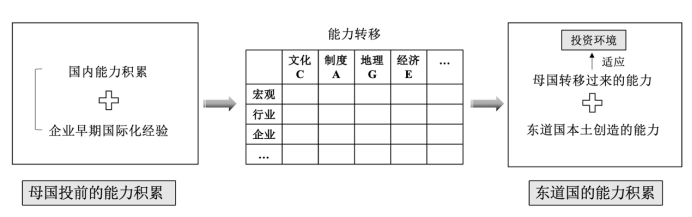
Figure 1 Framework for Building Enterprises' Foreign Investment Capacity
Extending this logic to building multinational enterprises' overseas responsibility performance capacity, we propose the framework for building overseas responsibility performance capacity of multinational enterprises (see Figure 2).
Figure 2 Schematic Diagram of the Ideas for Building Overseas Responsibility Performance Capacity of Multinational Enterprises
First, for multinational enterprises, pre-investment CSR experience includes both CSR fulfillment experience in the home country and CSR experience in other countries during early internationalization, which together constitute pre-investment responsibility performance capacity accumulation. However, due to home-host country differences, the pre-accumulated responsibility performance capacity may not be fully transferable to host countries.
For example:
• Planning stage: Enterprises need to understand stakeholders' needs (Lee et al., 2013). Due to home-host differences, enterprises must re-understand local stakeholders' needs in the host country context.
• Implementation stage: Enterprises may fulfill CSR by establishing CSR departments or foundations, but governance models applicable in the home country may not work in host countries.
• Evaluation stage: Capacity involves disclosing CSR evaluation results and implementation (e.g., via CSR reports), which is often difficult to transfer due to differences in language, reporting standards, etc.
Thus, multinational enterprises need to locally create the responsibility performance capacity required by host countries but lacking internally. Localization remains a critical approach to building context-appropriate responsibility performance capacity in host countries, which is fully supported by CSR case studies of multinational enterprises. Many scholars emphasize the importance of collaboration with host-country governments, NGOs, and other institutions (Forstater et al., 2010; Deigh et al., 2016; Yakovleva, 2017). Under this framework, the partially transferred responsibility performance capacity from the home country and the locally created responsibility performance capacity in the host country together form multinational enterprises' responsibility performance capacity in host countries.
3. Conclusion and Implications
This paper first reviews research on the definition, connotation, and development of responsibility performance capacity. Responsibility performance capacity is defined as a unique combination of organizational knowledge, skills, and processes in planning, implementing, and evaluating CSR activities. Scholars' attempts to unpack responsibility performance capacity by pre-planning, mid-implementation, and post-evaluation stages provide useful references. Although existing studies have not proposed systematic approaches to building responsibility performance capacity, some insights have been offered.
Based on our long-term research on enterprise internationalization, this paper focuses on building responsibility performance capacity for multinational enterprises in host countries. We argue that, following the logic of building foreign investment capacity for multinational enterprises, due to home-host country differences, only part of enterprises' responsibility performance capacity accumulated in the home country and during early internationalization can be transferred to host countries. Therefore, enterprises must further build context-appropriate responsibility performance capacity in host countries through localization strategies—often the most challenging part.
This research provides valuable implications for multinational enterprises fulfilling CSR in host countries:
1. Multinational enterprises should recognize that fulfilling social responsibility is not simply charitable behavior; it requires dedicated responsibility performance capacity.
2. Given multi-dimensional and multi-level home-host differences, the proposed framework offers a directional and actionable approach for multinational enterprises to build responsibility performance capacity in host countries.
3. For multinational enterprises, building responsibility performance capacity is not a one-time effort. It is rooted in rich pre-investment experience accumulation and continuous learning during long-term host-country operations. It is an ongoing process and a necessary path to fulfill CSR effectively, integrate into host-country societies, and achieve win-win development with host countries.
References
[1] Amos, G. J., & Awuah, G. B. (2017). Multinational Enterprises and Distance: Exploring Opportunities and Challenges Involved in Practicing CSR in Host-Countries. International Journal of Business and Management, 5(1), 15–39.
[2] Barin Cruz, L., & Boehe, D. M. (2010). How do Leading Retail MNCs Leverage CSR Globally? Insights from Brazil. Journal of Business Ethics, 91(2), 243–263. https://doi.org/10.1007/s10551-010-0617-8
[3] Black, L. D. (2006). Corporate Social Responsibility as Capability: The Case of BHP Billiton. The Journal of Corporate Citizenship, 23, 25–38. https://doi.org/10.9774/GLEAF.4700.2006.au.00006
[4] Black, L. D., & Härtel, C. E. J. (2004). The five capabilities of socially responsible companies. Journal of Public Affairs, 4(2), 125–144. https://doi.org/10.1002/pa.176
[5] Campbell, J. T., Eden, L., & Miller, S. R. (2012). Multinationals and corporate social responsibility in host countries: Does distance matter? Journal of International Business Studies, 43(1), 84–106. https://doi.org/10.1057/jibs.2011.45
[6] Deigh, L., Farquhar, J., Palazzo, M., & Siano, A. (2016). Corporate social responsibility: Engaging the community. Qualitative Market Research: An International Journal, 19(2), 225–240. https://doi.org/10.1108/QMR-02-2016-001
[7] Evans, M. D. (2007). New Collaborations for International Development: Corporate Social Responsibility and Beyond. International Journal, 62(2), 311–325. https://doi.org/10.1177/002070200706200207
[8] Forstater, M., Zadek, S., Guang, Y., Yu, K., Hong, X., & George, M. (2010). Corporate Responsibility in African Development.
[9] Ghemawat, P. (2001). Distance Still Matters. The Hard Reality of Global Expansion. Harvard Business Review, 79(8), 137–147.
[10] Gifford, B., Kestler, A., & Anand, S. (2010). Building local legitimacy into corporate social responsibility: Gold mining firms in developing nations. Journal of World Business, 45(3), 304–311. https://doi.org/10.1016/j.jwb.2009.09.007
[11] Hsieh, Y.-C., Weng, J., Pham, N. T., & Yi, L.-H. (2022). What drives employees to participate in corporate social responsibility? A personal characteristics - CSR capacity - organizational reinforcing model of employees’ motivation for voluntary CSR activities. The International Journal of Human Resource Management, 33(18), 3703–3735. https://doi.org/10.1080/09585192.2021.1967422
[12] Jenkins, H., & Obara, L. (2008). Corporate Social Responsibility (CSR) in the mining industry—The risk of community dependency.
[13] Lee, E. M., Park, S.-Y., & Lee, H. J. (2013). Employee perception of CSR activities: Its antecedents and consequences. Journal of Business Research, 66(10), 1716–1724. https://doi.org/10.1016/j.jbusres.2012.11.008
[14] Lee, E.-M., Lee, H. J., Pae, J.-H., & Park, S.-Y. (2016). The important role of corporate social responsibility capabilities in improving sustainable competitive advantage. Social Responsibility Journal, 12(4), 642–653. https://doi.org/10.1108/SRJ-11-2015-0163
[15] Nam, Y. (2013). Fostering Corporate Social Responsibility (CSR) in the Global Supply Chain: Capacity Building of Small and Medium-Sized Enterprises (SMEs) in APEC. SSRN Electronic Journal. https://doi.org/10.2139/ssrn.2836793
[16] Schouten, E. M. J., & Remmé, J. (2006). Making sense of corporate social responsibility in international business: Experiences from Shell. Business Ethics: A European Review, 15(4), 365–379. https://doi.org/10.1111/j.1467-8608.2006.00456.x
[17] Teece, D. J., Pisano, G., & Shuen, A. (1997). Dynamic capabilities and strategic management. Strategic Management Journal, 18(7), 509–533. https://doi.org/10.1002/(SICI)1097-0266(199708)18:7<509::AID-SMJ882>3.0.CO;2-Z
[18] Yakovleva, N. (2017). Corporate Social Responsibility in the Mining Industries (1st ed.). Routledge. https://doi.org/10.4324/9781315259215
[19] Xu, Y. H. (2019). Research on Social Responsibility Capacity Building of Listed Companies in Guangdong Province (Master’s thesis, Guangdong Academy of Social Sciences).
[20] Wu, F. F. (2013). Research on Social Responsibility Issues of State-Owned Chinese Enterprises in Overseas Operations (Doctoral dissertation, Peking University).
[21] Cui, X. J. (2007). The conceptual framework of corporate social responsibility of multinational corporations. World Economy Study, 4, 64–68+88.
[22] Nie, L. L., & Xu, P. (2009). Research on the system of corporate social responsibility capacity building. Enterprise Economy, 4, 100–102.
[23] Xiao, H. J. (2014). Do relative institutional distances affect the social responsibility performance of multinational corporations in host countries? The Journal of Quantitative & Technical Economics, 31(04), 50–67.
[24] Xiao, H. J., Hu, Y. L., & Xu, Y. J. (2015). Evaluation of corporate social responsibility capacity maturity—Evidence from listed companies in China. Economic Management Journal, 37(2), 178–188.