Course Background
In the past decade, economic and trade relations between China and Latin America have grown increasingly close. During his visit to Latin America in 2016, President Xi Jinping emphasized in a meeting with the Argentine President in May 2017 that Latin America is a natural extension of the Belt and Road Initiative. In 2018, the Tsinghua University Latin America Center was established in Santiago, the capital of Chile. The Latin America Center serves as a liaison and exchange hub for Tsinghua University in the region, supporting the university's core mission of cultivating globally competent talent, and promoting academic research, cultural exchange, and technological innovation cooperation with Latin American countries.
Course Introduction
This series of public lectures is jointly organized by the Tsinghua University Latin America Center and the Tsinghua University Student Global Competence Development Guidance Center. Through this course, students will have the opportunity to gain a better understanding of the politics, economies, cultures of Latin American countries, and the development of China-Latin America relations. All students interested in Latin America and the Caribbean are welcome to take this opportunity to learn about this distant yet friendly and amiable continent.
For the Spring 2026 semester, the "Exploring Latin America and the Caribbean Countries" public lecture series consists of 7 sessions. Chinese participants include Professor Li Ziying from Beijing Foreign Studies University, among others. International participants include Professor Flavia Zacconi from Pontificia Universidad Católica de Chile, Paula Carvalho, Associate Researcher at the National Institute of Science and Technology for Public Policy, Strategy and Development (INCT-PPED) of the Federal University of Rio de Janeiro, Professor Enrique Dussel Peters from the National Autonomous University of Mexico (UNAM), Professor Jhon Beens from the Faculty of Statistical and Actuarial Sciences at the Central University of Venezuela (UCV), and other university faculty and professors who will deliver special lectures.
A special highlight of this course is that it will invite one or two ambassadors from Latin American countries to China to participate in a "Dialogue at the Summit" on the Tsinghua campus. For the Spring 2026 semester, the course plans to invite the Ambassador of Peru to China and the Ambassador of Dominica to China. The Tsinghua University Latin America Center and the Tsinghua University Student Global Competence Development Guidance Center will jointly host this event.
Information for This Session
Lecture Time: June 4 (Thursday), 19:00-22:00
Lecture Format: In-person attendance (limited to 10 spots), online attendance (unlimited spots).
Lecture Venue: Jianhua Building, Room A101
Online Link: Join Zoom Meeting
https://us02web.zoom.us/j/89491755845?pwd=BScxKS9qcw2ouNbdyQTXICWzBVg0lx.1
Meeting ID: 894 9175 5845
Passcode: 425052
Lecture Content
This lecture will focus on the latest developments in contemporary Mexico's social development and Mexico-China economic interactions, divided into two parts.
Part 1:
Theme: "Contemporary Mexico: Key Issues, Development Trends, and Challenges"
Speaker: Adalberto Noyola, Senior Researcher at the Institute of Engineering, National Autonomous University of Mexico (UNAM), and Director of the UNAM-Beijing Foreign Studies University Mexico Studies Center.
Professor Noyola is an internationally renowned environmental engineering expert. He holds a PhD in Wastewater Treatment Engineering from INSA Toulouse, France. He served as the Director of the UNAM Institute of Engineering from 2008 to 2016 and is currently a Level III (highest level) member of Mexico's National System of Researchers (SNI). In this lecture, Professor Noyola will draw upon his extensive academic research and practical experience to introduce the development overview of contemporary Mexico, helping the audience gain a more comprehensive understanding of its current state of development.
Part 2:
Theme: "Socioeconomic Relations between Mexico and China in 2026: Conditions and Challenges"
Speaker: Professor Enrique Dussel Peters, Professor at the Faculty of Economics, National Autonomous University of Mexico (UNAM), Director of the Center for China-Mexico Studies, and Coordinator of the Latin American and Caribbean Academic Network on China (Red ALC-China).
Professor Dussel Peters has been a full professor in the Graduate School of the UNAM Faculty of Economics since 1993. He obtained his bachelor's and master's degrees from the Otto Suhr Institute of Political Science, Freie Universität Berlin (1989) and his PhD in Economics from the University of Notre Dame, USA (1996). He is a Level III member (highest rank) of Mexico's National System of Researchers (SNI). Since joining UNAM, he has taught over 90 undergraduate, master's, and doctoral courses and has delivered presentations at more than 260 national and international academic conferences. His research primarily focuses on industrial organization theory, economic development theory, and political economy, with a particular emphasis on issues related to manufacturing, trade, and regional development in Latin America and Mexico. He has led and participated in numerous research and advisory projects supported by institutions such as UNAM, the United Nations Economic Commission for Latin America and the Caribbean (ECLAC/CEPAL), the International Labour Organization (ILO), the Ford Foundation, and the Inter-American Development Bank (IDB). Professor Dussel has received awards including the "National University Award for Young Scholars" from UNAM (2000 for Research, 2004 for Teaching, in the Economics-Management Science category) and the "Research Prize" from the Mexican Academy of Sciences (2004). In this lecture, he will analyze the current state and main characteristics of Mexico-China socioeconomic relations based on the latest research findings, discuss opportunities and challenges for bilateral cooperation, and look ahead to future directions for collaboration.
This lecture will connect the technological foundations of Mexico's national development with an international perspective, offering insightful interdisciplinary exchange for audiences interested in China-Latin America relations and development issues of the Global South.
Bios of Keynote Speakers
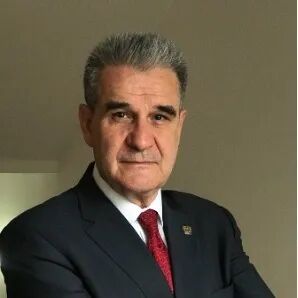
Adalberto Noyola
Adalberto Noyola is the current Director of the UNAM-Beijing Foreign Studies University Mexico Studies Center and a Senior Researcher at the Institute of Engineering, National Autonomous University of Mexico (UNAM).
Adalberto Noyola is an environmental engineering expert, holding a PhD in Wastewater Treatment Engineering from INSA Toulouse, France. He served as the Director of the UNAM Institute of Engineering from 2008 to 2016 and is currently a Level III (highest level) member of Mexico's National System of Researchers (SNI).
Professor Noyola's research focuses on providing innovative solutions for wastewater and sludge treatment through bioprocesses. He has developed 5 patents, 2 of which have been technologically transferred and applied. He has published 70 research papers in internationally renowned academic journals (JCR), cited 2600 and 4130 times on Scopus and Google Scholar respectively. He has also supervised 56 undergraduates, 33 master's students, and 12 doctoral students.

Enrique Dussel Peters
Professor Enrique Dussel Peters has been a full-time full professor in the Graduate School of the Faculty of Economics at the National Autonomous University of Mexico (UNAM) since 1993. Professor Dussel Peters earned his bachelor's and master's degrees from the Otto Suhr Institute of Political Science, Freie Universität Berlin (1989) and his PhD in Economics from the University of Notre Dame, USA (1996).
He is a Level III member (highest rank) of Mexico's National System of Researchers (SNI). Since beginning his teaching career, he has taught over 90 undergraduate, master's, and doctoral courses and has delivered presentations at more than 260 national and international academic conferences.
His research primarily focuses on industrial organization theory, economic development theory, and political economy, with a particular emphasis on issues related to manufacturing, trade, and regional development in Latin America and Mexico. He has led and participated in numerous research and advisory projects supported by institutions such as UNAM, the United Nations Economic Commission for Latin America and the Caribbean (ECLAC/CEPAL), the International Labour Organization (ILO), the Ford Foundation, and the Inter-American Development Bank (IDB).
Professor Dussel has received awards including the "National University Award for Young Scholars" from UNAM (2000 for Research, 2004 for Teaching, in the Economics-Management Science category) and the "Research Prize" from the Mexican Academy of Sciences (2004).