Prof. Chen Taotao
Editor's note: On the evening of May 7, 2026 (Beijing Time), China–Chile Poverty Alleviation Lecture of “China-Latin America Youth Responding to Global Challenges — 2026 Poverty Alleviation Challenge” was held at Tsinghua University. This article presents key insights shared during the lecture by Chen Taotao, Professor at the School of Economics and Management of Tsinghua University, Director of the Tsinghua University Latin America Center, and Director of Center for China-Latin America Management Studies at School of Economics and Management.
She emphasized that sustainable poverty alleviation should integrate poverty alleviation with capacity building, industrial development, and mutual learning through cross-national exchange of experiences. In the context of globalization and technological advancement, mutual learning among countries on poverty alleviation practices is not only an important approach to achieving shared development, but also a core vision that the “Poverty Alleviation Challenge” seeks to promote.
Good evening to all my Tsinghua students!
Good morning to all my young friends from Chile, Brazil, and Peru who are joining us online!
I believe you still remember that I mentioned at the Kick-off event for the 2026 “Poverty Alleviation Challenge” that we intend to shift the focus of this project from “poverty alleviation” to “poverty alleviation and development.” In the past two years, we have always emphasized “poverty alleviation.” Now, I would like to add “development” as a clear concept into this topic. Why should we do this?
I believe all of us have already realized that poverty alleviation is an important task for every government. Government around the world take this work seriously. Last year, I visited the Ministry of Social Development in Chile and the Ministry of Social Development in Peru with my PhD team. They explained how they classify vulnerable groups and identify those most in need of assistance. They try to target these people precisely and provide direct cash subsidies to them through the government budget. This type of work is very important. In China, we also have similar departments doing similar work. But this alone is far from enough. Simply providing financial assistance is often not enough to help people escape poverty in a sustainable way. Therefore, we do need to add the content of “development.”
In China, one important policy approach is known as “development-oriented poverty alleviation.” This also corresponds to a very famous and vivid Chinese saying: “授人以鱼,不如授人以渔” — it is better to teach a person how to fish than simply to give them a fish. It means that if you give a person a fish, you can only help them for one day; if you teach them how to fish, you can help them for a lifetime, that is, help them build the long-term capacity to improve their own lives and move out of poverty. I believe this idea does not exist only in China. I have also heard many similar ideas from our Latin American partners. This shows that we all understand that if we hope to achieve sustainable poverty alleviation, we must connect people’s lives with a certain process of development.
There is also very clear evidence of the relationship between development and poverty alleviation. This is data from the World Bank. You can see very clearly that the yellow part represents global GDP growth, while the dark line represents the poverty rate. As global GDP rises, the poverty rate clearly declines. Per capita GDP shows a similar relationship: when global per capita GDP rises, the poverty rate also declines.
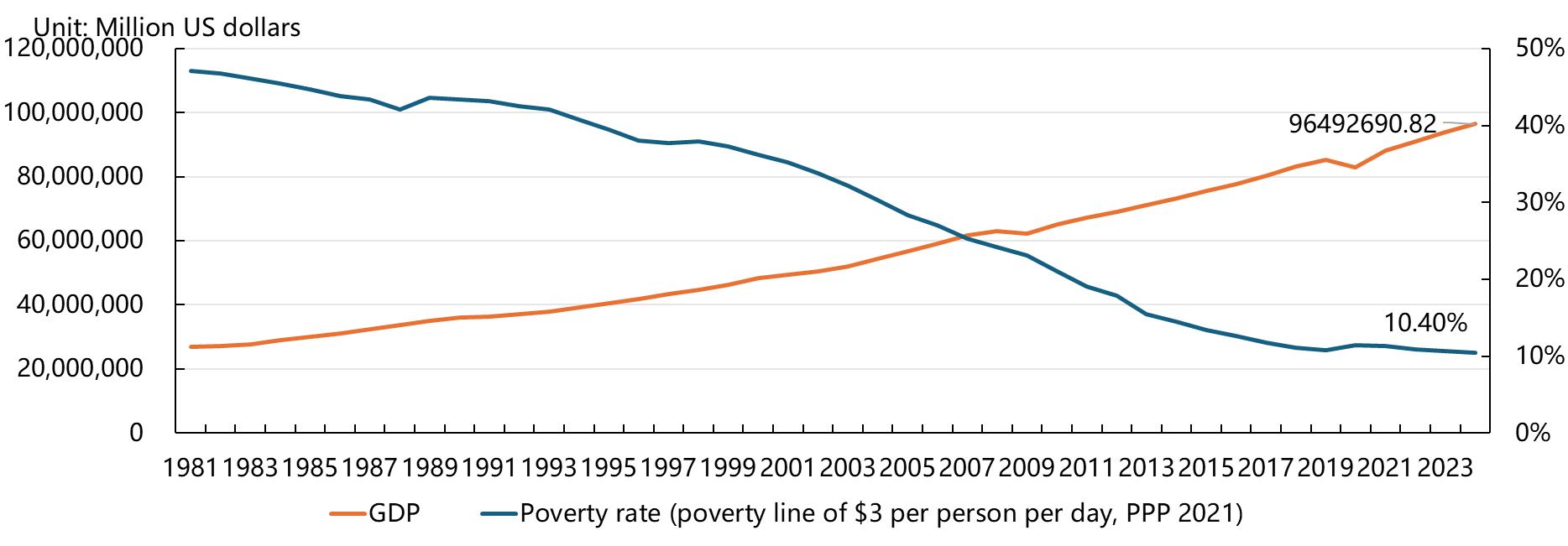
Global GDP Growth and Poverty Rate
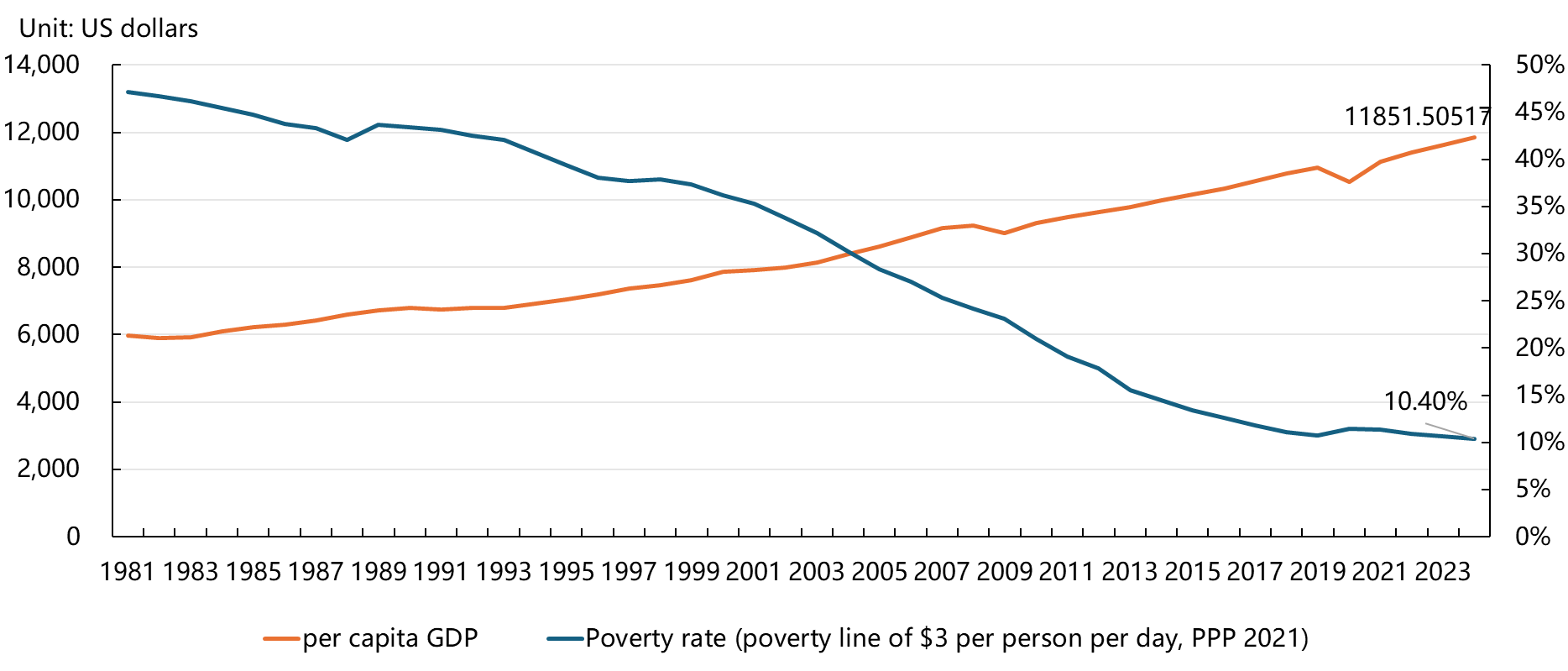
Worldwide per capita GDP growth and poverty rate
Here, I would also like to emphasize that the era of globalization witnessed unprecedented global economic growth. Here I added another chart. The blue line represents global GDP growth, and the other two curves represent global foreign direct investment. The yellow line is foreign direct investment inflows, and the other line is foreign direct investment outflows. Basically, they both represent foreign direct investment. You can see that their trends are almost exactly the same: when foreign direct investment increases, global GDP also rises; and when GDP grows, the poverty rate declines, just as we saw earlier.
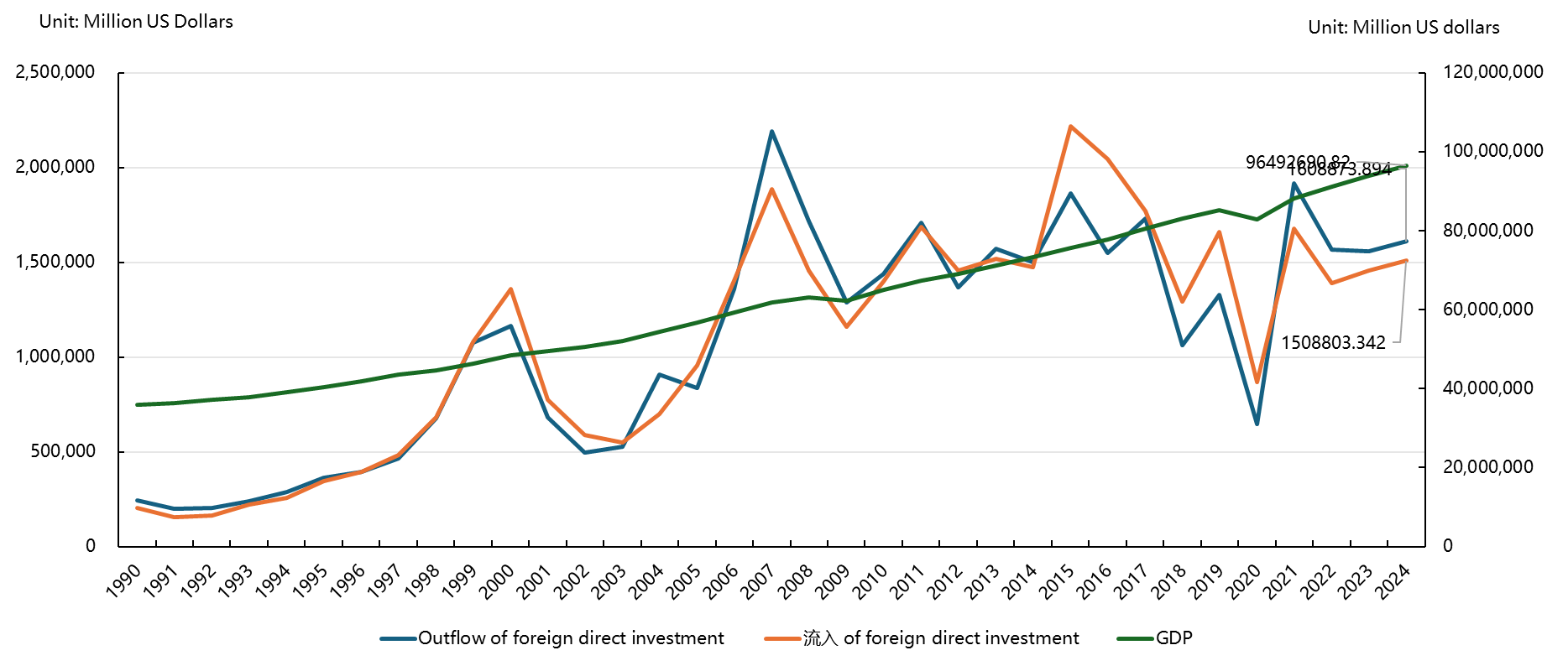
Global Capital Flows and World GDP Growth
The same thing happened in China. This chart shows the relationship between China’s GDP and China’s poverty rate. There is a very clear relationship here: GDP rises, and the poverty rate declines. The same is true for per capita GDP.
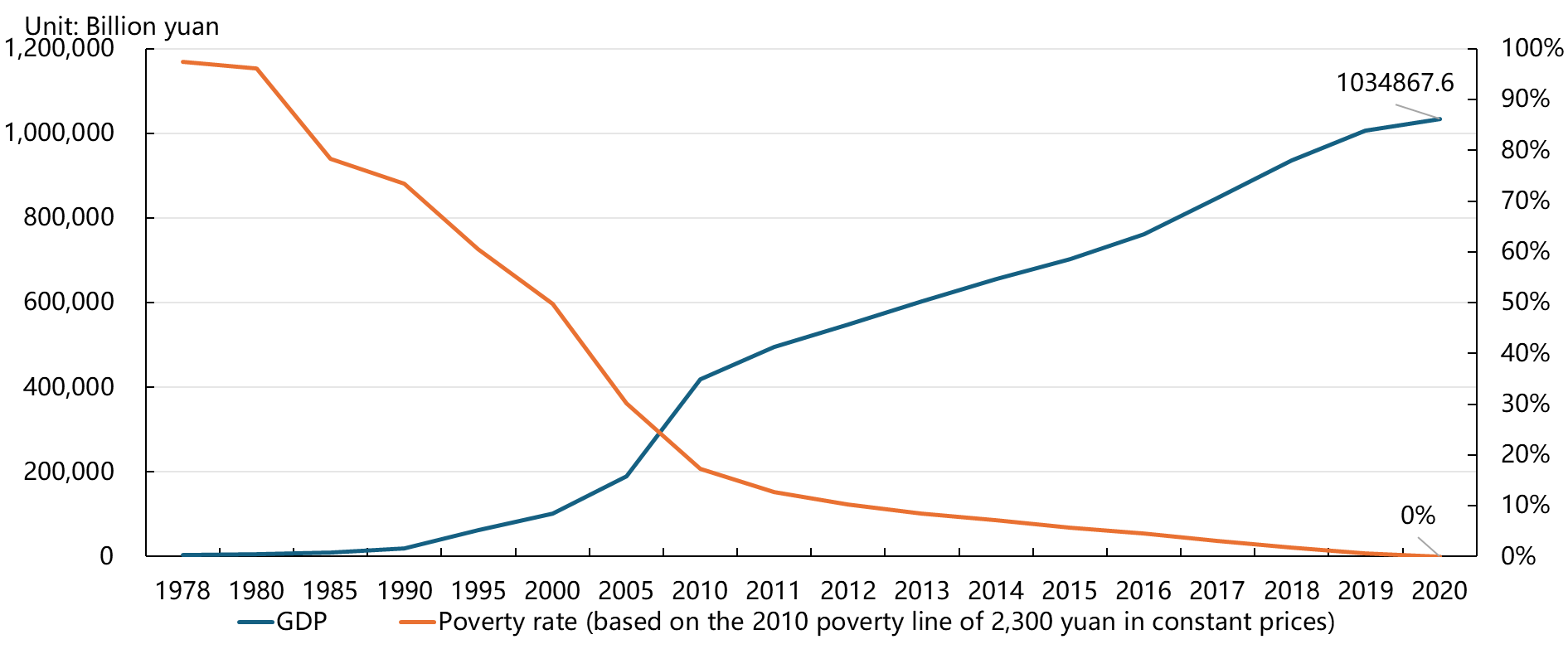
Chinas GDP and poverty rate
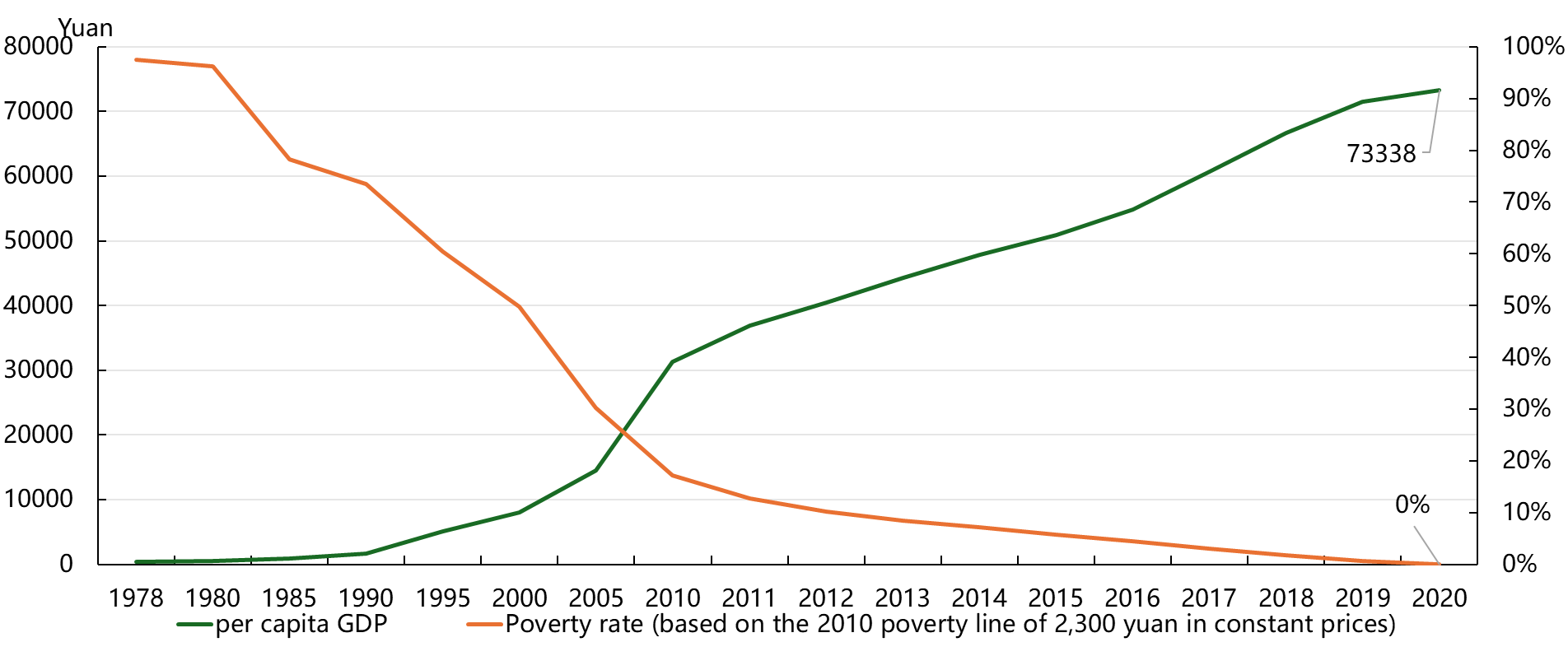
Chinas per capita GDP and poverty rate
From the perspective of globalization, since China’s reform and opening-up began in 1978, China actively attracted foreign direct investment. The yellow part in the chart represents foreign direct investment inflows, which move in the same direction as GDP growth. As China’s GDP grew, the poverty rate also declined.
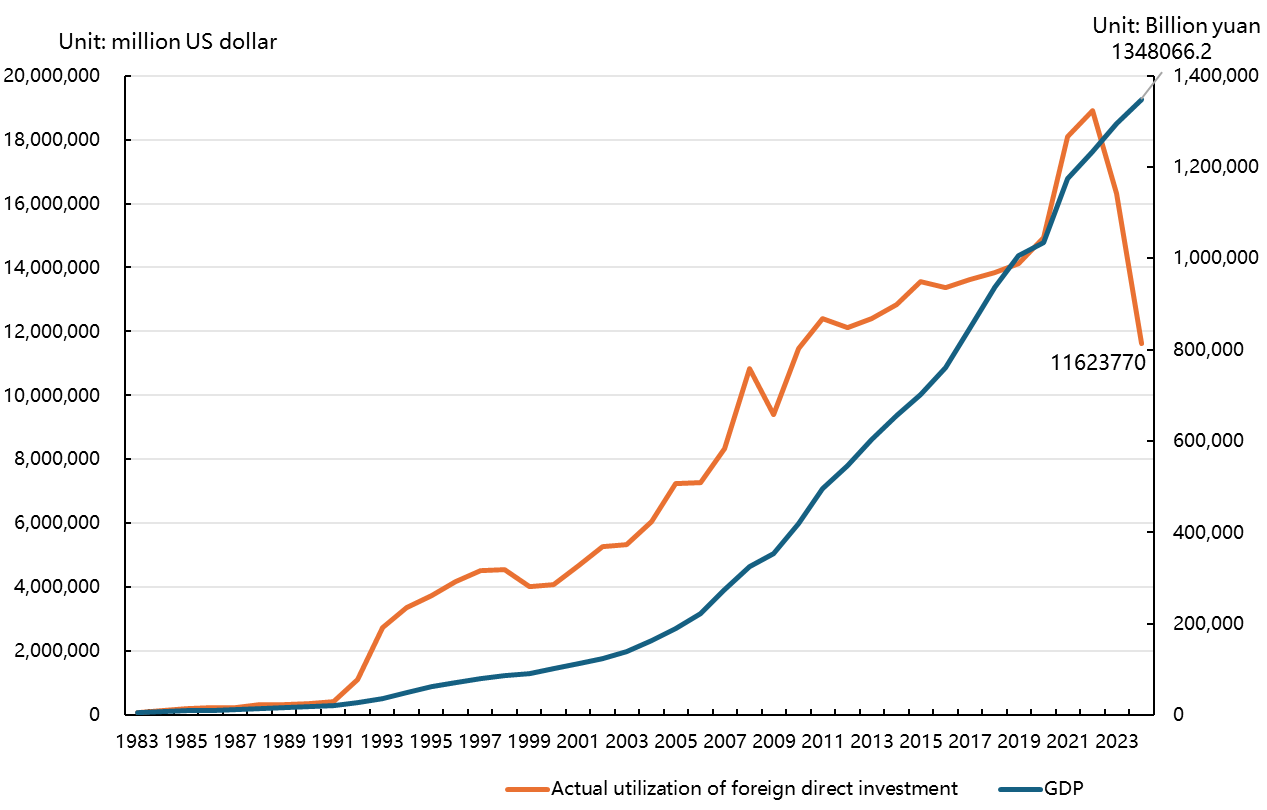
China IFDI and GDP
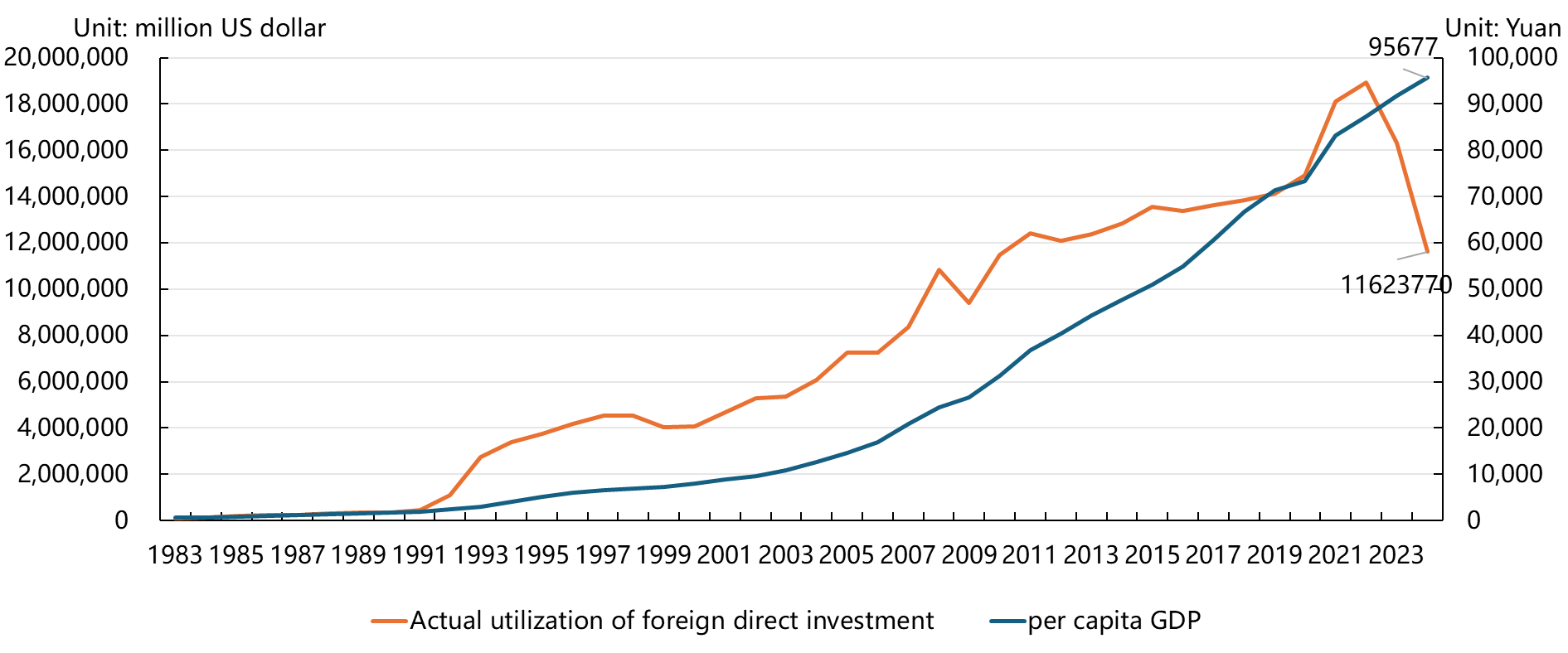
China IFDI and Per Capita GDP
Although these are only simple charts, they clearly demonstrate the intrinsic link between development and poverty alleviation, as well as the correlation between development and openness. Accordingly, we must pursue a development-driven approach to poverty alleviation. Different countries have their own paths to development. Although today’s class is not primarily focused on development strategies themselves, I do believe that one important way to achieve development is mutual learning among different countries. At the same time, different countries also have their own poverty alleviation paths. We believe that mutual learning among countries can enrich each country’s poverty alleviation experience and methods, and connect poverty alleviation ideas with development approaches. This is exactly what we are doing here today, and it is also what our Poverty Alleviation Challenge project hopes to do.
I believe we can all recognize that poverty manifests with similar characteristics across different countries. That said, specific poverty alleviation approaches and technologies are usually developed within a country’s unique economic conditions and institutional context. Even so, we can draw on effective poverty reduction practices pioneered in one country and adapt them for application in others. Let me give an example. In the past, some remote areas in China had insufficient electricity supply. Now, we have already solved this problem. Companies such as State Grid, as well as other large enterprises, have developed a technology called microgrid. This technology was used to address electricity shortages in remote regions of China.. Now, State Grid has already invested in Latin American and Caribbean countries. It has entered Brazil and Chile. I once spoke with the CEO of this company in Chile. He explained that they believe microgrid systems could also be applied in remote areas of Chile. They are testing it and have already applied to the Chilean government for the relevant project. This is a very vivid example. It illustrates an important point: different countries have different ways of poverty alleviation, and mutual learning can benefit more countries.
Of course, mutual learning among different countries also faces difficulties and challenges. There are systemic differences among different countries, such as cultural differences, legal differences, institutional differences, and so on — all these differences are challenges before us. At the same time, it is also true that some methods in certain countries cannot be learned from or transferred to other countries. But we believe that there are still some experiences and methods that we can learn from one another. In other words, even though there are many differences among countries, it does not mean that we cannot learn from each other. I often say that human wisdom is limited, but we do have the ability to learn. Since mutual learning can bring mutual benefits, we should have the courage to explore it. This is also why we are carrying out this Challenge program. This Challenge program itself is an innovative initiative. It brings together outstanding Chinese and Latin American youth and young friends, allowing everyone to exchange ideas, learn from each other, and work together to address poverty-related issues.
Here, I would like to especially emphasize the 5W1H+ framework. This framework is especially important because it provides a structured way to analyze poverty-related issues. It not only helps you break down the logic of poverty alleviation, but also provides all of us with a common language for discussing poverty-related issues. No matter which country you come from, and no matter what academic background you have, when we work together in this project, we can all use 5W1H+ as a shared language for discussion. This is very important. As more case studies and more projects are carried out, we will have more content to compare with each other. On the basis of practice, we will also have the opportunity to go beyond 5W1H+ itself and further consider whether a business model for poverty alleviation in one country can be transferred, or whether a key method for addressing a specific poverty challenge can be learned. Today, we will also try to discuss these questions through Chinese cases.
For this Challenge program, we are making efforts to promote mutual learning and mutual reference. I have already explained very clearly why this is important. We offer this class in order to share experiences. We encourage everyone to form cross-national teams. Now is exactly the stage for forming cross-national teams, and I strongly encourage everyone to do so. In the overall design of our Poverty Alleviation Challenge, there are different stages, and each stage uses different methods to promote mutual learning and mutual reference of poverty alleviation experiences. I hope that as you take part in every stage of the Poverty Alleviation Challenge Project, you will gain a clear understanding of how each stage facilitates mutual learning. Please engage fully with every component of the project and approach each process with due diligence.
Finally, I hope all of you can open up your minds and broaden your perspectives. I would like to remind you of three points. First, all of us have experienced the process of globalization. In this process, there have been flows of capital, flows of information, and movements of people. These have truly promoted cross-border communication. Although the trend of globalization seems to have declined somewhat, we have already experienced the benefits brought by this process. Therefore, we should continue promoting international exchange and cooperation. Second, we now also have better technologies, especially artificial intelligence. It can help us with cross-border communication, and it can also help different countries transfer and learn from each other’s technologies and methods. Third, please note that our Poverty Alleviation Challenge project provides a very good platform for mutual learning. It is not only a platform for mutual learning among all the young friends here, including Tsinghua students and students from Chile, Brazil, and Peru — but also a platform that invites different participants to join, including government agencies, enterprises, think tanks, and other types of institutions from different countries. They can all play a role on this platform. We have already realized this, and we are also working hard to invite them to join us. So let us join hands and work together for the challenge program!