China and Latin America join hands
to advance poverty alleviation;
empower with wisdom
and achieve far-reaching impact through action.
A platform for
cross-cultural exchange, collaboration, and action.
In this spotlight, we’re introducing one of our participating teams
and discover how they are turning
innovative ideas into real-world impact.
On August 14 local time, “2026 Poverty Alleviation Challenge” Brazil Final was successfully held at Universidade Federal do Rio de Janeiro. Focusing on the livelihoods of waste pickers, the Ecocycle team won the bronze award with its waste cooking oil recycling and logistics project.
Project Overview
Project Theme: AI-driven logistics for UCO repurposing, providing structural income for waste pickers and mitigating flood risk
Project Introduction:
Improper disposal of used cooking oil is a significant environmental challenge in Rio de Janeiro’s Pavuna-Meriti basin. Instead of being collected and recycled, valuable waste cooking oil is frequently discharged into rivers, contributing to water pollution while forfeiting opportunities for resource recovery and income generation. Existing recycling systems fail to address last-mile collection barriers, limiting both environmental and socioeconomic outcomes. EcoCycle was developed to bridge this gap by establishing a circular economy network for waste cooking oil recovery, creating sustainable livelihoods for marginalised waste pickers while simultaneously promoting environmental restoration, poverty alleviation, and progress toward the United Nations Sustainable Development Goals (SDGs).
Team Members
Thais da Silva Oliveira Mendes – Team leader
School: Federal University of Rio de Janeiro
Introduction: I have a multidisciplinary background combining Electrical Engineering, sustainability, research, artificial intelligence, and social impact. My strengths include analytical thinking, adaptability, cross-cultural collaboration, and leadership in international teams. I was a research student in Engineering Education at Purdue University in Indiana, USA, where I expanded my perspective on innovation, education, practical learning and global development. I have experience developing projects focused on local development, environmental sustainability, poverty alleviation, access to energy, and AI-driven community solutions. I also have received awards for projects related to sustainability and energy access during high school and undergraduation. Through international academic and innovation programs, I have collaborated with students from Latin America and China on scalable social impact initiatives. My work emphasizes transforming environmental challenges into economic opportunities while promoting inclusion, education, technological innovation, and long-term community resilience.
Award feelings or thoughts: Being a finalist in the Poverty Alleviation Challenge for the second consecutive year is an incredible honor. Working alongside talented teammates from Brazil, China, and Chile has shown me that when people from different cultures unite around a shared purpose, innovation becomes a powerful force for creating meaningful social and environmental impact.
Individual photo:

Caio Peixoto Galdino – Team member
School: Federal University of Rio de Janeiro
Introduction: I am an Engineering of Computation and Information student at Poli-UFRJ whose primary interest lies in bridging advanced computing with sustainable social impact. I possess a strong technical foundation in Artificial Intelligence, Computer Vision, and software development. My experience in poverty alleviation was shaped by participating the 2025 China–Latin America Poverty Alleviation Challenge, an award that included a technical immersion at leading innovation hubs in China. This experience expanded my perspective on how green technologies, large-scale engineering, and data-driven algorithms can be leveraged to address structural socio-economic inequalities. Currently, I am applying my technical knowledge to design scalable social technologies. Utilizing data-driven systems and advanced algorithms to optimize resource distribution, foster sustainable development, and create strategic frameworks that empower vulnerable populations.
Award feelings or thoughts: I truly believe that every participant is a winner. The most fulfilling aspect of the Poverty Alleviation Challenge is knowing that our combined knowledge and teamwork can make a real difference in the world. I look forward to meeting new people, exchanging ideas, and building meaningful connections.
Individual photo:
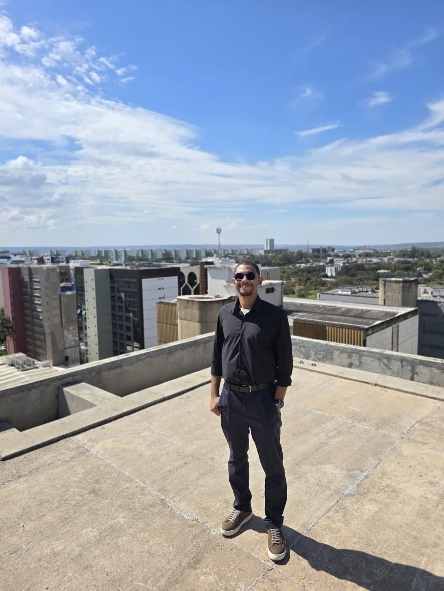
Diego Urzúa – Team member
School: Catholic University of Chile
Introduction: I am an educational psychologist from Pontificia Universidad Católica de Chile, currently completing a Master's in Educational Psychology with a thesis defense scheduled for 2026. My research sits where cognition, language and technology meet: within FONDECYT N°1251102 I design and test automated assessment of expressive vocabulary in schoolchildren, comparing language model outputs against human raters and standardized measures, under strict data protection and research ethics protocols. Earlier work at LIFLab and on FONDECYT N°1231550 focused on narrative discourse development in preschoolers, and a research stay at Universidad Austral in Argentina involved developing and adapting a psychometric instrument.
I run local models rather than cloud services because assessment data from children should not leave the institution that collected it. That constraint shapes what I build. I am also developing AprendeLocal, a system that generates place based STEM projects for rural schools from local ecological and heritage context, and conducting a systematic review with quantitative synthesis screening over 500 studies under PRISMA guidelines. Beyond research, I teach and facilitate: university teaching assistantships in language development and cognition, instructional design for teacher professional development, and in person training for operational workers, entrepreneurs and older adults. Analysis in R and SPSS, Spanish native, English B2, Mandarin A2.
Award feelings or thoughts: Being finalists for the second time means more to us than the first did. Once could be luck; twice suggests the work holds up under outside scrutiny. What we feel is less celebration than responsibility, because a finalist place recognizes an idea, not a working solution. Our hope goes beyond the ranking: we want ecocycle to actually run, with real users in a real context, and the contest matters to us mainly as a way to get there.
Individual photo:
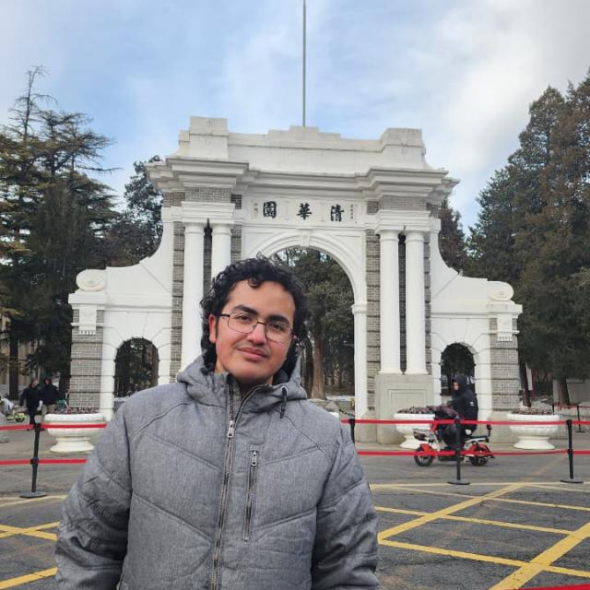
Wu Zongqin – Team member
School: Tsinghua University
Introduction: I am a master’s student at Tsinghua University, majoring in Environmental Science and New Energy Technology. I have gained strong skills in data analysis, research, and team management, and am proficient in Python, R, and ArcGIS. I have published an international journal paper as a co-first author. I participated in rural revitalization initiatives in Nanjian, Yunnan, and in China–Brazil youth poverty alleviation exchanges. My team received the Rural Revitalization Silver Award from Tsinghua University and a School-Level Social Practice Second Prize.
Award feelings or thoughts: To me, the greatest gain lies far beyond qualifying for the final. Through intellectual exchanges with Latin American teammates, I stepped out of my inherent perspective and built a more diversified and comprehensive understanding of global poverty issues. Cross-cultural cooperation removed geographical barriers and brought me precious international friendships. Meanwhile, I had the opportunity to apply my academic expertise in environmental science and new energy technologies to the global agenda of sustainable poverty reduction, linking theories to real-world challenges.
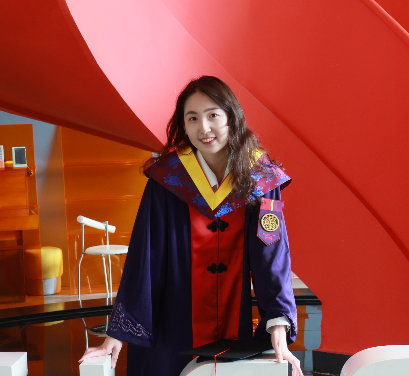
Individual photo:
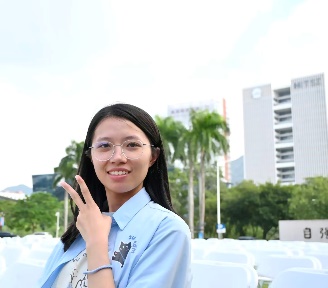
Sun Yingfei – Team member
School: Tsinghua University
Introduction: I am a Ph.D. majoring in Environmental Science and Technology, whose core technical expertise lies in the high-value utilization of food waste. I directly support poverty alleviation by transforming waste into resources and creating sustainable livelihood opportunities. I am a quick learner with strong problem-solving abilities, which I have demonstrated through first-author publications in leading journals and my capacity to lead interdisciplinary projects. In terms of poverty alleviation experience, I have actively volunteered in tree-planting campaigns in remote and underprivileged regions to combat land degradation and improve local ecological conditions. I have also regularly participated in food distribution initiatives for homeless populations in urban communities.
Award feelings or thoughts: I am honored to receive this preliminary award, which encourages us to continue optimizing our project. I look forward to the final competition and exchanging ideas with excellent competitors to further improve our project.
Individual photo: