Director's Introduction:
Deeply Understanding the Development Orientation of the Host Country—Promoting the Deepening of the Belt and Road Initiative in Latin America

Director, Tsinghua University Latin America Center
Director, China-Latin America Management Research Center, School of Economics and Management, Tsinghua University
Abstract: Based on China's experience in opening up and development, we believe that Chinese enterprises should deeply understand the development orientation of Latin American host countries. Based on the investment capabilities of Chinese enterprises, they should work together with Latin American partners to jointly create business models that align with the development orientation of the host countries. This will effectively promote the in-depth development of the Belt and Road Initiative in Latin America, thereby putting the ideal of building a community with a shared future for mankind into practice.
From the perspective of outbound investment, under the current complex global situation, whether China can practice the open development concept of building a community with a shared future for mankind and effectively promote the implementation of the Belt and Road Initiative largely depends on whether China can diligently understand the development orientation of developing host countries. Then, based on its own capabilities and development experience, it can explore win-win investment models that conform to the host country's development orientation.
Looking back on the history of global transnational investment, China is an absolute latecomer. As most Chinese enterprises began their attempts at overseas investment after the financial crisis, their outbound investments obviously missed the golden age of global transnational investment. However, during the golden age of global investment, China joined the globalization process in the role of a host country. The entry of foreign capital aligned with China's direction of opening up and development, enabling China to genuinely benefit from the spillover effects of foreign capital. Therefore, from our own experience, we understand that only when there is open development and when foreign capital aligns with the host country's development orientation can win-win development outcomes be achieved.
Most Latin American countries are still developing countries, and development remains a challenge for these countries. Since the 1990s, opening up for development has also been the development strategy for most Latin American countries. From the perspective of investing in Latin America, Chinese enterprises are still latecomers. However, during the development of the past decade or so, Chinese enterprises have experienced early setbacks, gained an understanding of the Latin American investment environment, and have also developed and honed their investment capabilities in Latin America. Currently, a considerable number of Chinese enterprises have grown into competent investors in the Latin American region.
Therefore, based on China's experience in opening up and development, we believe that Chinese enterprises should deeply understand the development orientation of Latin American host countries. Furthermore, based on the investment capabilities of Chinese enterprises, they should work with Latin American partners to jointly create business models that align with the host country's development orientation. Only in this way can the Belt and Road Initiative be effectively promoted for in-depth development in Latin America, thereby putting the ideal of building a community with a shared future for mankind into practice.
Although exploring the development orientation of Latin American countries is important, it is not easy. Most countries in the Latin American region implemented neoliberal economic development models in the last century. However, frequent financial crises, increasing wealth gaps, and other issues have caused governments to vacillate in their choice of economic models. There is a lack of medium- to long-term development strategies, and political instability is a characteristic. Many countries also suffer from serious political corruption.
However, the economic foundation, geographical advantages, and industrial development status of Latin American countries are objective and definite, and there are corresponding development paths to follow. Over the development course of the past decades, Latin American countries have continuously reflected on and attempted to develop their own industries and economies based on their own conditions. Successive governments have also made corresponding plans for their national economic development upon taking office. In addition, important regional think tanks in Latin America (such as ECLAC), multilateral banks (such as IDB, CAF), and outstanding scholars from various Latin American countries have conducted long-term reflection and research on local economic development, accumulating a wealth of research results. Therefore, we believe that the exploration of Latin America's economic and trade development orientation is evidence-based. Among these, research on major Latin American countries such as Brazil, Mexico, and Chile helps us quickly grasp the local economic and trade environment and understand local development demands.
Part One | Research on the Development of Sino-Brazilian Economic and Trade Relations and Brazil's Development Orientation

Ge Yixuan
PhD Candidate, Class of 2018, Department of Finance, School of Economics and Management, Tsinghua University
PhD Candidate Researcher, China-Latin America Management Research Center, School of Economics and Management, Tsinghua University
Abstract: Brazil is the largest economy in Latin America and also a major trading partner and investment destination for China in the region. Through research, this project team believes that focused attention should be paid to Brazil's development demands in industries such as agriculture, manufacturing, and the energy and mining sectors. Cooperation should be carried out in areas such as the green economy, digital economy, and infrastructure construction.
I. Overall Description of Sino-Brazilian Economic and Trade Relations
Brazil is the country with the largest area and population in Latin America, possesses the leading economic strength in Latin America, and has regional influence and a certain degree of international influence. In terms of economic scale, Brazil's GDP in 2020 was 1.4 trillion US dollars, accounting for 33% of Latin America's total, consistently ranking first. In terms of per capita income, Brazil is an upper-middle-income country, at a medium level in Latin America. In 2020, Brazil's per capita income was 6,796.84 US dollars per person, ranking 19th in Latin America, with a growth rate higher than the average level in Latin America in recent years (0.49%).
In terms of economic openness, Brazil, as a major economy, has a relatively low dependence on foreign trade and investment in Latin America. In terms of trade dependence, Brazil's total foreign trade volume in 2020 was 368.747 billion US dollars, with a foreign trade dependence ratio of 27%, which is relatively low in Latin America. Exports accounted for 15% and imports accounted for 12%, with an average annual growth rate of -0.2% from 2017-2019. In terms of investment dependence, Brazil's total direct investment in 2020 was -1.03 billion US dollars (indicating a situation of disinvestment), with an investment dependence ratio of -0.1%, also ranking relatively low in Latin America. Outward investment accounted for -1.8%, while inward foreign investment accounted for 1.7%, with an average annual growth rate of 0.3% from 2017-2019.
From the perspective of Sino-Brazilian economic and trade relations, Brazil is China's eighth largest trading partner and the largest trading partner in Latin America. In 2020, the bilateral trade volume between China and Brazil was 119.04 billion US dollars, of which China's exports were 34.957 billion US dollars and imports were 84.084 billion US dollars. Both imports and exports have shown an upward trend over the past 10 years, with average annual growth rates exceeding 1% and 7%, respectively. China's investment in Brazil has also shown an overall upward trend in recent years, with investment in Brazil exceeding 800 million US dollars in 2019, a record high. At the same time, the development of Sino-Brazilian relations has a long history, with a good diplomatic and economic foundation. As the economies of both China and Brazil have developed, the two sides have gradually formed a bilateral dependence in areas such as agriculture (e.g., soybeans, beef), mining (e.g., iron ore), and some manufacturing sectors (e.g., vehicles, aviation).
II. Brazil's Economic and Trade Development Orientation
(I) Methodology and Information Sources
This article analyzes and synthesizes the following materials and information sources to derive Brazil's development foundation and orientation in industries and related fields. Mainly including: reports from important Latin American regional think tanks (e.g., ECLAC), research reports from Latin American multilateral banks (e.g., IDB, CAF), public speeches by Brazilian political leaders, Brazilian government development plans and work reports, research reports from the China-Brazil Entrepreneurs Council, interviews with ambassadors in China conducted by the Tsinghua University Latin America Center, and related research in Chinese and foreign literature.
(II) Brazil's Key Development Industries and Fields
As one of the largest emerging economies, Brazil has a relatively complete economic system. In terms of industrial distribution, Brazil is dominated by the tertiary industry, with services accounting for over seventy percent of GDP, of which the financial industry is relatively developed. At the same time, Brazil is very rich in agricultural and mineral resources, and both agriculture and mining are key industries for Brazil. In terms of industry, Brazil's civil aircraft and biofuel industries are at the world's leading level (Ministry of Commerce, 2021). From 2017 to 2019, the proportion of domestic manufacturing in Brazil's GDP showed an upward trend (0.6%).
Overall, Brazil possesses superior natural conditions and human resource advantages, has a relatively large market size, and has a relatively clear industrial and field development orientation. The key industries to be developed at present and for some time to come mainly include agriculture, manufacturing, and the energy and mining sectors. Key fields for development include the green economy, digital economy, and infrastructure construction. Specifically:
1. Agriculture: Consolidate agricultural trade, increase infrastructure investment, promote green transformation.
Brazil has superior natural conditions, with exports of soybeans, corn, coffee, citrus, as well as beef, pork, and poultry meat all ranking among the top globally. Brazilian President Bolsonaro stated in 2021 that Brazil will consolidate its position as the world's largest food producer. However, Brazil's agricultural development also faces problems such as relatively low knowledge and skill levels among farmers, and prominent bottlenecks in agricultural infrastructure, especially transportation facilities. Restricted by election politics, the Brazilian government often finds it difficult to make long-term investments in this area (Yu Yue, 2018). At the same time, Brazil's future agricultural development requires more sustainable, precise, and efficient production technologies to reduce the vulnerability of agricultural and livestock production systems, increase agricultural productivity and income, enhance resilience, and control greenhouse gas emissions (Zhang Mingjun, 2021). To this end, the Brazilian government stated in the "Federal Development Strategy 2020-2031" that it will strengthen the transformation of agribusiness by developing and integrating new biological, digital, and innovative technologies to make agriculture economically, socially, and environmentally sustainable.
2. Manufacturing: Reindustrialization of the industry, extension of local industrial chains, expansion of manufacturing exports.
Since the 21st century, driven by market forces, Brazil has shown a trend of "deindustrialization" and export "commoditization" (primary product focus). Furthermore, according to research by Mortari and Oliveira from ECLAC (2019), Brazil's dependence on imports is relatively high in multiple industries including food processing, printing, textiles/furniture, chemicals, plastics, basic metals, automobiles, and electrical machinery. But on the other hand, after Brazil fell into an economic crisis in 2015, exports to China became a positive and stable growth point. Brazil has also utilized opportunities from China-Latin America production capacity cooperation to expand its market in China and increase its manufacturing exports, especially high-end manufactured products. Examples include refrigerators produced by Embraco, aircraft produced by Embraer, and steel products produced by Companhia Vale do Rio Doce (Wang Fei, 2018). The Brazilian government similarly stated in the "Federal Development Strategy 2020-2031" that it will implement development strategies to extend the value-added of local production chains and ensure the vitality of the national industrial property system to promote the development of tangible and intangible assets. The newly elected Brazilian President Lula has also proposed "reversing the deindustrialization process, promoting reindustrialization across a wide and new range of industries," and driving the transition of industries towards the digital and green economies. Specifically at the state government level, the top 4 of the six priority strategic development areas identified in São Paulo State's "Science and Technology Development Strategy 2018-2022" are all in the industrial field, including software, biotechnology and pharmaceutical manufacturing, semiconductors and electronics, and large engineering machinery and equipment.
3. Energy and Mining Sector: Attract foreign investment, mineral development, and clean energy transition.
Brazil is very rich in resources such as petroleum, iron ore, and niobium, which has attracted a large amount of foreign investment. For example, the British energy company Trident Energy acquired two major Brazilian oil fields, Pampo and Enchova, in 2019 (ECLAC, 2020). Miguel Nery, President of the Brazilian Mining Institute, once said, "We need to attract long-term investment to develop more mining projects, including policies and strategies for the production of copper, nickel, lithium, and cobalt, to meet the needs of clean energy development." The Brazilian government pays close attention to the clean development needs of mineral resources and has initiated a series of studies for the 2050 Mining Plan to provide guidelines for mining development. At the same time, renewable energy development in the Brazilian region is progressing rapidly. Besides mainly using hydropower for electricity supply, Brazil's photovoltaic industry has shown strong momentum in recent years, with the nationwide installed photovoltaic capacity in operation exceeding 13 GW.
4. Digital Economy: Develop the digital industry, improve internet access, focus on privacy regulation.
Brazil is the only country among the four major Latin American economies to deploy 5G networks. However, due to its large population, achieving universal access requires enormous investment in infrastructure construction, resulting in relatively backward development in infrastructure and connectivity. Brazil has the largest e-commerce market in Latin America. In 2019, Brazil's e-commerce sales grew by 16%, and it is at the regional leading level in terms of production digitization. However, Brazilian companies are still in the early stages of adopting digital technology and still lag behind OECD member countries in the use of the internet and digital technologies (Xu Zeyang, 2021). The Brazilian government attaches great importance to investment and development in this field and is vigorously promoting projects such as the Digital City Project, Industry 4.0 Technology, and the "Smart Brazil" National Broadband Development Plan. In 2019, Brazilian President Bolsonaro said, "In the field of the digital economy, we have discovered huge opportunities to create wealth, among which a regulatory framework that encourages innovation and respects privacy and internet freedom is very important for this." In the "Federal Development Strategy 2020-2031," the Brazilian government also places the digital economy in an important position and will support it by expanding internet access, promoting automation, and the dissemination and implementation of emerging technologies such as nanotechnology.
5. Green Economy: Multiple sectors advancing together, strengthen international cooperation, focus on technological innovation.
Brazil has always attached importance to environmental protection. The Brazilian Ministry of Economy and the Ministry of Environment jointly launched the "Green Growth Program," planning to use a total of approximately 411 billion Brazilian reais in public and private investment to promote Brazil's green and low-carbon economic transformation. Forest protection, low-carbon agriculture, renewable energy, urban transportation, logistics, green infrastructure, ecotourism, public health, waste management, and communication technology are the main focus areas of this program. According to the Brazilian government's 2020 work report, due to the implementation of technological innovations, multiple sectors in Brazil, including mining and manufacturing, have reduced their consumption of raw materials, energy, and water, thereby reducing their environmental impact. In terms of domestic energy supply, the proportion of fossil fuel use has also gradually decreased in recent years. Several Chinese and foreign companies operating in Brazil, such as Brazil's Suzano (pulp), Vale, Bayer Brazil, and Three Gorges International, have actively responded to Brazil's carbon reduction efforts in recent years, achieving environmental protection and sustainable development in multiple sectors such as agriculture/forestry, energy/mining, and manufacturing (China-Brazil Entrepreneurs Council, 2022).
6. Infrastructure Construction: Strong investment demand, attract foreign investment for concessions and PPPs.
The level of domestic infrastructure in Brazil urgently needs improvement, and there is strong demand for investment (Wang Fei, 2020). As the world's ninth-largest economy, Brazil's infrastructure stock is inadequate, leading to domestic market segmentation and poor external connectivity. For this reason, after taking office in early 2019, Brazilian President Bolsonaro immediately announced that at least 49 public tenders would be held in the field of infrastructure construction throughout the year, with an estimated tender amount of 67.9 billion Brazilian reais. In addition, since the beginning of 2019, governors or local government delegations from more than 10 states have visited China to promote projects to Chinese investors, mainly concentrated in infrastructure areas such as railways, water conservancy, highways, and ports. CAF has also paid attention to and provided financial support for Brazil's logistics, highway construction, and urban sanitation and drainage facility improvements in its report (CAF, 2020).
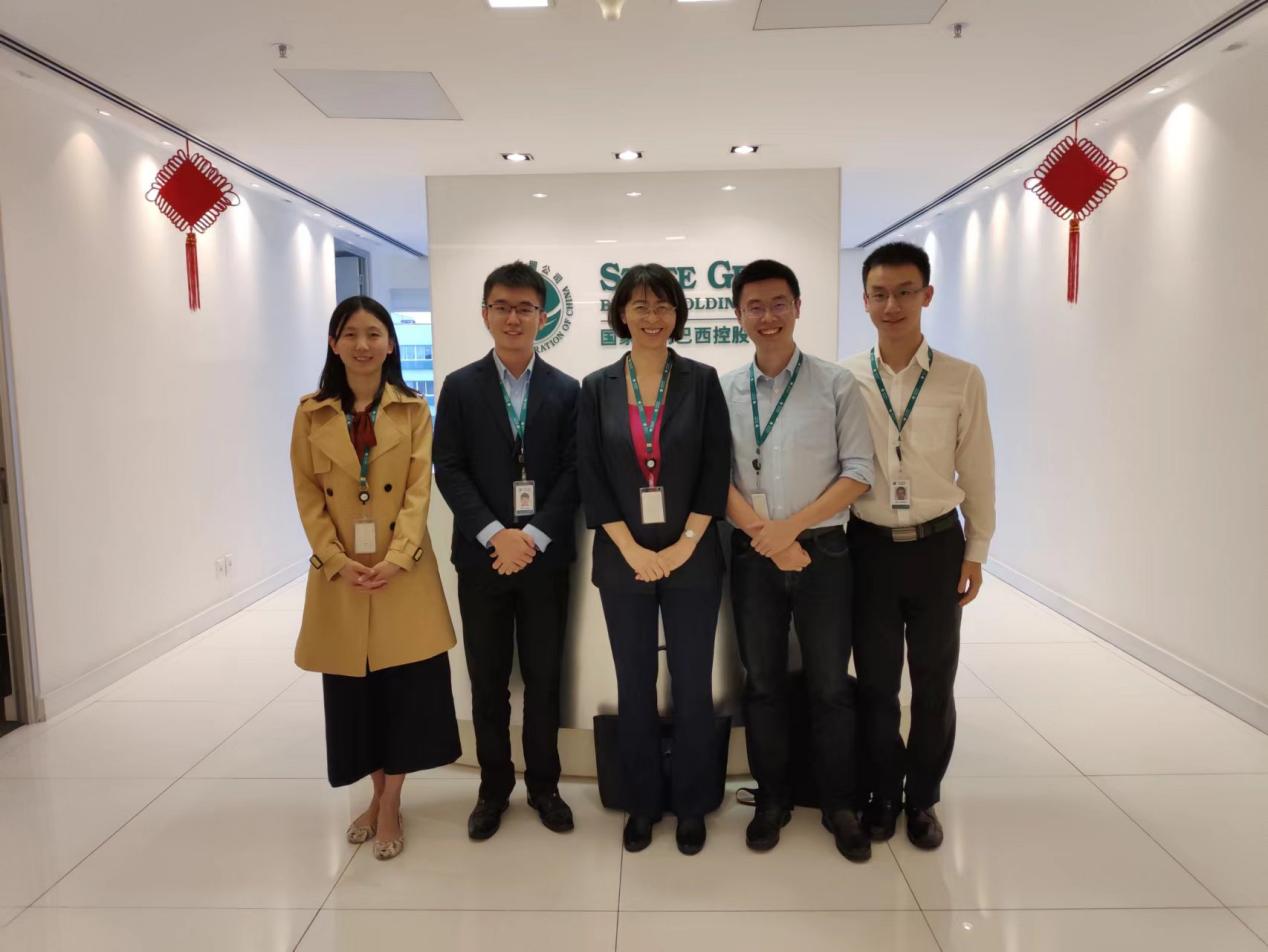
The research team conducted a research trip to Brazil to investigate State Grid Brazil Holding S.A.
References:
[1] Ministry of Commerce. Country Guide for Outbound Investment Cooperation (Brazil) [R]. 2021
[2] Wang Fei. From "Deindustrialization" to "Reindustrialization": The Economic Cycle Between China and Brazil [J]. Cultural Review, 2018, 06, 65-71.
[3] Wang Fei. China-Brazil Infrastructure Construction Cooperation: Progress, Challenges, and Path Selection [J]. International Studies, 2020, 01, 54-66.
[4] Xu Zeyang. Preliminary Study on the Development and Strategy of the Digital Economy in Latin America [D]. Graduate School of Chinese Academy of Social Sciences, 2021.
[5] Yu Yue. Current Situation of Agricultural Development in Brazil and Prospects for China-Brazil Cooperation [J]. Journal of Southwest Forestry University (Social Sciences), 2018, 2(05), 1-5.
[6] Zhang Mingjun. Current Situation and Prospects of Agricultural Development in Brazil [J]. Agricultural Outlook, 2021, 17(10), 110-115.
[7] 2020 Annual Report of the Development Bank of Latin America [R], Development Bank of Latin America, 2020.
https://www.bnamericas.com/en/news/studies-begin-to-map-out-brazilian-mining-plan-through-2050
[8] Speech by President Bolsonaro at the Opening of the Informal Meeting of BRICS Leaders [N]. Bolsonaro, 2019.
https://www.gov.br/planalto/pt-br/acompanhe-o-planalto/discursos/2019/discurso-do-presidente-da-republica-jair-bolsonaro-durante-abertura-da-reuniao-informal-dos-lideres-do-brics-osaka-japao
[9] Taking Sustainable Development and Scientific and Technological Innovation as the Foundation for China-Brazil Cooperation [R]. China-Brazil Entrepreneurs Council, 2021.
http://www.mofcom.gov.cn/article/zwjg/zwxw/zwxwmd/202110/20211003209732.shtml
[10] 2020-2031 Federal Development Strategy of Brazil [R]. Brazilian Ministry of Economy, 2020.
https://www.gov.br/economia/pt-br/assumos/gestao/estrategia-federal-de-desenvolvimento
[11] 2018-2022 Science and Technology Development Strategy of São Paulo State [R]. São Paulo State Ministry of Science and Technology, 2016.
www.prodesp.sp.gov.br
[12] de Moraes Silva, D. R., Furtado, A. T.,& Vonortas, N. S.. University-industry R&D cooperation in Brazil: A sectoral approach[J]. The Journal of Technology Transfer, 2019, 43(2), 285-315.