Author: Chen Taotao, Feng Jian, Fan Jiwei, An Haozhen
In recent years, affected by the overlapping of multiple factors such as geopolitical conflicts, supply chain restructuring, and industrial policy competition among nations, the global foreign direct investment (FDI) landscape is undergoing a profound transformation. Taking April 2026 as the observation point, looking back, global FDI in 2025 achieved a technical rebound in total volume, but indicators for real investment remained weak. Investment focus accelerated its concentration towards a few strategic industries such as data centers and semiconductors, and regional divergence became increasingly evident. Against this macro backdrop, China's two-way investment has also manifested new characteristics of structural adjustment: outward direct investment (OFDI) has demonstrated strong resilience, accelerating its shift towards the "Global South"; while inbound foreign direct investment (IFDI) has declined for three consecutive years, yet the rate of decline has narrowed, and the sectoral structure continues to optimize. This article aims to systematically outline these evolving trends and analyze the responses and future directions of China's two-way investment under the strategic framework of "dual circulation".
I. Evolution and Recent Trends of the Global FDI Macro Landscape
(I) Historical Evolution and Driving Factors of Global FDI
Examined from the perspective of historical evolution, the development of global FDI exhibits distinct stage-wise characteristics. From the 1980s to the present, it can roughly be divided into three developmental stages, each with its unique driving logic and operational patterns.
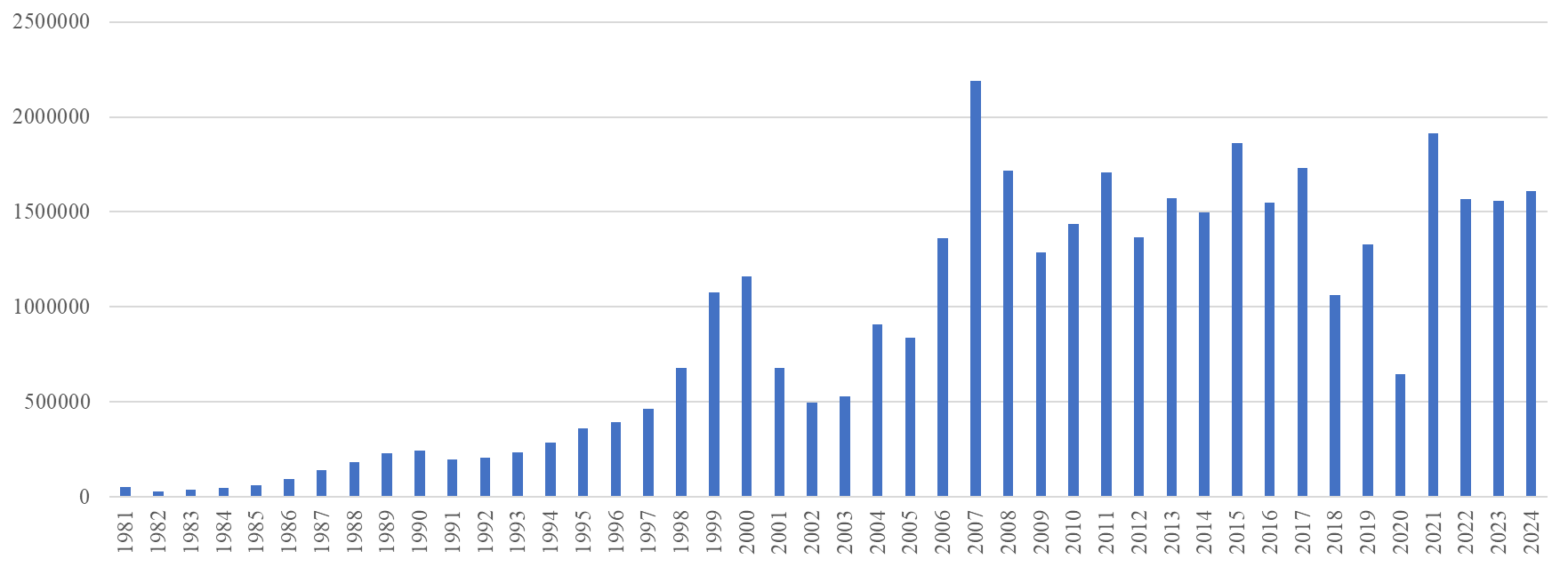
The first stage is the "Harmonious Globalization Phase" before 2008. During this period, despite brief disruptions, the scale of global cross-border investment generally exhibited a rapid growth trend. The core logic behind this was the high alignment between the motives of developed countries to invest abroad and the needs of developing countries to attract foreign capital. From the perspective of developed countries, they had strong motives for outward investment and continued traditional open-up strategies, gaining market, resource, and efficiency advantages through cross-border investment. From the perspective of developing countries, after the 1980s, a vast number of developing countries, to meet their urgent development needs, gradually opened their doors, actively attracting foreign capital, creating a strong demand for foreign investment. This "supply-demand match" drove the continuous expansion of global FDI. During this period, global FDI experienced a significant decline in 2001 due to the bursting of the dot-com bubble and the 9/11 attacks, but this was only a temporary shock to cross-border investment activities and did not undermine the fundamental impetus for internationalization.
The second stage is the "Post-Crisis Adjustment Phase" from 2008 to 2017. After the financial crisis, the strong growth trend of global cross-border investment disappeared, entering a phase of relative volatility. The underlying logic was that after the crisis, both developed and developing countries were re-evaluating and adjusting their strategies for outward investment and attracting foreign capital to adapt to the new global economic landscape. Developed countries, post-crisis, emphasized domestic industrial development, became cautious about outward investment, actively sought inbound investment, and began to pay attention to national security issues. Developing countries seized the opportunity for leapfrog development in outward investment during the crisis, while also recognizing that attracting foreign capital needed to align with their own development needs. During this stage, the status of developing countries in global FDI notably rose, especially in attracting foreign capital. In 2014, the scale of foreign capital received by developing countries surpassed that of developed countries for the first time. From 2020 onwards, it accounted for about 60% or more of global FDI.
The third stage is the "Increasing Turbulence Phase" from 2018 to the present. During this stage, FDI fluctuations have intensified. The underlying logic is that a series of far-reaching events have occurred on the world stage, significantly impacting the globalization process and the international investment landscape. Consecutive major shocks such as the China-US trade friction, the COVID-19 pandemic, and the Russia-Ukraine conflict have impacted countries worldwide, bringing unprecedented challenges to cross-border investment and making predictions about its future trajectory increasingly uncertain.
(II) Core Characteristics and Reasons for Global FDI in 2025
According to preliminary statistics from the United Nations Conference on Trade and Development (UNCTAD), global FDI in 2025 exhibited three major characteristics: "weak total volume, sectoral concentration, and regional divergence."
1. Total Volume Characteristic: Real Investment Remains Sluggish
Global FDI flows grew by 14% in 2025, reaching approximately $1.6 trillion, ending the low performance of the previous two consecutive years. However, this growth was primarily a technical rebound, as investor confidence remained weak. Several key indicators constituting real investment showed negative growth: international project finance in areas like infrastructure fell for the fourth consecutive year, dropping by a high 16%; the number of new greenfield projects decreased by 16%; and the value of cross-border M&A deals decreased by 10%. These data indicate that companies are reluctant to make long-term capital commitments.
More critically, the growth in global FDI in 2025 was significantly amplified by certain conduit transactions in several European economies. After excluding these "financial center/conduit flows," the real growth in global FDI was only about 5%.
The UNCTAD report explicitly states that any growth may have been primarily driven by major one-off transactions and fluctuations in conduit flows through financial centers. Real project activity likely remained depressed, weighed down by persistent geopolitical tensions, regional conflicts, policy uncertainty, and trends in economic fragmentation.
The deep-seated reason for the weak total volume lies in the fundamental shift in investment logic. The macro background for recent global FDI trends can be summarized as the "overlap of three shocks." The first shock is the continuous escalation of geopolitical tensions. The intensification of China-US strategic competition, the protracted Russia-Ukraine conflict, and instability in the Middle East have profoundly affected the investment decisions of multinational enterprises, prompting a shift in investment from "globalization" to "regionalization." In particular, the push by the US and some other countries to form exclusive industrial alliances promoting "decoupling" and "friendshoring" has disrupted the global economic order. The second shock is the accelerated restructuring of global supply chains. The COVID-19 pandemic exposed the fragility of global supply chains. Companies are now placing greater emphasis on the security and resilience of supply chains, rather than purely cost efficiency. Many multinational corporations are adopting strategies of diversification, nearshoring, and regionalization to reduce the risk of supply chain disruptions. The third shock is the rising policy uncertainty in major economies. The US introduced "America First investment policies," the EU strengthened its foreign investment screening mechanism, and industrial policy competition among countries intensified. These policy changes have increased the uncertainty and compliance costs of cross-border investment. Consequently, facing geopolitical and economic fragmentation, global capital is shifting from efficiency-first to security-first, leading to a greater emphasis on cautious layout, diversified placement, and short-term operations. In the context of poor global economic conditions, real FDI has exhibited an overall downward, weak trend in recent years.
2. Sectoral Characteristic: Investment Concentrates in a Few Strategic Industries
The sectoral distribution of FDI in 2025 showed a clear "bifurcation" characteristic, with investment highly concentrated in a few strategic industries such as data centers and semiconductors. Greenfield investments in data centers totaled over $270 billion, accounting for more than one-fifth of all investment projects; projects related to semiconductors grew 35% in value compared to the previous year. These two areas became the core engines of global FDI growth.
The explosive growth in data center investment is mainly driven by the intensifying competition in artificial intelligence technology. The training and inference of AI large models require massive computing power, making data centers the infrastructure of the AI era. Investment destinations prioritized developed countries (like France, the US) and emerging markets with computing resources (like Brazil). France received the most data center investment, followed by the US and South Korea; meanwhile, emerging economies like Brazil, Thailand, and Malaysia also attracted significant data center investment, possessing unique advantages in energy costs, climatic conditions, or policy support. Taking Brazil as an example, its abundant land resources, sufficient cooling water, and diversified energy mix dominated by hydropower and renewables (onshore wind, solar PV) have all facilitated the development of its data center industry; simultaneously, Brazil has also released a series of supportive policies, with the Brazilian National Development Bank (BNDES) announcing in September 2024 the establishment of a BRL 2 billion (approximately $400 million) special credit line to support data center construction. The introduction of data localization legislation (e.g., the Brazilian General Data Protection Law (LGPD)), by mandating local data storage, has driven data center investment.
The growth in semiconductor investment reflects the trend of global chip supply chain restructuring. Driven by policies like the US CHIPS and Science Act and the EU Chips Act, semiconductor manufacturing capacity is dispersing from the highly concentrated East Asia region to the US, Europe, and elsewhere. Concurrently, geopolitical considerations are prompting countries to strengthen control over semiconductor supply chains, driving rapid growth in related investments. According to UNCTAD's Global Investment Trends Monitor No. 50, 5 of the top 10 greenfield investments in 2025 were large investments by Taiwan, China's TSMC in the US, including the construction of three new semiconductor fabrication plants and two advanced packaging facilities in Arizona.
In stark contrast to the hot investment in strategic industries, renewable energy, industrial and real estate, and global value chain-intensive industries all experienced declines. Greenfield investment projects in renewable energy fell 28%, dropping to $197 billion; greenfield projects in global value chain-intensive industries, after strong growth in the previous two years, declined in 2025, with the number and total value of projects in electronics, automotive, machinery, and textiles all falling. This sectoral divergence profoundly reflects the reshaping of global capital flows. Compared to the traditional efficiency maximization, current investment places greater emphasis on non-economic strategic demands such as technological autonomy, supply chain controllability, and data localization.
3. Regional Characteristic: Capital Flows of Major Economies Show Significant Divergence
The regional distribution of global FDI in 2025 exhibited significant divergence, with markedly different performances across regions.
The US maintained stable foreign capital inflows. As the world's largest FDI recipient, US inflows grew by 2% in 2025, remaining stable. This is mainly due to the US's leading position in strategic areas like AI and semiconductors, and the attractiveness of industrial policies like the CHIPS and Science Act for foreign capital. The US's imposition or threat of tariffs on multiple economies in 2025 also affected global capital allocation. On one hand, theoretical research and historical experience suggest tariffs may induce firms to engage in direct investment in the host country to circumvent cross-border tariff costs; on the other hand, policy and market practice in 2025 also reflected that, driven by tariffs and industrial policy, domestic investment in US strategic sectors like semiconductors and EV batteries increased notably. Simultaneously, arrangements where "investment commitments are exchanged for tariff treatment" frequently appeared in multilateral or bilateral negotiations. The superposition of these factors means that the US, in absorbing FDI, not only relies on traditional market and institutional advantages but also adds effects driven by tariffs and industrial policy. UNCTAD also noted that the US introduced an "America First Investment Policy" in 2025, allocating additional administrative resources to promote partner country investments and encouraging FDI from specific countries.
In contrast, Europe faced significant pressure on foreign capital inflows. FDI received by the EU grew by 56% in 2025, but this growth primarily stemmed from a few large deals, such as the UAE's 40+billiondatacenterinvestmentinFrance.Excludingtheseexceptionaltransactions,Europe′sactualFDIperformancewasnotoptimistic.Infact,Europe′sFDIhasbeenexceptionallyvolatileinrecentyears.AccordingtoUNCTADdata,FDIinflowstoEuropefrom2020to2024were45.9 billion, 223.4billion,−61.2 billion, 221.5billion,and198.1 billion, respectively. Even after excluding conduit economies like Ireland, Luxembourg, the Netherlands, and Switzerland, Europe's FDI still showed a declining trend. The reasons for this phenomenon are, on one hand, the persistent impact of the Russia-Ukraine conflict, rising energy costs, weak economic growth, and other factors continuously affecting Europe's investment attractiveness; on the other hand, the EU's continuous strengthening of foreign investment security screening under its economic security framework, bringing sensitive areas like dual-use goods, artificial intelligence, and critical raw materials under mandatory review, has also somewhat dampened foreign capital inflows.
In the same period, China's inbound FDI was also affected by the external environment. FDI inflows to China fell for the third consecutive year, declining by 8% in 2025 to a preliminary estimate of $107.5 billion. China's share in global FDI dropped from 15.5% in 2020 to about 6.7% in 2025. This declining trend reflects the combined impact of multiple factors, including global geopolitical tensions, policy uncertainty in major economies, and China's domestic economic structural adjustment, which will be detailed later.
However, some emerging markets achieved growth benefiting from the current situation. In 2025, Thailand and Turkey saw robust FDI inflow growth, increasing by 35% and 29% respectively, and India also achieved 73% growth. The growth in these countries partly benefited from the "diversion effect" brought by global industrial chain restructuring and investment in new sectors. Under the impact of China-US trade friction and tariff barriers, some multinational companies shifted production bases from China to these countries to avoid tariff risks. Simultaneously, these countries themselves are actively improving their business environments and offering investment incentives to attract foreign capital. Taking Thailand as an example, the Thailand Board of Investment announced that both the number and value of investment promotion applications increased significantly in 2025. Secretary-General Narit stated the driving factors mainly include, amid geopolitical tensions, manufacturing is relocating, with companies, while maintaining "in China for China," also seeking diversification outside China and expanding production in ASEAN to export globally, including to the US; additionally, rapidly developing digitalization and AI investment are accelerating investment in data centers, AI infrastructure, and cloud services in Thailand. Companies from Singapore, mainland China, Hong Kong China, etc., are reshaping Thailand's digital infrastructure landscape with hyperscale parks. In contrast, investor favor for India also benefits from India's large domestic market potential.
The underlying logic of regional divergence similarly lies in the substitution of "security logic" for "efficiency logic." Under the trend of global economic fragmentation, the choice of investment destination is no longer based solely on cost-efficiency considerations but places greater emphasis on factors like stable political relations, predictable regulatory environments, and supply chain security. Meanwhile, from the perspective of host countries, especially the vast number of developing countries, when introducing foreign capital, there is an increasing emphasis on the extension of local industrial chains and the building of actual production capacity. Multinational enterprises must accommodate and respond to this industrial demand of host countries in their business layouts, constituting a significant characteristic of the current global investment landscape.
II. Structural Adjustment and Underlying Drivers of China's Two-way Investment
(I) Structural Transformation and Driving Factors of China's Outward Investment
According to preliminary statistics from the Ministry of Commerce and the State Administration of Foreign Exchange, China's outward direct investment (OFDI) in 2025 maintained growth against the backdrop of de-globalization, rising trade barriers, and intensifying geopolitical risks. The flow was approximately $174.38 billion, a year-on-year increase of 7.1%, continuing to rank among the top globally, demonstrating strong resilience and clear structural reconfiguration characteristics.
From an investment characteristics perspective, China's OFDI shows three significant features. First, the investment destination is accelerating its shift towards the "Global South." The investment focus has clearly shifted from European and American markets to Southeast Asia, Latin America, the Middle East, Africa, and other regions. Non-financial direct investment in countries participating in the Belt and Road Initiative grew by 17.6%, accounting for nearly 30% of non-financial OFDI. Second, the sectoral structure is extending upstream from end manufacturing towards resources. Investment in automotive and new energy end manufacturing is becoming cautious, shifting instead towards increased investment in critical minerals (lithium, copper, nickel) and basic materials to ensure supply chain security; simultaneously, digital infrastructure (data centers, 5G) has become a new investment focus. Third, investment methods are becoming more diversified. Against the backdrop of tightening investment scrutiny in Europe and the US, Chinese companies are placing greater emphasis on entering target markets through various means such as joint ventures and strategic alliances, adopting more flexible and pragmatic investment strategies.
The reasons behind the growth and structural transformation of China's OFDI are multifaceted.
From international factors: First, tariff shocks are prompting companies to maintain market access through third-country layouts. Europe and the US imposing tariffs on China's advantageous industries like electric vehicles and photovoltaics have led Chinese companies to set up factories, establish distribution channels, and undertake trade-service oriented investments in ASEAN, Latin America, and elsewhere to maintain export access to European and American markets. Second, the upgrading of investment scrutiny is forcing strategic adjustments. The EU and the US continue to tighten foreign investment screening, especially in sensitive areas like artificial intelligence, quantum, biotechnology, and semiconductors, significantly increasing compliance costs and uncertainty for Chinese enterprises investing in Europe and the US, thereby pushing Chinese capital towards emerging markets with stronger cooperative will. Third, global supply chain restructuring is driving regional reconfiguration. The shift in global supply chains from efficiency-first to security and resilience-first is prompting Chinese companies to build a new layout of "China headquarters + regional production bases."
From domestic factors: First, there is the dual drive of optimizing production capacity layout and industrial upgrading. In recent years, China's demographic dividend has weakened, consumer demand has been relatively weak, deflationary pressures have persisted, and traditional capital-absorbing sectors like real estate have contracted, leading to limited domestic investment return space. In this context, internationally competitive enterprises are more inclined to invest capital overseas to seek new growth space and higher returns. Second, policy support has intensified. The policy level emphasizes "promoting reasonable growth of investment" and "supporting enterprises in high-quality 'going global'," placing greater prominence on industrial chain upgrading, technological innovation, green transformation, and high-quality international operations. The optimization and shortening of ODI filing processes have also improved investment facilitation. Third, the Belt and Road Initiative (BRI) is entering a deepening stage. As the BRI enters its second decade, the role of Chinese enterprises overseas is transforming from suppliers and engineering contractors to partners in industrial and value chains. The investment structure has achieved a leap from passive adjustment to active reconstruction.
From structural factors: Southeast Asia, Africa, Latin America, and other regions have strong complementarity with China in manufacturing, resources, processing, and infrastructure. The BRI framework reduces institutional and financing costs. Against the backdrop of global supply chain restructuring and technology blockades, these regions also serve multiple strategic functions: absorbing spillover capacity, ensuring resources, and safeguarding supply chain security.
(II) Structural Transformation and Driving Factors of China's Inbound Foreign Investment
According to UNCTAD statistics, China's total inbound FDI in 2024 was $116.24 billion, a 28.8% decrease compared to 2023, but it still maintained its position as the largest recipient among developing economies. In 2025, 70,392 new foreign-invested enterprises were established nationwide, a 19.1% increase from the previous year; actually utilized foreign capital was 747.7 billion yuan, a decrease of 9.5%. Although the decline narrowed compared to 2024, the downward trend of FDI inflows to China over the past four years has not yet been reversed. In January-February 2026, 8,631 new foreign-invested enterprises were established nationwide, a 14% year-on-year increase; actually utilized foreign capital was 161.45 billion yuan, with the year-on-year decline further narrowing to 5.7%, indicating a preliminary stabilization in foreign capital inflows.
From an investment characteristics perspective, China's IFDI exhibits the characteristic of "declining total volume, optimizing structure." Although the overall foreign capital inflow has declined, the sectoral structure shows positive developments. In 2024, actually utilized foreign capital in China's manufacturing sector was 31.12billion.Itsshareinthetotalacrossallsectorsincreasedagainstthetrendto26.813.51 billion, accounting for 43.4% of the total actually utilized foreign capital in manufacturing, a 3.7 percentage point increase year-on-year, indicating further improvement in the quality of foreign capital utilization in manufacturing. The decline in foreign capital inflows was mainly concentrated in real estate, retail, and wholesale sectors, while manufacturing and scientific research saw significant growth. Between 2019 and 2023, the average annual growth rate of actually utilized foreign capital in high-tech industries reached 15%, with its share in total foreign capital rising from 27% to 37%.
From the perspective of source distribution, Asia remains China's largest source of investment. In 2024, actually utilized foreign capital from the ten Asian countries/regions amounted to $99.16 billion, accounting for 85.3% of the total actually utilized foreign capital. Hong Kong China's supporting role in attracting and utilizing foreign capital is becoming increasingly prominent. From 2002 to 2024, the proportion of actually utilized FDI from Hong Kong China to the total actually utilized foreign capital of the year rose from 34% to 69.6%. Singapore's position as the second-largest source of investment has been significantly consolidated and elevated, with its share reaching a decade-high of 9.3% in 2024. Notably, US direct investment in China has shown a recent recovery, with its ranking significantly jumping from ninth in 2022 to third in 2024.
The reasons for the decline in China's IFDI in recent years are multifaceted and require objective analysis from multiple dimensions.
Zhu Bing, Director-General of the Department of Foreign Investment Administration of the Ministry of Commerce, summarized the reasons for the decline in foreign investment into four aspects: First, as domestic labor and land costs rise, some cost-sensitive, labor-intensive foreign capital is adjusting its global layout. Second, foreign-invested enterprises face increasingly fierce market competition. Some foreign enterprises with weakened competitive advantages are choosing to gradually exit the Chinese market. Third, many foreign enterprises are actively adjusting their investment layout in China in line with the trend of domestic industrial upgrading. Fourth, the impact of geopolitical factors on capital flows has significantly increased, with some multinational companies dispersing part of their new investments to other countries.
Besides the above reasons, US tariff barriers have also led to a reduction in export-oriented investments to the US based in China. For a long time, some foreign enterprises invested and set up factories in China to leverage China's manufacturing advantages to produce goods for export to developed markets like the US. However, as the US imposed high tariffs on Chinese products, this "produce in China, export to the US" investment model became less economically viable. This portion of export-oriented foreign capital had to adjust its global layout, shifting production bases to countries like Vietnam and Mexico not affected by tariffs, leading to a decline in China's IFDI. This factor is related to the "geopolitical factors" mentioned by the Ministry of Commerce but more specifically points to the crowding-out effect of tariff barriers on a particular type of investment. Additionally, the People's Bank of China's 2025 "Urban Depositor Survey" showed that the proportion choosing "more savings" exceeded 60%, while "more consumption" was only about 20%, indicating relatively weak domestic consumption willingness, which to some extent also affects foreign enterprises' expectations for the growth prospects of the Chinese market.
Overall, the decline in China's IFDI is the result of the combined effect of cyclical, structural, and external shock factors. Cyclical factors include slowing global economic growth and overall weak cross-border investment. Structural factors include China's industrial upgrading, rising labor costs, and enhanced competitiveness of domestic enterprises. External shocks include geopolitical tensions, rising tariff barriers, and supply chain restructuring. It is noteworthy that, despite the overall decline, the optimization of the sectoral structure indicates that foreign capital is adjusting rather than simply withdrawing. While capital is being withdrawn from traditional sectors, it is placing more resources on China's future industries.
III. Conclusion
Taking April 2026 as the time point, this article systematically reviews the evolution of the global FDI landscape and the structural changes in China's two-way investment, drawing the following main conclusions:
First, the global FDI landscape is undergoing a profound restructuring. From "harmonious globalization" to "post-crisis adjustment" and then to "increasing turbulence," the driving logic of global FDI has shifted from "efficiency-first" to "security-first." Although global FDI achieved a technical rebound in 2025, real investment indicators remain persistently weak, with investment focus accelerating its concentration towards a few strategic industries like data centers and semiconductors. Regional divergence is evident: the US performed solidly, Europe remained under pressure, China was also affected, while some emerging markets like Thailand and Turkey benefited from industrial chain restructuring to achieve growth.
Second, China's OFDI has demonstrated strong resilience and structural transformation. Against the backdrop of de-globalization, rising trade barriers, and intensifying geopolitical risks, China's OFDI still grew by 7.1%. The investment destination is accelerating its shift towards the "Global South," and the sectoral structure is shifting from automotive and new energy end manufacturing to strategic areas like critical minerals and digital infrastructure. This indicates that China's outward investment has transitioned from a stage primarily focused on scale expansion to a new stage centered on regional restructuring, industrial chain extension, and strategic layout optimization.
Third, China's IFDI decline needs to be viewed dialectically. Although IFDI has declined for three consecutive years, the rate of decline has gradually narrowed, the sectoral structure continues to optimize, and the share of high-tech manufacturing has significantly increased. The reasons for the decline in foreign capital are multifaceted, including the four points proposed by the Ministry of Commerce (rising costs, intensifying competition, industrial upgrading, geopolitics), as well as factors like weaker expectations for the Chinese consumer market and reduced export-oriented investment due to US tariff barriers. The "withdrawal" of foreign capital is more of a structural adjustment than a comprehensive retreat. While capital is being withdrawn from traditional sectors, it is placing more resources on China's future industries.
Looking ahead to 2026 and the future, the prospects for global FDI flows are highly uncertain. UNCTAD points out that any growth may be primarily driven by major one-off transactions and fluctuations in conduit flows through financial centers. Real project activity may remain depressed, weighed down by persistent geopolitical tensions, regional conflicts, policy uncertainty, and trends in economic fragmentation. Large projects in strategic sectors (especially data centers and semiconductors) may support sustained high total capital expenditures, but project activity may remain stagnant and geographically more concentrated.
2026 is the inaugural year of the 15th Five-Year Plan. For China, two-way investment will face new opportunities and challenges. In terms of outward investment, with the deepening of the Belt and Road Initiative and the ongoing restructuring of global industrial chains, investment opportunities for Chinese enterprises in emerging markets will be broader. China and a wide range of developing countries in Southeast Asia, Latin America, etc., are highly complementary in manufacturing, processing and assembly, and infrastructure construction. The injection of Chinese capital aligns with the urgent needs of host countries to accelerate industrialization and enhance local industrial supporting capabilities. However, it also needs to cope with challenges such as increasing investment scrutiny and rising compliance costs. In terms of attracting foreign investment, China's ultra-large market, complete industrial chain, and rapid technological iteration capabilities remain core advantages. The "Outline of the 15th Five-Year Plan" explicitly proposes to "steadily expand institutional opening-up, build a new system of a higher-level open economy" and also to "vigorously boost consumption" and "deepen the building of a unified national market," thereby stabilizing foreign capital expectations and enhancing foreign investor confidence. Looking ahead, China needs to coordinate "bringing in" and "going global" under the strategic framework of "dual circulation." In the process of implementing "improving the systems and mechanisms for high-standard opening-up," it is necessary to both prevent the risks of decoupling and avoid the trap of closing the door. A new balance must be found between openness and autonomy, growth and risk, participating in global economic governance with a more proactive stance and promoting the building of an open world economy.
References
[1] UNCTAD. World Investment Report 2025. 2025.
[2] UNCTAD. Global Investment Trends Monitor, No.50. 2026
[3] OECD. Global Outlook on Financing for Sustainable Development 2025. 2025.
[4] IMF. People's Republic of China: 2025 Article IV Consultation. 2026.
[5] ASEAN. ASEAN Investment Report 2025: Foreign Direct Investment and Supply Chain Development. 2025-10.
[6] EY China Overseas Investment Department. 2025 Overview of China's Overseas Investment. 2026-02.
[7] Ministry of Commerce. 2025 Action Plan for Stabilizing Foreign Investment. 2025.
[8] National Development and Reform Commission, Ministry of Commerce. Special Administrative Measures (Negative List) for Foreign Investment Access (2024 Edition). 2024.
[9] National Development and Reform Commission, Ministry of Commerce. Catalogue of Industries Encouraging Foreign Investment (2025 Edition). 2025.
[10] China Macroeconomic Forum. China Foreign Investment Report 2025. 2025.
[11] PwC. 2024 Central and Western China Investment Research Report. 2024.