编者按:本文原载于智利全国性媒体 El Ciudadano,由清华大学拉美中心组织翻译并整理成中文版本,以飨中文读者。在本次访谈中,陈涛涛教授重点围绕三个方面展开论述:一是中拉跨境投资的挑战与机遇;二是介绍了清华大学在减贫实践中总结的“5W1H+”减贫工具箱,旨在通过结构化的逻辑框架促进不同国家间的经验互鉴;三是阐述了大学和研究机构在当前地缘政治背景下应承担的责任,以共同应对全球性发展难题。以下为访谈全文。
来源媒体:El Ciudadano
原文标题:
原文链接:https://www.elciudadano.com/en/inversion-china-en-america-latina-claves-para-entender-los-desafios-y-oportunidades-segun-la-dra-taotao-chen-directora-del-centro-de-america-latina-de-la-universidad-de-tsinghua/08/28/
Interview with Dr. Taotao Chen, Director of the Latin America Center at Tsinghua University, with whom we spoke about the investment conditions that Latin America represents for China, the poverty reduction methodology used by China called '5W1H+', and the challenges facing universities and research centers in the current geopolitical context.
本次访谈的对象是清华大学拉美中心主任陈涛涛博士。我们与她探讨了中国在拉美投资面临的环境与条件、中国采用的名为“5W1H+”的减贫方法论,以及在当前地缘政治背景下大学和研究中心面临的挑战。
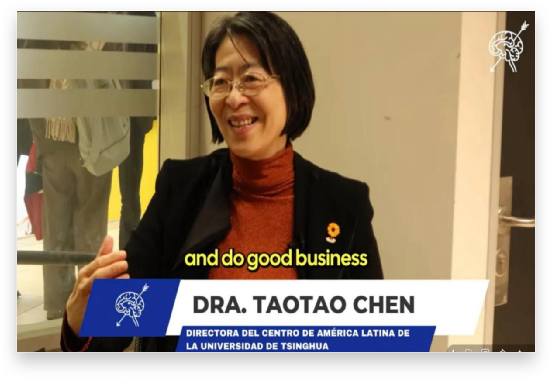
Dr. Taotao Chen, Professor of International Business and Economics at the School of Economics and Management at Tsinghua University (Tsinghua SEM), one of China’s leading economics and business schools, is one of the Chinese intellectuals with the greatest knowledge about Latin America.
陈涛涛教授是清华大学经济管理学院(Tsinghua SEM)国际商务与经济学教授。清华经管学院是中国顶尖的经济管理学院之一,而陈教授也是中国最了解拉丁美洲问题的学者之一。
Currently, Professor Chen is Director of the Latin America Center at Tsinghua University and Director of the Center for China-Latin America Management Studies at Tsinghua SEM. From these positions, she has developed important work aimed at strengthening academic, economic, and cooperative ties between China and Latin America. In August 2026, she visited our country as part of the «China–Latin America Youth Responding to Global Challenges Poverty Alleviation Challenge 2026» the awards ceremony for which was held at the Faculty of Administration and Economics of the University of Santiago de Chile (USACH).
目前,陈教授担任清华大学拉美中心主任以及清华经管学院中国-拉美管理研究中心主任。在这些职位上,她开展了大量重要工作,旨在加强中国与拉丁美洲之间的学术、经济和合作联系。2026年8月,她作为“中拉青年应对全球挑战——2026减贫营”项目的一员访问了智利,该项目的颁奖典礼在智利圣地亚哥大学(USACH)管理与经济学院举行。
In this interview, we spoke about the investment conditions that Latin America represents for China, the poverty reduction methodology used by China called «5W1H+», and the challenges for universities and research centers in the current geopolitical context.
在本次访谈中,我们讨论了拉丁美洲对中国的投资条件、中国使用的“5W1H+”减贫方法论,以及在当前地缘政治背景下大学和研究中心面临的挑战。
Javier Pineda (JP): Professor Chen, from your academic experience and as director of the Latin America Center at Tsinghua University, what do you consider to be the main challenges and opportunities today in terms of investment to deepen the relationship between China and Latin America?
哈维尔(记者):陈教授,根据您的学术经验以及作为清华大学拉美中心主任的身份,您认为在深化中拉关系的投资方面,当今主要的挑战和机遇是什么?
Dra. Taotao Chen (TC): That is a wonderful question. Cross-border investment is a very complex issue that requires companies to have comprehensive capabilities. Basically, there are differences between the home country and the host country. To be a competent multinational company, you need, at the very least, to appropriately transfer technology and capabilities from the home country and, at the same time, understand the business environment of the host country in order to develop an appropriate localization strategy that allows you to leverage the excellent local factors.
陈涛涛:这是一个非常好的问题。跨境投资是一个非常复杂的问题,要求企业具备综合能力。基本上,母国和东道国之间存在差异。要成为一家合格的跨国公司,你至少需要适当地转移母国的技术和能力,同时了解东道国的商业环境,以便制定合适的本土化战略,从而利用当地的优秀要素。
China and Latin American countries are very far apart and very different. That is why, at the beginning, Chinese companies faced many challenges in this part of the world. Fortunately, after all these years of effort, most of them have become more familiar with the local business environment and have established many relationships with local companies, governments, and universities, which allows them to better manage their localization strategy. Today we can see some important projects by Chinese companies that are already recognized by Latin Americans themselves.
中国与拉美国家距离遥远且差异巨大。因此,中国企业初期在世界这一地区面临许多挑战。幸运的是,经过多年的努力,大多数企业已更加熟悉当地的商业环境,并与当地企业、政府和大学建立了广泛的联系,这使得它们能够更好地管理其本土化战略。如今,我们可以看到一些由中国企业开展的重要项目已经得到了拉美人民本人的认可。
However, due to those differences, we still need to understand each other better. It is clear that developing countries—and in this sense, both China and the countries of Latin America are developing countries—are still looking for how to find our own path towards development. We see that governments are seeking policies to encourage foreign companies to align with their national development strategies, and that is a trend.
然而,由于这些差异,我们仍需加深相互理解。显然,作为发展中国家——从这个意义上说,中国和拉美国家都是发展中国家——我们仍在探索如何找到适合自己的发展道路。我们看到,各国政府正寻求出台相关政策,鼓励外国公司与其国家发展战略相对接,这已成为一种趋势。
For multinational companies, thoroughly understanding a government’s development strategy is relatively difficult, but Chinese companies are working on it. In China, we have the experience that when we opened up, multinational companies that understood China’s development strategy were able to seize more opportunities, do good business, and create win-win situations. That is why we really want to encourage our companies to understand not only the basic business environment but also where the country wants to go, why, and what capabilities we have to accompany them. That is a very important capability that we must accumulate.
对于跨国公司而言,深入理解一国政府的发展战略是相对困难的,但中国企业正为此做出努力。在中国,我们拥有这样的经验:当我们对外开放时,那些理解中国发展战略的跨国公司能够抓住更多机遇,取得良好的经营业绩,并实现共赢。这就是为什么我们非常希望鼓励我们的企业不仅要了解基础的商业环境,还要了解这个国家的发展方向、原因,以及我们能够以哪些能力与他们协同发展。这是一项我们必须积累的重要能力。
On the other hand, for any multinational company, the stability of the business environment is key. When we first arrived and compared with other countries in the region, we saw that Chile has a relatively more stable business environment that is very favorable for the arrival of foreign companies, which gives us comfort and confidence. However, the world has become a bit more complex, and being so far away, we really look for stable environments to be able to make good investments and create win-win situations with the host countries.
另一方面,对于任何一家跨国公司来说,商业环境的稳定性至关重要。当我们最初来到这里并与该地区其他国家进行比较时,我们发现智利拥有相对更稳定的商业环境,这非常有利于外国企业的进入,也给了我们更多信心和安全感。然而,世界已变得有些复杂,由于距离遥远,我们确实在寻找稳定的环境,以便能够进行良好的投资,并与东道国创造共赢局面。
Regarding Chinese investment here, as I said, after so many years, some Chinese companies already know the environment better and do good business. We have good examples, such as the company CGE, which provides electricity to a large part of Chilean society. I have spoken with its senior executives, and they feel that the technology accumulated in China can be applied very well here. The technology developed in China is relatively advanced, and they find ways to create the conditions to implement it. I like this a lot: China used to be a developing country, and although we still are, we have already accumulated more advanced technology that we can use in Latin America and that can benefit the region. I think that is exactly what a multinational company should do.
关于中国企业在拉丁美洲的投资,正如我所说,经过这么多年的发展,一些中国企业已经更加了解当地环境,并取得了良好的经营成果。我们有一些很好的案例,例如 CGE(智利国家电网旗下配电公司)。这家公司为智利社会的大部分地区提供电力服务。我曾与其高管交流,他们认为中国积累的技术完全可以在智利得到很好的应用。中国研发和积累的技术总体上已经达到较高水平,而这些企业正在积极探索如何创造条件,将这些技术真正落地实施。我非常欣赏这一点。中国曾经是一个发展中国家,虽然今天我们依然属于发展中国家,但已经积累了许多较为先进的技术。这些技术不仅可以在中国发挥作用,也能够应用于拉丁美洲,为当地发展带来实际收益。我认为,这正是跨国企业应当承担的重要使命。
There is also a clear difference in the way challenges are approached. In China, the government has a clear leadership role in policy implementation, and everyone follows that direction. In contrast, in this part of the world, due to the different systems, there is more responsibility on the companies themselves, which we call social responsibility. That is also a challenge for Chinese companies, because they need to know the local particulars in much more detail. Fortunately, over time, we already see companies that have become more familiar with society and are beginning to exercise their corporate responsibility here; CGE is also an example in that regard.
与此同时,在应对发展挑战的方式上,中国与拉丁美洲也存在明显差异。在中国,政府在政策实施过程中发挥着明确的引领作用,各方围绕共同目标协调行动。而在拉丁美洲,由于制度环境不同,企业自身承担着更多责任,即我们通常所说的企业社会责任(Corporate Social Responsibility)。这对中国企业来说也是一项挑战。因为它们不仅要了解当地市场,还必须更加深入地理解当地社会的特点和需求。令人欣慰的是,经过长期实践,我们已经看到一些中国企业逐渐融入当地社会,并开始积极履行企业社会责任。CGE同样是这方面的一个典型案例。
JP: Speaking of responsibility and development, I wanted to ask you about the «5W1H+» methodology and how, from your perspective, this tool can contribute to understanding poverty reduction in China.
哈维尔(记者):谈到责任与发展,我想请您介绍一下“5W1H+”方法论。您认为这一工具如何帮助人们理解中国的减贫经验?
TC: The program we are carrying out now, «China–Latin America Youth Responding to Global Challenges,» addresses the great challenge of poverty that almost all developing countries face. All countries have put great effort into solving this problem and have accumulated many experiences and «recipes.» However, precisely because countries are very different from each other, these unique experiences are difficult to transfer and learn. At the same time, poverty is a very complex issue that no single institution or country can solve alone.
陈涛涛:我们当前开展的项目——“中国—拉美青年应对全球挑战”,聚焦于几乎所有发展中国家都面临的一项重大挑战:贫困问题。各国都为解决贫困投入了大量努力,也积累了丰富的经验和“解决方案”。然而,由于各国之间存在巨大差异,这些独特经验往往很难被直接借鉴和复制。与此同时,贫困本身极其复杂,没有任何一个国家或机构能够单独解决这一问题。
This program seeks precisely to promote mutual learning and the exchange of experiences. To facilitate this, we are establishing a methodology: the «5W1H.» Basically, we try to use this methodology to break down the logic of poverty elimination. First, you have to clearly define what poverty phenomenon we want to address, when it occurs, where, and what type of poverty we are referring to. Then, we analyze why that poverty exists. Afterwards, we think about who is going to solve the problem, and here we find that there are always multiple institutions working together: governments, universities, companies, NGOs, etc., that must collaborate to achieve it.
因此,我们这个项目正是希望促进彼此学习与经验交流。为此,我们正在建立一套方法论,即“5W1H+”框架。其核心思路是通过拆解减贫工作的逻辑,使不同国家之间能够更容易地理解和借鉴彼此的经验。首先,我们需要明确界定:我们要解决的是什么贫困现象(What);这一现象发生在什么时候(When);发生在哪里(Where);属于哪一种类型的贫困;以及这种贫困产生的原因是什么(Why)。随后,我们进一步思考:谁(Who)来解决这一问题。在这里我们会发现,减贫从来都不是某一个机构能够独立完成的任务,而是需要多个主体共同参与,包括:政府;高校;企业;非政府组织(NGO);各类社会组织等。
Within that analysis, we see who does what in the poverty alleviation process. The «5W1H+» is basically a way to simplify the logic of poverty eradication to facilitate the exchange of experiences. For example, if we see a good practice in China, many foreign friends might think: «The Chinese government is very strong, it can do it, but in our different system, maybe we cannot.» However, with the «5W1H» framework, we can ask ourselves: in different countries, facing a similar poverty phenomenon, who could play the role that the Chinese government played in that context? That kind of framework and that key question can facilitate the process of learning from experiences.
在这个框架中,我们还会分析各参与方分别在减贫过程中发挥什么作用;因此,“5W1H+”实际上是一种将减贫逻辑加以简化和结构化的方法,从而帮助不同国家之间开展经验交流与相互学习。例如,当我们看到中国的一项成功减贫实践时,许多国外朋友可能会认为:“中国政府非常强大,因此能够做到这一点;而我们的制度不同,也许无法复制这种经验。”但通过“5W1H+”框架,我们可以换一个角度思考:在不同国家、面对类似贫困问题时,谁能够承担中国政府当时所发挥的那个角色?这样的分析框架以及这一关键问题,能够帮助各国更有效地学习彼此的经验,而不是简单地照搬模式。
In fact, after years of research, I have also found wonderful stories in Latin America, in Chile, Brazil, and Peru, that we can analyze with this same methodology. Therefore, this method seeks to facilitate mutual learning and the exchange of experiences in the fight against poverty.
事实上,经过多年的研究,我也在智利、巴西和秘鲁发现了许多非常优秀的发展实践和成功故事,这些案例同样可以运用“5W1H+”方法进行分析。因此,这套方法论的目标并非单向传播中国经验,而是促进不同国家之间在减贫领域的互惠互鉴和经验交流。
JP: Finally, considering the profound transformation of the global geopolitical and economic context, what role do you believe universities should play in building joint solutions between China and Latin America?
哈维尔(记者):最后,在当前全球地缘政治和经济格局深刻变化的背景下,您认为大学应该在推动中国与拉丁美洲共同寻找解决方案方面发挥什么样的作用?
TC: As I mentioned, poverty is a great challenge for all developing countries. Each one accumulates its own experiences, and we know that if we can learn from each other, we all benefit. However, the difficulties arising from differences between countries make people feel that it is difficult to learn from others. That is a task that must fall on the shoulders of researchers, research centers, and university professors. We must think of methodologies and innovative ways to address this problem.
陈涛涛:正如我前面所提到的,贫困是所有发展中国家共同面对的一项重大挑战。每个国家都积累了自己的经验,而我们深知,如果彼此能够相互学习,那么所有国家都将从中受益。然而,由于各国在制度、文化和发展背景方面存在差异,人们常常觉得向其他国家学习十分困难。而如何克服这种障碍,正是研究人员、研究中心以及大学教师应当承担的重要使命。我们需要不断探索新的方法论和创新路径,以帮助不同国家更好地交流经验、开展合作。
In our program, we do several things. First, we create the methodology and provide it to all participants. Then, we encourage mutual learning among students, forming international teams where they must solve problems and learn from each other, discussing and seeking solutions with a perspective of mutual benefit. We also offer conferences, seminars, and international mentoring to help them.
在我们的项目中,我们开展了多方面工作。首先,我们构建了一套共同的方法论框架,并将其提供给所有参与者。随后,我们鼓励学生开展跨国合作,组建国际团队。在这些团队中,学生们需要共同面对问题、寻找解决方案,并在合作过程中相互学习,以互利共赢的视角进行讨论和思考。与此同时,我们还为他们提供学术讲座;专题研讨会,以及国际导师指导等支持。
Universities and research centers must face real challenges and think with our capabilities, creating the appropriate methodology and platforms to solve global problems. Furthermore, we must invite young people to join these platforms and work with us. At the core of this program are the young people, who learn from each other.
大学和研究中心必须直面现实世界中的重大挑战,并运用自身的知识与能力,建立应对全球问题所需的方法论和合作平台。此外,我们还必须邀请年轻人参与这些平台,与我们一起推动变革。因为在这个项目中,最核心的主体正是青年学生。他们在交流中相互学习、共同成长。
We want to invite different actors—universities, governments, and companies—to join us because innovation for development is very complex and requires everyone’s effort. With the effort of the students as the central axis, we aspire to make good projects a reality and truly benefit the people who need them most. That is the design of the entire program. We are on the way, in the middle of a journey, trying to make it happen.
我们也希望邀请更多利益相关方加入进来,包括高校;政府以及企业。因为面向发展的创新是一项极其复杂的事业,需要各方面共同参与、共同努力。以学生的创新实践为核心,我们希望能够把优秀项目真正落地,并切实惠及那些最需要帮助的人群。这就是整个项目的设计理念。目前,我们仍在这条道路上不断前进,努力将这一愿景一步一步变为现实。